Wire Size Calculator UK: Nail the Right Gauge and Never Blow a Fuse (or Your Budget)
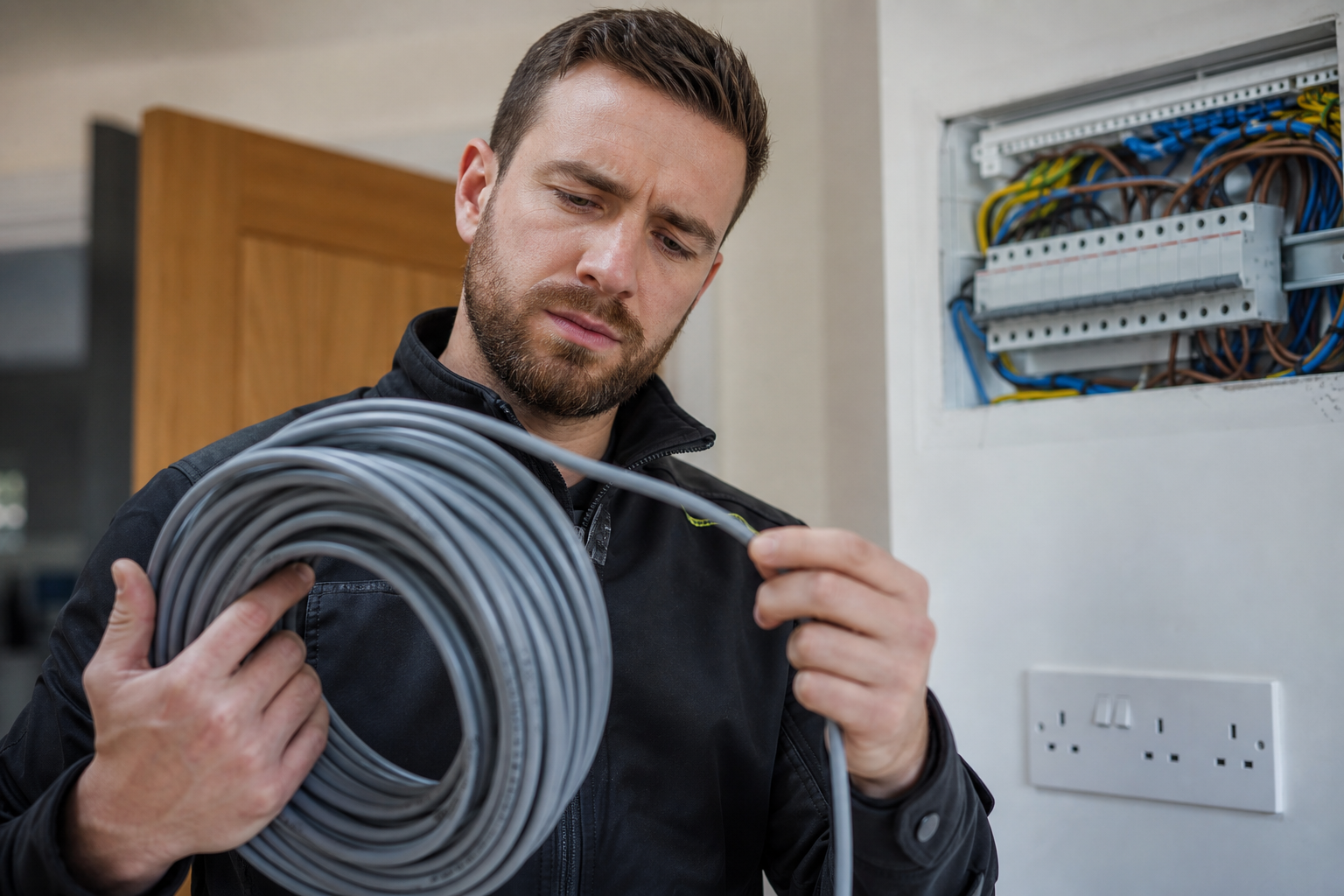
Ever found yourself staring at a reel of cable (wire, for our mates across the pond), squinting at the markings, and wondering if it's beefy enough to handle the job? Picking the right wire size isn’t just about ticking a box – get it wrong and you risk overheated wires, tripped breakers, or worse, the kind of fireworks you definitely don’t want in your walls. This guide will walk you through choosing the right wire size (gauge), measuring cables properly, and avoiding the classic mistakes that turn a tidy install into a tangled mess.
Why Wire Size Matters (and What Happens If You Get It Wrong)
Choosing the right cable size is a bit like picking the right pipe for plumbing. Too narrow, and everything backs up or bursts. Too wide, and you’re overspending on copper (which, last time I checked, isn’t being given away with your pint). Wire that's too thin for the current load can overheat, melt insulation, and set off breakers (or worse, fires). Go too chunky, and you’re paying for metal you don’t need and fighting to squeeze it into terminals.
The Basics: How Wire Sizing Works (UK vs US/AUS)
Here's the bit most people get wrong: cable sizes aren’t just a UK/US spelling thing. The UK and Europe use cross-sectional area in square millimetres (mm²), while the US and many others use American Wire Gauge (AWG). It's like measuring your waist in inches and then buying trousers in centimetres. Know which system you're dealing with, or you'll be back at the merchant, receipt in hand, looking sheepish.
| UK/EU Size (mm²) | US Size (AWG) | Typical Amps (Single-phase, clipped direct) |
|---|---|---|
| 1.0 | 17 | 13 |
| 1.5 | 15 | 16 |
| 2.5 | 13 | 20 |
| 4.0 | 11 | 26 |
| 6.0 | 10 | 32 |
| 10.0 | 8 | 45 |
Note: Always check your local regs, as installation method, ambient temperature, and cable type can change these figures.
How to Calculate Cable Size UK: The Practical Steps
Bet the merchant never told you this: cable sizing isn’t just about the amps. You also need to consider voltage drop and installation method (buried in wall, in conduit, clipped to a surface, etc.). Here’s a simple process:
- Work out your load:
- Add up the total power (in watts) of every device on the circuit.
- Convert to current:
- UK/Europe: Divide total watts by 230V (your supply voltage). US/Canada: Use 120V.
- Example: 3000W / 230V = 13A (amps).
- Factor in cable run length:
- Long runs mean more voltage drop. For most domestic jobs, up to 50m (165ft) is OK if sized right, but always check.
- Choose the cable size:
- Use tables (like above), or a wire size calculator, to pick a cable that safely handles your current over your distance.
- Allow for future upgrades:
- Like keeping a few extra biscuits in the tin. If you might add more load later, size up sensibly.
Worked Example: Sizing Wire for a Garage Socket (Metric & Imperial)
Let’s say you’re wiring a garage socket circuit for a heater and some power tools:
- Total load: 4000W (4kW)
- Voltage: 230V (UK/EU) or 120V (US)
- Distance from consumer unit to socket: 25m (82ft)
Step 1: 4000W / 230V = 17.4A (call it 18A for safety)
Step 2: For a 25m (82ft) run, check voltage drop (most regs allow about 3% drop, e.g. 6.9V on 230V)
Step 3:
- UK/EU: 2.5mm² cable (13 AWG) handles up to 20A, but for 25m (82ft), voltage drop might be close to the limit.
- Bump up to 4mm² (11 AWG) for less voltage drop and future-proofing.
- US: 12 AWG wire is rated for 20A; for longer runs, 10 AWG is safer.
Result:
- Use 4.0mm² (11 AWG) for the UK/EU, or 10 AWG for the US, for a safe, reliable install.
How to Identify and Measure Wire Size (When the Markings Have Rubbed Off)
Trying to tell cable size by eye is like guessing someone’s age by their haircut – a recipe for embarrassment. Here’s how the pros do it:
- Check the markings:
- Most cable sheaths are printed with size, e.g., “2.5mm²” or “12 AWG”.
- Measure the conductor:
- If markings are gone, strip back insulation and measure the copper core’s diameter with a vernier caliper (or a decent ruler in a pinch).
- Formula: Area (mm²) = π × (Diameter in mm ÷ 2)²
- E.g., a 1.78mm (0.070in) diameter core: Area = 3.14 × (1.78 ÷ 2)² ≈ 2.5mm²
- Compare to a chart:
- Use the measured diameter to look up the size in a conversion chart (lots online, or in the regs books).
Quick Tips: Avoiding the Classic Cock-Ups
- Don’t mix metric and AWG on the same job. It’s like measuring in pints and litres and hoping no one notices.
- Always allow a little spare capacity – nobody has ever finished a job wishing they’d run thinner cable.
- For long runs or high loads, always check voltage drop, not just amps.
- If in doubt, ask a sparkie or use a proper wire size calculator for your country.
Questions people are actually asking
What size wire do I have?
If your wire still has legible markings, check the sheath – it’ll say something like "2.5mm²" (UK/EU) or "12 AWG" (US). No markings? Strip a bit of insulation and measure the copper core’s diameter, then check a chart to convert diameter to size.
How to measure cable size UK?
Strip back the insulation to expose the copper, then use a vernier caliper or precise ruler to measure the diameter in millimetres (mm). Use the formula for area (π × radius squared) or check a conversion chart to confirm the square millimetre size. For example, a 1.78mm (0.070in) diameter is 2.5mm².
How to calculate cable size UK?
Add up your total load (watts), divide by voltage (230V), then choose a cable that can handle that current (amps) plus a bit extra for safety. Don’t forget to factor in run length for voltage drop, and check the regulations for installation method.
How to identify cable size UK?
Look for printed markings on the sheath (e.g., “4.0mm²”). If that’s worn off, strip a section and measure the core diameter. Reference a cable size chart to confirm the size. If you’re still unsure, compare it side-by-side with a known cable.
How to check cable size UK?
Check the sheath for markings first. If there are none, measure the copper conductor’s diameter and look it up in a size chart. Always double-check with a sparkie if you’re not confident.
How to measure electrical cable size UK?
Cut a small piece of cable, strip the insulation, and measure the diameter of the copper wire in millimetres (mm) or inches. Convert this diameter to square millimetres (mm²) or AWG using a chart.
How to tell wire size?
Either read the printed markings or, if they’re missing, measure the diameter of the conductor and reference it against a conversion chart to identify the correct size.
Wrapping Up: Get Your Sizing Right, First Time
Wire sizing isn’t rocket science, but it’s not something to wing, either. Take a few minutes to work out your loads, measure properly, and double-check against the regs – your circuits (and your wallet) will thank you. If you want to skip the maths, use a wire size calculator for your region. Better safe than sorry – especially when you’re dealing with mains voltage and your reputation.
Free tools to put this into practice
Reading is one thing — working out your own numbers is what saves time and money. Here are the free HowMuchDoINeed calculators that pair best with this guide:
- Choosing The Right Skip Size For Construction Diy Renovation Projects — work out exactly how much you need and what it will cost.
- Wire Size Calculator Uk Explained — get an instant materials estimate for your project.
- Breaker Size Calculator — size up quantities and costs before you head to the merchant.
- Skip Size Calculator — plan your order so you avoid over- or under-buying.
Explore every free calculator on HowMuchDoINeed — no sign-up required.