Retaining Wall Block Calculator: Nail Your Order, Skip the Pallet Panic
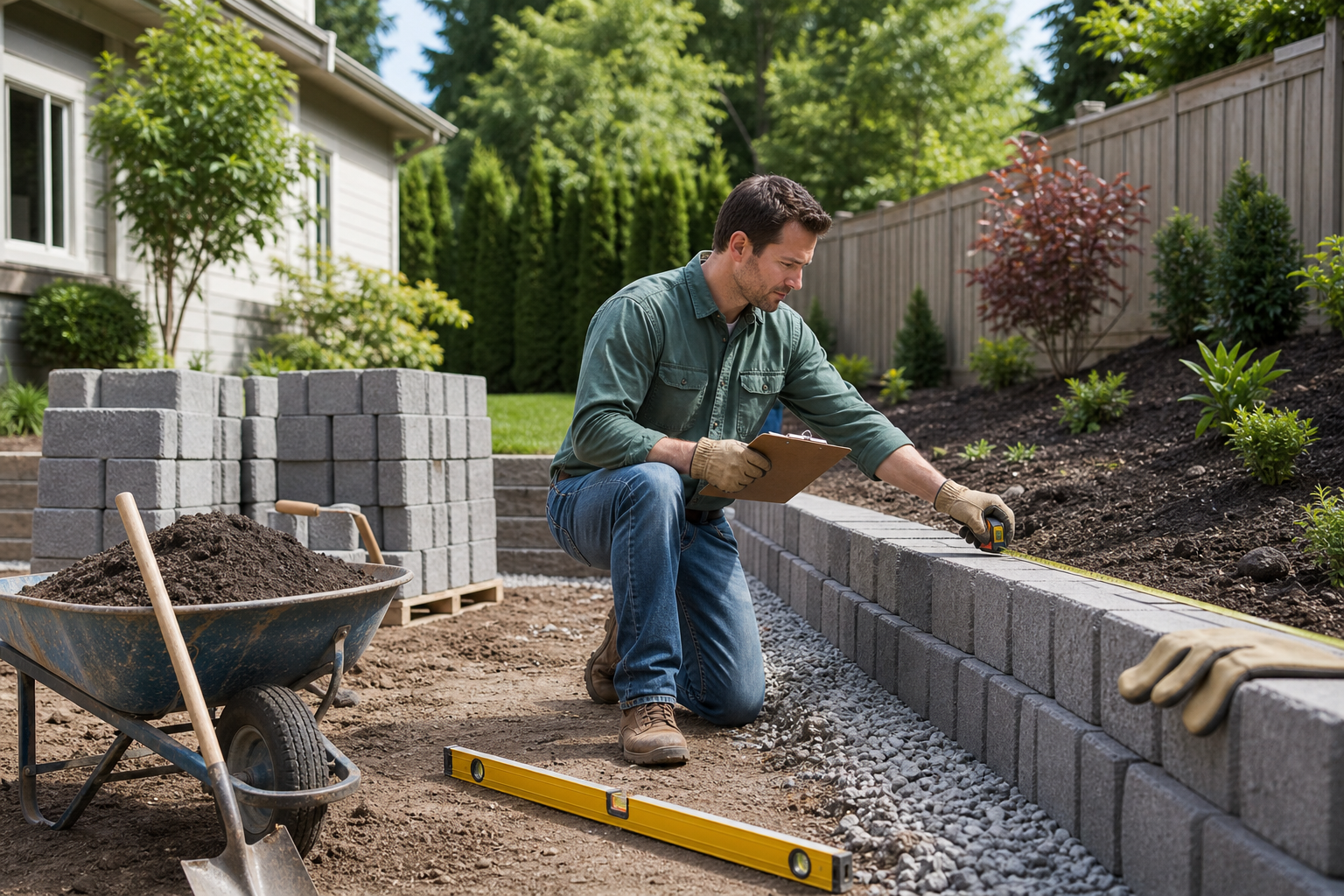
Ever got halfway through a retaining wall and realised your blocks have run out, but your motivation’s gone with them? We’ve all been there—measuring by eye, thinking "that’ll do", only to end up a row short or with a pile of blocks that’ll haunt you for years. Ordering retaining wall blocks without a proper take-off is like buying sausages for a BBQ without counting the guests: someone’s always left hungry (or you’re eating bangers for breakfast all week).
In this guide, you’ll learn how to calculate exactly how many retaining wall blocks (or walling units, if you want to sound posh) you need for your landscaping project—whether you’re building a straight wall, a fire pit, or even a circle. You’ll get the formulas, a worked example, and a few trade tips to save you the classic merchant runaround. Plus, I’ll show you how to use the retaining wall block calculator for a foolproof order every time.
The Basics: What You Need to Measure (and Why Most People Get it Wrong)
Here’s the bit most DIYers and even a few pros fudge: you can’t just guess block numbers off the plan. You need the wall’s length, height, and the exact size of your chosen block (retaining wall block in the UK, segmental block or concrete retaining wall block in North America/Australia). And let’s not forget: a 200mm (8in) high block is not the same as a 150mm (6in) one, and a wall that’s 10m (33ft) long at 1m (3.3ft) high eats up a lot more blocks than you’d think.
If you measure the wall in metres but your block size is in inches, you’re basically baking a cake with the oven in Fahrenheit and the recipe in Celsius. It’ll work, but not well—and you’ll be back to the shop before the mortar’s dry.
The Simple Formula for Working Out Block Quantities
Here’s the bare-bones formula:
- Work out the area of your wall:
- Wall area = length × height
- Give your answer in square metres (m²) and square feet (ft²) for good measure.
- Work out the face area of one block (the bit you see):
- Block face area = block length × block height
- Again, use both metric (mm/cm/metres) and imperial (inches/feet).
- Divide the wall area by the face area of a block to get the number of blocks you need.
- Add a wastage allowance—usually 5–10% (think of it as the spare teabags for when a few go missing or get chipped).
Worked Example (Metric and Imperial)
Let’s say you’re building a 6m (20ft) long wall, 0.9m (3ft) high. You’re using blocks that are 400mm (16in) long and 200mm (8in) high.
- Wall area:
- 6m × 0.9m = 5.4m²
- (20ft × 3ft = 60ft²)
- Block face area:
- 0.4m × 0.2m = 0.08m²
- (16in × 8in = 128in²; 128in² ÷ 144 = 0.89ft²)
- Blocks needed (no wastage):
- 5.4m² ÷ 0.08m² = 67.5 blocks
- 60ft² ÷ 0.89ft² = 67.4 blocks
- Add 10% wastage:
- 67.5 × 1.10 ≈ 75 blocks (always round up—nobody ever wishes they’d bought less)
So, you’ll need 75 blocks for this wall, whether you’re working in metres or feet. And if you’re using the retaining wall block calculator, it’ll do all this for you—without the napkin maths.
| Wall Length | Wall Height | Block Size (L x H) | Wall Area | Block Face Area | Blocks Needed | +10% Wastage |
|---|---|---|---|---|---|---|
| 6m (20ft) | 0.9m (3ft) | 400x200mm (16x8in) | 5.4m² (60ft²) | 0.08m² (0.89ft²) | 67.5 | 75 |
Don’t Forget Corners, Curves and Special Blocks
Bet the merchant never told you this: if your wall has corners, steps, or curves, you’ll need special corner or cap blocks, and the maths gets a bit more fiddly. Curved walls (like for a fire pit or a circular bed) aren’t just straight walls bent round a corner—they need a different take-off entirely.
- For circles: work out the wall’s circumference (π × diameter) instead of length.
- For fire pits: same deal—measure the total outside circumference, divide by the block length, and round up.
- Steps and corners? You’ll want to check your block’s range—most brands do a matching corner or cap unit, which you’ll need to add by hand.
If the thought of all that’s giving you a headache, just use the retaining wall block calculator. Plug in your wall’s shape and let it crunch the numbers.
Pallets, Delivery, and the Dreaded Leftovers
Here’s a classic rookie error: ordering by the pallet without checking how many blocks you actually need. Block manufacturers love a round number, but your garden probably doesn’t. A pallet might hold 40, 60, or even 80 blocks, depending on block size and brand. Always check blocks per pallet before you order—or you’ll be explaining to your other half why the BBQ’s now surrounded by a fortress of leftovers.
If you’ve run your numbers with the retaining wall block calculator, you’ll know exactly how many blocks to order, and whether you’re looking at one pallet, one-and-a-bit, or three trips with the van. Don’t leave it to guesswork.
Questions People Are Actually Asking
How much retaining wall block do I need?
It depends on your wall’s length, height, and the block size. Measure your wall, calculate the area, divide by your block’s face area, and add 5–10% for wastage. Or, skip the faff and use the retaining wall block calculator to get an exact number in seconds.
How many retaining wall blocks on a pallet?
This varies by manufacturer and block size. Small blocks (around 200mm/8in high) often come 40–80 to a pallet. Check your supplier’s spec sheet or ask directly, as the number can change even within a single brand’s range.
How many retaining wall blocks do I need for a circle?
Measure the diameter of your circle (say, for a fire pit or round bed), multiply by π (3.14) to get the circumference, then divide by the length of one block. Always round up, and add 5–10% for wastage—you’ll thank yourself later.
How many retaining wall blocks for a fire pit?
Same principle as a circle: work out the circumference of your planned fire pit, divide by the length of your block, and round up. For a 1m (3ft) diameter pit using 300mm (12in) blocks:
- Circumference: π × 1m = 3.14m (π × 3ft = 9.4ft)
- Blocks needed: 3.14m ÷ 0.3m ≈ 10.5 (9.4ft ÷ 1ft ≈ 9.4) So, you’d need 11 blocks per layer in metric, 10 in imperial (and add a spare or two for luck).
How much do retaining wall blocks weigh?
Block weights vary massively. A small concrete block (200x400mm / 8x16in) might weigh 15–25kg (33–55lb). Larger and heavier-duty blocks can be 35kg (77lb) or more. Always check with your supplier before you throw your back out.
How much do retaining wall blocks cost?
Prices depend on the block type, manufacturer, and where you are. Budget blocks start at a few quid/dollars each, while premium or decorative units can cost several times more. Always factor in delivery and wastage—nobody likes a surprise at the checkout.
Wrapping Up: Get Your Block Order Bang On
Ordering retaining wall blocks shouldn’t feel like you’re playing Tetris with your wallet. Measure up properly, allow for wastage, check your pallet quantities, and let the retaining wall block calculator do the heavy lifting. You’ll save yourself the heartache of running short—or the embarrassment of your patio doubling as a block storage yard.
Ready to build? Head over to the calculator, punch in your numbers, and get your order right first time. Your back (and your neighbour’s envy) will thank you.
Free tools to put this into practice
Reading is one thing — working out your own numbers is what saves time and money. Here are the free HowMuchDoINeed calculators that pair best with this guide:
- Retaining Wall Calculator — work out exactly how much you need and what it will cost.
- Stud Wall Frame Calculator — get an instant materials estimate for your project.
- Wall Stud Calculator — size up quantities and costs before you head to the merchant.
- Wall Area Calculator For Plastering — plan your order so you avoid over- or under-buying.
Explore every free calculator on HowMuchDoINeed — no sign-up required.