
Wall Stud Calculator: The Quickest Way to Plan a Partition Wall Without Buying Half a Timber Yard You Don't Need
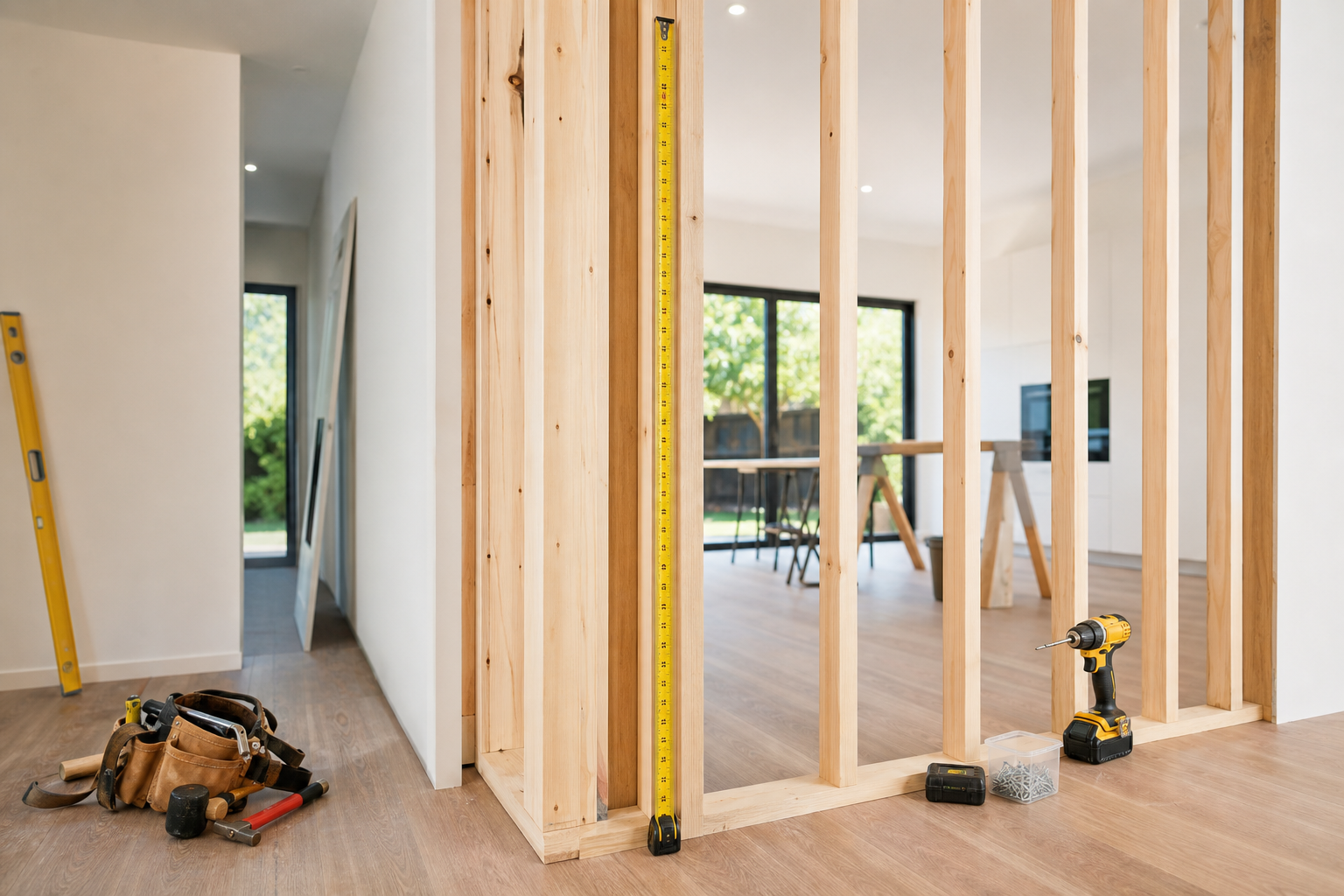
Building a partition wall? Before you load up the van, you need three numbers nailed down: how many studs, how far apart, and what it'll cost. Get those wrong and you're either back at the merchant by lunchtime or staring at a pile of timber you'll never use. This guide shows you exactly how to use a wall stud calculator, sidestep the classic mistakes, and crack on with confidence — metric or imperial, no bother.
Why Use a Wall Stud Calculator?
Getting the stud layout right isn't optional — it's the difference between a wall that stands up straight for decades and one that flexes like a wet cardboard box. Too few studs and you've got a problem. Too many and you've got an expensive one. A wall stud calculator cuts through the guesswork and tells you:
- How many studs you need for your wall's length and height
- Correct spacing (centres) for your region
- Overall timber required
- Estimated cost
Think of it like doing the weekly shop with a list instead of wandering the aisles hoping for the best. Plan before you buy, and you'll save time, reduce waste, and keep your blood pressure where it belongs.
Typical Wall Stud Spacing: What's Standard?
The distance between wall studs — called "centres" — is usually dictated by building codes and the type of wall you're building.
| Region | Common Stud Spacing |
|---|---|
| UK/EU | 400mm or 600mm centres |
| US/Canada | 16 or 24 inches (406/610mm) |
| Australia/NZ | 450mm or 600mm centres |
- 400/450mm (16–18") centres: Often used for stronger, load-bearing walls or where heavy items will be hung.
- 600mm (24") centres: Suitable for most non-load-bearing partition walls.
Tip: Always check your local building regulations before starting. Nobody wants a visit from Building Control that ends badly.
How to Calculate Wall Studs – Step by Step
Here's the method the pros use — straightforward once you see it laid out:
- Measure your wall length (in metres or feet).
- Decide your stud spacing (centres).
- Divide wall length by spacing, then add 1 for the end stud.
- Add extra studs for corners, door/window openings, and intersecting walls.
- Multiply by wall height for total timber needed.
Worked Example: Metric and Imperial
Let's put some real numbers through it. You want to build a 3.6 metre (12 foot) long partition wall, 2.4 metres (8 feet) high, using 600mm (24") centres.
Metric Calculation
- Wall length: 3.6m
- Stud spacing: 0.6m (600mm)
Number of spaces: 3.6m ÷ 0.6m = 6
You need 7 studs (6 spaces + 1 = 7 studs)
Imperial Calculation
- Wall length: 12 ft
- Stud spacing: 24 in (2 ft)
Number of spaces: 12ft ÷ 2ft = 6
You need 7 studs (6 spaces + 1 = 7 studs)
Don't forget: Add 2–4 extra studs for each end/corner, door frames, or intersections. Always round up — the spare studs are like the spare teabags you keep so you're never caught short mid-job.
Automate Your Planning with a Wall Stud Calculator
Manual maths is fine for a single straight wall. Add a couple of openings and a corner or two, and it gets fiddly fast. That's where a wall stud calculator earns its keep. Punch in your wall length, height, and chosen stud spacing, and you get an instant breakdown — including extra studs for doors or windows — in the time it takes to finish your brew.
Factoring in Cost: How Much Will My Stud Wall Cost?
What's it going to set you back? That depends on a few moving parts:
- Timber prices (varies by country, material, and grade)
- Number of studs and noggins (horizontal bracing)
- Plasterboard or drywall
- Fixings and extras (screws, insulation, etc.)
Rough guide:
| Item | Typical Price Range (per unit) |
|---|---|
| Timber stud (2.4m/8ft) | £2–£5 / $3–$7 |
| Plasterboard | £5–£10 / $8–$15 |
| Fixings/Extras | £10–£20 / $15–$30 (per wall) |
Total cost for a small partition wall (materials only):
- UK/EU: £50–£120
- US/Canada/AU/NZ: $70–$180
For an accurate estimate, use the wall stud calculator to get your stud count, then multiply by your local timber price. Simple as that.
Questions People Are Actually Asking
How far apart should wall studs be?
Studs are typically spaced at 400mm, 450mm, or 600mm centres in metric, or 16 or 24 inches in imperial. The right choice depends on wall type, local building codes, and what you're planning to hang on the wall. For most partition (non-load-bearing) walls, 600mm/24" centres do the job nicely — but tighten up the spacing if you need extra strength or you're mounting something heavy.
How many wall studs do I need?
Divide your wall length by the chosen stud spacing, then add one. Don't forget to add extra studs for corners, doorways, and intersections — they're easy to overlook and painful to be short on. For speed and accuracy, the wall stud calculator does all of that in seconds.
How much does a stud wall cost?
Material costs vary by location and wall size. Expect to pay £50–£120 (UK) or $70–$180 (US/Canada/AU/NZ) for a typical small room partition, including studs, plasterboard, and fixings. For a precise figure, work out your stud count first and multiply by local timber prices.
How much can wall studs hold?
Standard timber studs in a correctly built wall will happily take shelves, TVs, and cupboards. For heavier loads, drop to 400mm/16" spacing and consider noggins (horizontal bracing) for extra rigidity. Always use suitable fixings — the right anchor makes a big difference. For load-bearing walls, get a structural engineer involved. Not the time to wing it.
How much do wall studs cost?
Timber studs typically cost £2–£5 each (UK) or $3–$7 (US/Canada/AU/NZ), depending on length and grade. Prices shift with timber type and local supply, so it's worth checking your merchant's current rates before you budget.
How much weight can wall studs hold?
A single stud can often hold 30–50kg (60–110 lbs) with proper fixings, but always check the wall build and use the correct anchor for your intended load. Spread the weight across multiple studs wherever you can — it's the same principle as not putting all your shopping bags on one finger.
Top Tips for Building Partition Walls
- Double-check your measurements before buying timber. Measure twice, order once.
- Use a wall stud calculator to save time and avoid mistakes.
- Account for doors/windows, adding extra studs as needed.
- Check your local building codes for spacing and fire safety rules.
- Plan for services (electrics/plumbing) before closing up the wall — far easier now than later.
Conclusion: Get Planning and Build with Confidence
Accurate planning is what separates a smooth build from a stressful one. Whether you're DIY-ing or managing a project, a wall stud calculator gives you the right quantities, keeps waste down, and stops costs running away from you. Ready to crack on? Try the calculator now and take the guesswork out of your next job.
Free Tools to Put This into Practice
Reading about it is one thing — running your own numbers is what actually saves time and money on site. Here are the free HowMuchDoINeed calculators that pair best with this guide:
- Stud Spacing Calculator — work out exactly how much you need and what it will cost.
- Retaining Wall Calculator — work out exactly how much you need and what it will cost.
- Wallpaper Calculator — work out exactly how much you need and what it will cost.
- Drywall Calculator — work out exactly how much you need and what it will cost.
Explore every free calculator on HowMuchDoINeed — no sign-up required.