
Insulation Calculator: Stop Guessing, Start Saving (And Keep Your Toes Warm)
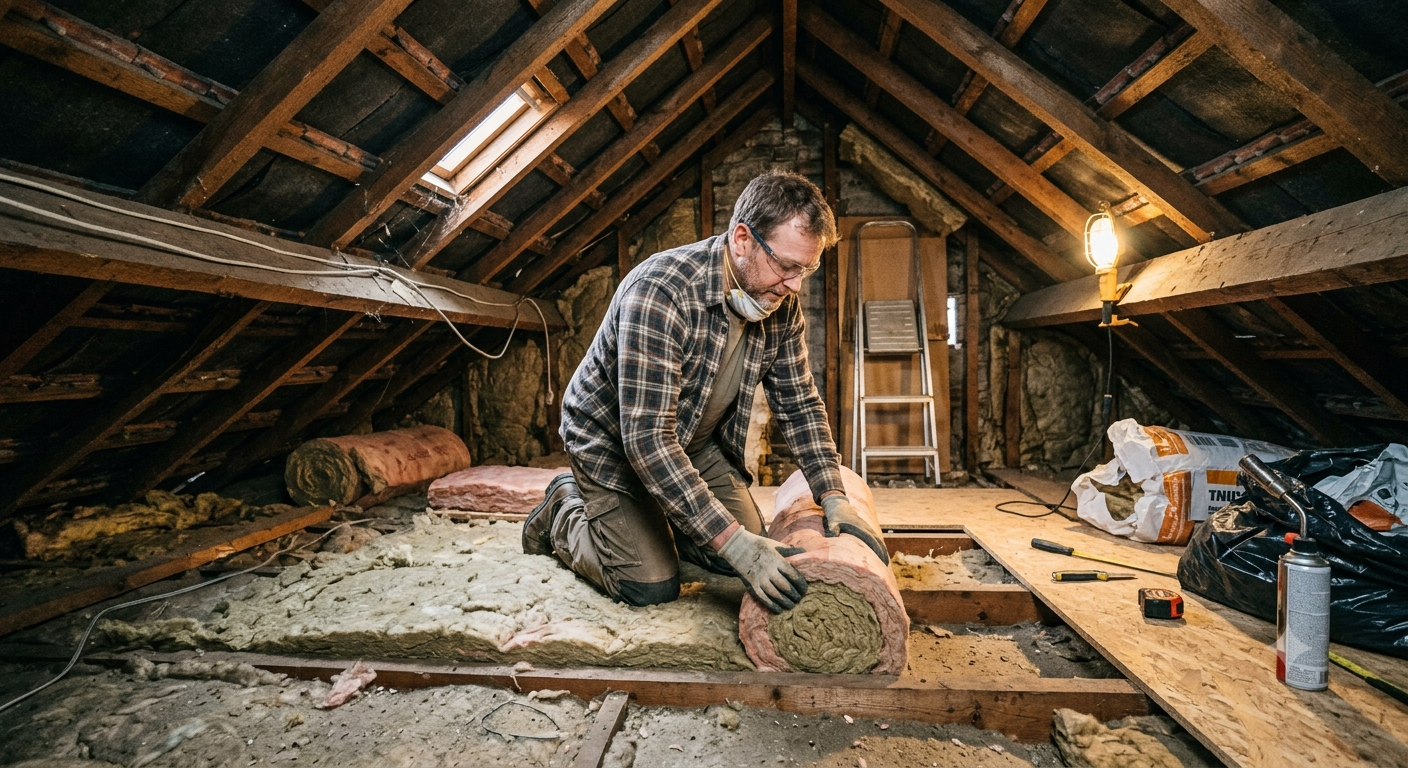
Ever felt that first winter draft and realised your insulation is about as effective as a chocolate teapot? Or got halfway through the attic, only to find you’re two rolls short and the shop’s shut? If you’re tired of guessing how much insulation you need—and paying for it later with high bills or chilly toes—this one’s for you. Let’s break down how an insulation calculator works, why it matters, and how you can nail your next insulation job, whether you’re tackling a loft (attic), a garden shed, or the whole house.
Why Bother With an Insulation Calculator?
Here’s the bit most people get wrong: they just eyeball the space and grab a few rolls, thinking "close enough". That’s like ordering timber (lumber) for a deck by the ‘it’ll probably do’ method—great if you like extra trips to the merchant and a patchwork finish.
An insulation calculator takes the guesswork out. It tells you exactly how many rolls, batts, or bags you’ll need, converting area into real product quantities. No more over-buying or, worse, under-buying and living with a cold spot above your bed.
What Does an Insulation Calculator Actually Do?
Think of it as your shopping list for insulation—but one that knows how to do sums. You punch in:
- The area you want to insulate (length x width of your loft, wall, or shed)
- The thickness/loft depth you want (or need, by code)
- The product you’re using (batts, rolls, loose-fill, etc.)
The calculator dishes out how many bags, rolls, or batts you’ll need, in both metric (square metres, m²) and imperial (square feet, ft²), plus the total volume if you’re using loose-fill.
Bet the merchant never told you this: the numbers on the packaging don’t always match up across brands or regions. Some rolls cover 9.5m² (102ft²), others 8.3m² (89ft²), and loose-fill bags come in all sorts of weights and volumes. That’s why calculators (and this guide) are worth their weight in gold.
How to Calculate the Amount of Insulation You Need
Step 1: Measure Your Area
Let’s do a worked example. You’ve got a loft (attic) that’s 6m x 4m (20ft x 13ft). That’s:
- 6m x 4m = 24m²
- 20ft x 13ft = 260ft²
Step 2: Decide on Insulation Thickness
Standard recommendations (always check your local building code):
- UK/EU: 270mm (10.5in) in lofts
- US/Canada: R-value is key—aim for R38 to R49 (about 12-19in or 300-480mm, depending on material)
Let’s say you’re sticking with 270mm (10.5in) batts/rolls.
Step 3: Check the Coverage per Pack
Suppose you’re eyeing up rolls that cover 8.3m² (89ft²) each at 270mm (10.5in) thick. Here’s your maths:
- Total area: 24m² (260ft²)
- Coverage per roll: 8.3m² (89ft²)
- Rolls needed: 24 ÷ 8.3 = 2.89 rolls (round up to 3 rolls)
- In imperial: 260 ÷ 89 = 2.92 rolls (again, round up to 3)
But wait! Factor in a 10% wastage allowance—like the spare teabags you keep so you’re never caught short.
- 24m² x 1.10 = 26.4m² (or 260ft² x 1.10 = 286ft²)
- Rolls needed: 26.4 ÷ 8.3 = 3.18 (round up to 4 rolls)
- Or: 286 ÷ 89 = 3.21 (round up to 4 rolls)
You’ll thank yourself when you hit that awkward corner or mis-cut (we’ve all been there).
Step 4: Check Your Product Type
- Batts and Rolls: Sold by area covered at a set thickness.
- Loose-fill/Blown-in: Sold by bag volume, but you’ll need to check the coverage chart for your desired thickness.
- Rigid Boards: Sold by sheet size—just like plasterboard (drywall)—so calculate how many sheets for your space.
Worked Example Table
| Area | Coverage per Roll | Rolls Needed (with 10% extra) |
|---|---|---|
| 24m² (260ft²) | 8.3m² (89ft²) | 4 |
Don’t Mix Up Your Units (Seriously)
Measuring the loft in metres and buying in feet is like making tea with coffee spoons—confusing and likely to end with someone getting grumpy. Stick to one system, or double-check every conversion.
What About Insulation for Walls, Sheds, or Floors?
Same principle. Measure the area (height x width for walls, length x width for floors), check your product specs, and add that 10% buffer. For sheds, the thickness may be less—typically 50mm (2in) to 100mm (4in)—but always check what’s sensible for your climate.
How Much Will It Cost?
Insulation cost varies by material (glass wool, mineral wool, foam, cellulose, you name it), thickness, and brand. To get a ballpark:
- Total packs needed x price per pack (see your local supplier’s site)
- Don’t forget to add in accessories (vapour barrier, tape, fixings, etc.)
Nobody has ever finished a job saying they wish they’d bought less insulation. It pays for itself with lower energy bills—think of it as the thermal blanket you never have to wash.
Questions People Are Actually Asking
How much insulation do I need?
First, measure the total area you want to insulate in square metres (m²) or square feet (ft²). Divide by the coverage area listed on the insulation pack or bag, then add about 10% for wastage. The type and thickness depend on your local climate and building regulations.
How much insulation should I have in my attic?
In the UK/EU, current guidance is at least 270mm (10.5in) of loft insulation. In the US/Canada, aim for an R-value of R38–R49, which often means 12–19in (300–480mm) of insulation, depending on the material. Always check your country’s code.
How much insulation comes in a roll?
It varies by brand and thickness. A typical roll at 270mm (10.5in) thick covers around 8.3m² (89ft²). Always check the packaging, as some are longer but thinner, and not all rolls are created equal.
How much insulation comes in a bag?
Loose-fill or blown-in insulation is sold by volume—often in 10kg (22lb) or 20kg (44lb) bags. Coverage depends on the thickness you install. Each bag should have a coverage chart showing area per depth, both in m² (ft²) and mm (in).
How much insulation does an attic need?
Calculate the total attic floor area, then apply your recommended thickness (e.g., 270mm/10.5in in the UK, or enough for R38+ in North America). Divide the area by the product’s stated coverage at your thickness to find how many packs you need. Add 10% for error and tricky corners.
How much insulation for a 10x12 shed?
A 10ft x 12ft (3m x 3.6m) shed has an area of 120ft² (10.8m²) per wall or floor. For the roof and four walls, total area is about 432ft² (40.3m²), not subtracting for doors/windows. Choose your thickness based on climate (50–100mm / 2–4in is typical). Divide the total area by your insulation pack’s coverage. Add a bit for wastage.
How much insulation is too much?
There’s a point where adding more insulation gives you very little extra benefit—like putting two hats on in winter. If your insulation is at or above code recommendations (e.g., 270mm/10.5in in the UK, R49 in the US), adding more usually isn’t cost-effective. Too much can also cause issues with ventilation and moisture.
Conclusion: Measure Once, Order Right, Stay Toasty
Ordering insulation without a plan is like painting a wall with a toothbrush—possible, but unnecessarily painful. Use an insulation calculator (or follow the steps above), double-check your units, and always allow a little extra for offcuts and mistakes. You’ll save money, energy, and the odd cold morning cursing your own optimism. Ready to get started? Grab your tape measure and calculator, and make your next insulation job the warmest yet.
Free tools to put this into practice
Reading is one thing — working out your own numbers is what saves time and money. Here are the free HowMuchDoINeed calculators that pair best with this guide:
- Insulation Calculator Understanding Save Money Energy — work out exactly how much you need and what it will cost.
- Understanding Cable Sizes Beginners Guide Uk — get an instant materials estimate for your project.
- Understanding Timber Fastener Spacing — size up quantities and costs before you head to the merchant.
- Partition Wall Material Calculator Stud Wall Estimator — plan your order so you avoid over- or under-buying.
Explore every free calculator on HowMuchDoINeed — no sign-up required.
Try the Insulation Calculator
Working this out by hand? Our Insulation Calculator does the sums for you in seconds — pop in your measurements and you'll have your numbers straight away.