Driveway Tarmac Calculator: Nail Your Quantities First Time and Skip the Awkward Merchant Run
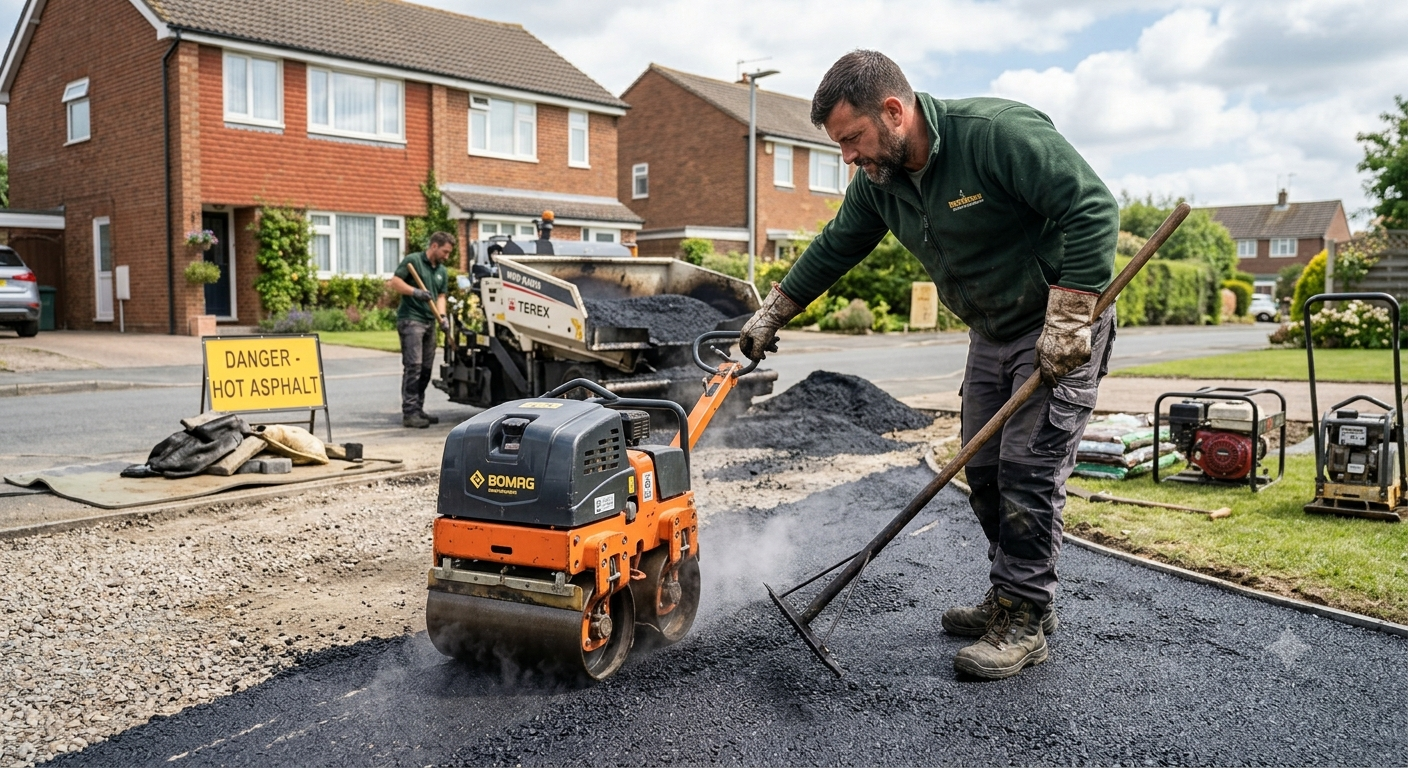
Ever found yourself halfway through a driveway job, realising you’re a tonne (or ton) short on tarmac? That sinking feeling is right up there with forgetting your wallet at the builder’s merchant. This guide’s here to spare you all that, showing you how to use a driveway tarmac calculator to get your quantities bang on, first time. We’ll cover everything from thickness to cost, all in both metric and imperial — because nobody wants to measure the drive in metres and order the tarmac in square feet.
Why Bother with a Driveway Tarmac Calculator? (Spoiler: It’s Cheaper Than Guessing)
Let’s be honest: ordering tarmac for a driveway without a proper take-off is like doing your weekly shop with no list and a blindfold. You’ll end up with either not enough for the job or piles of leftovers the neighbour’s cat will sunbathe on. A tarmac calculator takes away the guesswork — you plug in your measurements, pick your thickness, and get a no-nonsense answer in tonnes (metric) and tons (imperial).
What Does the Calculator Actually Do?
- Takes your driveway’s length and width (in metres/feet)
- Lets you set the thickness (mm/inches)
- Works out the area and volume
- Converts it to the amount of tarmac you’ll need, in both tonnes (metric tons) and tons (US/UK short tons)
- Helps you figure out how many loads or bags to order (so you don’t order a skip’s worth when you only need a wheelbarrow)
Try it for yourself: estimate your tarmac needs with the driveway tarmac calculator.
The Big Three: Area, Thickness, and Wastage
Here’s the bit most people get wrong: thickness matters. A 50mm (2in) tarmac layer over a gravel (aggregate) base is standard for driveways, but skimping here is like using tissue paper for underlay — it won’t last one winter, let alone a few years of family cars.
- Standard domestic driveway tarmac thickness:
- Wearing course (top layer): 25–40mm (1–1.5in)
- Binder/base course (below): 40–60mm (1.5–2.5in) if you’re doing a full build-up
- Most single-layer resurface jobs: 50mm (2in) is typical
Wastage: Add 5–10% for wastage (think: the spare teabags you keep so you’re never caught short).
Worked Example: Calculating Tarmac for a 30m² (320ft²) Driveway
Let’s say you’ve got a rectangular driveway, 6m x 5m (20ft x 16ft). You want a 50mm (2in) thick tarmac layer.
- Area:
- 6m x 5m = 30m² (20ft x 16ft = 320ft²)
- Volume:
- 30m² x 0.05m = 1.5m³ (320ft² x 0.167ft = ~53.4ft³)
- Tarmac Density:
- Tarmac weighs about 2.4 tonnes/m³ (150lb/ft³)
- Total Tarmac Needed:
- 1.5m³ x 2.4 = 3.6 tonnes (53.4ft³ x 150lb = 8,010lb / 2,000 = 4 US tons)
- Wastage (10%):
- 3.6 tonnes x 1.1 = 3.96, round up to 4 tonnes (4 US tons x 1.1 = 4.4 US tons)
You’ll want to order about 4 tonnes (4.4 US tons) of tarmac for a 30m² (320ft²) driveway at 50mm (2in) thick.
Want to skip the maths and get your answer straight off? Use the driveway tarmac calculator — just punch in your numbers and let it do the heavy lifting.
Price Talk: How Much to Tarmac a Driveway?
Bet the merchant never told you this — the price of tarmac (asphalt) can swing wildly depending on the region, the thickness, and whether you’re in the UK, US, Ireland, Canada, Australia, or somewhere else. And don’t forget, the cost per square metre (or square foot) isn’t just about the material — there’s prep, base, labour, and all the usual extras.
- Material Only:
- UK: Priced per tonne or per m² (square metre)
- US/Canada: Priced per ton or per ft² (square foot)
- Typical guide (material only):
- UK: £40–£70/m² (material + labour, 50mm/2in thick)
- US: $3–$7/ft² (material + labour, 2in thick)
These are ballpark figures — not gospel. Always get a local quote, because costs in Belfast or Birmingham aren’t the same as Boston or Brisbane.
Thickness: Don’t Skimp, Don’t Overdo It
How thick should tarmac be for a driveway? If you go too thin, it’ll crack faster than a dodgy joke at tea break. Too thick, and you’re just wasting money (and making more work). For most domestic driveways, 50mm (2in) is the sweet spot. Heavy vehicles? Consider bumping up to 75mm (3in) — but check with your local supplier or a civil engineer first.
Pro Tips for an Easy Ordering Process
- Double-check your measurements (measure twice, order once — unless you fancy a return trip)
- Allow for shape: If your driveway’s not a perfect rectangle, break it down into smaller shapes (rectangles, triangles, curves) and add up the areas
- Order in one batch if possible — part-loads cost more, and uneven batches can look patchy
- Confirm units with your supplier: ordering in metric and getting imperial (or vice versa) is a recipe for confusion
- Always add a bit for wastage — nobody has ever finished a job saying they wish they’d bought less
Skip the head-scratching and use the driveway tarmac calculator for a fast, stress-free take-off.
Questions People Are Actually Asking
How much to tarmac a large driveway?
The total depends on the area, thickness, and local rates. For a large driveway (say, 100m² or 1,100ft²), expect to use 12–15 tonnes (13–17 US tons) of tarmac at 50mm (2in) thick. Costs vary — in the UK, you might pay £4,000–£7,000 (including labour and prep); in the US, $7,000–$12,000 isn't unusual. Always get a local quote.
How thick should tarmac be for a driveway?
Standard domestic driveways need 50mm (2in) of tarmac. For heavy vehicles or commercial use, go for 75mm (3in) or more. Thickness is key — too thin, and you’ll be patching potholes before you know it.
How much tarmac do I need per square metre?
At 50mm (2in) thick, you’ll need about 0.12 tonnes per m² (25lb/ft²). So, for every 10m² (107ft²), allow for about 1.2 tonnes (1.3 US tons) — plus a bit extra for waste.
How much does a tarmac driveway cost?
It depends on location, size, prep, and finish. In the UK, expect £40–£70 per m² (including labour and materials). In the US, $3–$7 per ft² is typical. Always add VAT/tax and check what’s included in your quote.
How much to tarmac a driveway in Northern Ireland?
Costs in Northern Ireland can be slightly lower due to local material and labour rates. For a standard 50mm (2in) driveway, expect £35–£60 per m² — but always get a few quotes, as prices can change with demand and availability.
How do I use a driveway tarmac calculator?
Just measure your driveway’s length and width, decide your thickness, and enter the numbers into the driveway tarmac calculator. It’ll do the sums for you in both tonnes and tons.
What’s the difference between tarmac and asphalt?
Tarmac (UK) and asphalt (US, Canada, Aus/NZ) both refer to bitumen-bound surfaces, but asphalt is generally a bit smoother and harder-wearing. For domestic driveways, the terms are often used interchangeably.
Conclusion: Don’t Leave It to Chance — Calculate Before You Commit
Ordering tarmac isn’t like ordering pizza — you can’t just guess the size and hope nobody notices. Get your measurements right, use the driveway tarmac calculator to check your quantities in both metric and imperial, and you’ll save yourself a world of hassle (and cash). Ready to get started? Grab your tape, punch in your numbers, and tackle your driveway project with confidence.
Free tools to put this into practice
Reading is one thing — working out your own numbers is what saves time and money. Here are the free HowMuchDoINeed calculators that pair best with this guide:
- Driveway Calculator — work out exactly how much you need and what it will cost.
- Block Paving Calculator Builders Guide — get an instant materials estimate for your project.
- Drywall Sheet Calculator Builders Guide — size up quantities and costs before you head to the merchant.
Explore every free calculator on HowMuchDoINeed — no sign-up required.