Block Paving Calculator: Your Shortcut to Ordering the Right Amount (First Time, Every Time)
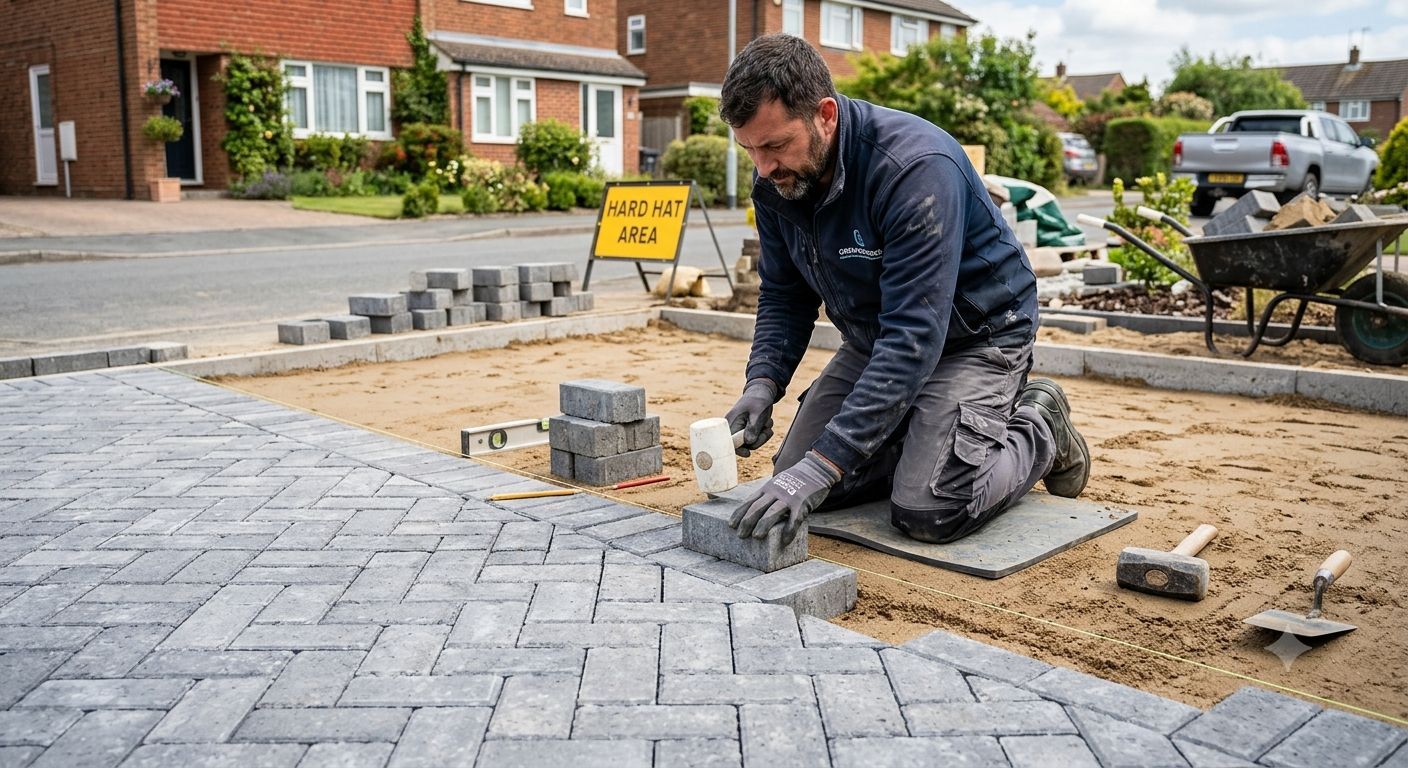
Ever got to the last row of block paving (or brick pavers, for our North American mates) and realised you’re three blocks short—and the builder’s merchant is now shut? Yeah, we’ve all been there. This guide is your lifeline: you’ll learn how to measure up, calculate the number of blocks, sand, and sealer you need, and avoid the classic rookie mistakes. And yes, we’ll point you to the block paving calculator that gets it right first time.
The Problem With Guesswork: Why Calculating Block Paving Matters
Trying to estimate block paving by eye is like buying tiles for your bathroom without a tape measure: it looks easy, until you’re 90% done and 100% out of blocks. Not to mention the pain of buying in mismatched units—measuring the area in feet, then ordering pavers by the metre, and wondering why there’s half a pack left over.
A block paving calculator sorts all that—and saves you time, money, and unnecessary trips to the merchant. Here’s how it works, and what you need to know before you dive in.
Block Paving: What Are We Actually Measuring?
First, let’s get our terms straight:
- Area: The surface you want to pave, measured in square metres (m²) or square feet (ft²).
- Block size: The size of each block, usually in mm (e.g., 200x100mm, or 8x4in).
- Depth: The thickness of the block (typically 50-80mm or 2-3in), and the bedding layer (sharp sand/compacted base).
You’ll need these details for an accurate take-off. Don’t worry, we’ll walk you through it—and the concrete block calculator does the hard maths for you.
How To Calculate How Many Blocks You Need (Worked Example)
Let’s say you’re paving a driveway that’s 5m x 4m (16ft x 13ft). You’re using standard 200mm x 100mm (8in x 4in) blocks. Here’s the step-by-step:
1. Measure the total area:
- 5m x 4m = 20m² (or 16ft x 13ft = 208ft²)
2. Work out the area of one block:
- 200mm x 100mm = 20,000mm², which is 0.02m x 0.01m = 0.002m² (8in x 4in = 32in², or 0.22ft²)
3. Calculate the number of blocks per square metre (or foot):
- 1m² / 0.02m x 0.01m = 50 blocks per m²
- 1ft² / 0.22ft² ≈ 4.5 blocks per ft²
4. Multiply by the total area:
- 20m² x 50 = 1,000 blocks
- 208ft² x 4.5 ≈ 936 blocks
5. Add a wastage allowance (usually 5-10%):
- 1,000 x 1.10 = 1,100 blocks (10% extra)
So, for a 5m x 4m driveway (16ft x 13ft), you’ll want to order around 1,100 blocks. The calculator does all this—just plug in your area and block size at the block paving calculator.
The Secret Sauce: Wastage Allowance (And Why You Need It)
Nobody has ever finished a job wishing they’d bought less block paving. Allow for offcuts, breakages, and the inevitable “whoops, I measured around the bush, not over it.” 10% extra is your insurance policy – like keeping spare teabags in the van so you’re never caught short.
Don’t Forget The Bedding: How Much Sharp Sand And Sub-Base?
Block paving isn’t just about the pretty top layer. Underneath, you’ll need:
- Compactable sub-base (MOT type 1/road base) or similar: Typically 100mm (4in) deep
- Sharp sand (paver sand): Typically 30-50mm (1-2in) deep
To calculate quantities:
- Sub-base:
- Area (m² or ft²) x depth (in metres or feet) = cubic metres (m³) or cubic feet (ft³)
- E.g., 20m² x 0.1m = 2m³ (208ft² x 0.33ft = 69ft³)
- Sharp sand:
- 20m² x 0.04m = 0.8m³ (208ft² x 0.13ft = 27ft³)
Bags usually come in 25kg (55lb) or bulk bags (approx. 0.6-0.8m³ or 21-28ft³). If you don’t fancy doing mental gymnastics, the concrete block calculator figures it out for you.
Block Paving Packs: How Many In A Pack?
Manufacturers love to mix it up, but a typical pack contains 488 to 500 blocks, covering about 9.8m² (105ft²). Always check the pack’s coverage—like reading the fine print before signing for a dodgy delivery. If in doubt, round up—you’ll use the extras for repairs or patio expansions later.
| Block Size | Blocks per Pack | Coverage per Pack |
|---|---|---|
| 200x100mm | 488-500 | ~9.8m² (105ft²) |
| 225x112.5mm | 404-420 | ~10m² (108ft²) |
Block Paving Costs: The Bit That Hurts (But You Need To Know)
Costs vary by region, colour, finish and whether you’re buying just the blocks, a full kit (blocks, sand, sub-base), or going for fancy patterns. In general:
- Blocks only: Priced per m² (ft²) or per pack
- Extras: Don’t forget sand, sub-base, sealer, edge restraints (kerbs/curbs)
- Labour: If you’re paying someone, factor in costs per m²/ft² or day-rate
Always get a full breakdown before you order—the block paving calculator won't tell you the price, but it will stop you ordering four times more than you need because you measured in feet and the merchant sold in metres.
Questions People Are Actually Asking
How much block paving do I need?
Measure your area (length x width) in metres (or feet), then divide by the area covered by one block to get the number needed. Don’t forget to add 5-10% for cuts and wastage. Or just use the block paving calculator to get an instant answer.
How many block paving bricks per m2 (or ft2)?
For standard 200x100mm (8x4in) blocks, you’ll need about 50 per m² or roughly 4.5 per ft². Double-check your block size, as larger or smaller formats differ.
How much block paving sand do I need?
For the bedding layer, you’ll typically need about 50mm (2in) depth of sharp sand—so multiply your area by 0.05m (or by 0.17ft). For a 20m² (208ft²) driveway, that’s around 1m³ (35ft³) of sand. The concrete block calculator will handle this for you.
How much block paving sealer do I need?
Coverage depends on the brand, but most sealers cover 3-5m² per litre (32-53ft² per US gallon) for the first coat, with a little more for the second. For a 20m² (208ft²) driveway, you’ll need about 4-7 litres (1-2 US gallons) for one coat. Always check the product label, as finishes and block porosity make a big difference.
How many block paving in a pack?
A standard pack usually contains 488-500 blocks (for 200x100mm/8x4in size), covering about 9.8m² (105ft²). Always check the manufacturer’s details, as pack sizes can vary. Better to have a few left over than to come up short.
How much block paving can be laid in a day?
It depends on your experience, site prep, and weather. A skilled gang can lay 60-80m² (650-860ft²) in a day on a prepped base, but if you’re DIYing, allow for 20-30m² (215-325ft²). More if you’re not stopping every ten minutes for a cuppa.
How much does block paving cost?
Prices range widely by region and style, but as a ballpark, expect to pay per m² (ft²) for blocks, plus sand, sub-base, and labour if you’re not doing it yourself. Always get a detailed quote—don’t rely on guesswork.
How much block paving per m2 (or ft2)?
For most standard blocks (200x100mm/8x4in), you’ll need around 50 per m² or 4.5 per ft². If you’re using a different size or pattern, check with your supplier or use the block paving calculator for accuracy.
Conclusion: Get It Right, Get It Done
Ordering block paving without a proper calculation is like trying to make a Sunday roast with a recipe written in Morse code—you’ll get there, but not without a lot of confusion and probably a trip back to the shops. Save yourself the stress (and the petrol) by measuring up, using a sensible wastage allowance, and letting the block paving calculator do the maths. Your driveway—and your wallet—will thank you.
Free tools to put this into practice
Reading is one thing — working out your own numbers is what saves time and money. Here are the free HowMuchDoINeed calculators that pair best with this guide:
- Block Paving Calculator Builders Guide — work out exactly how much you need and what it will cost.
- Concrete Block Calculator — get an instant materials estimate for your project.
- Block Fill Calculator — size up quantities and costs before you head to the merchant.
- Drywall Sheet Calculator Builders Guide — plan your order so you avoid over- or under-buying.
Explore every free calculator on HowMuchDoINeed — no sign-up required.