Decorative Gravel Calculator: Never Run Short or Over-Order Again (Your Garden Will Thank You)
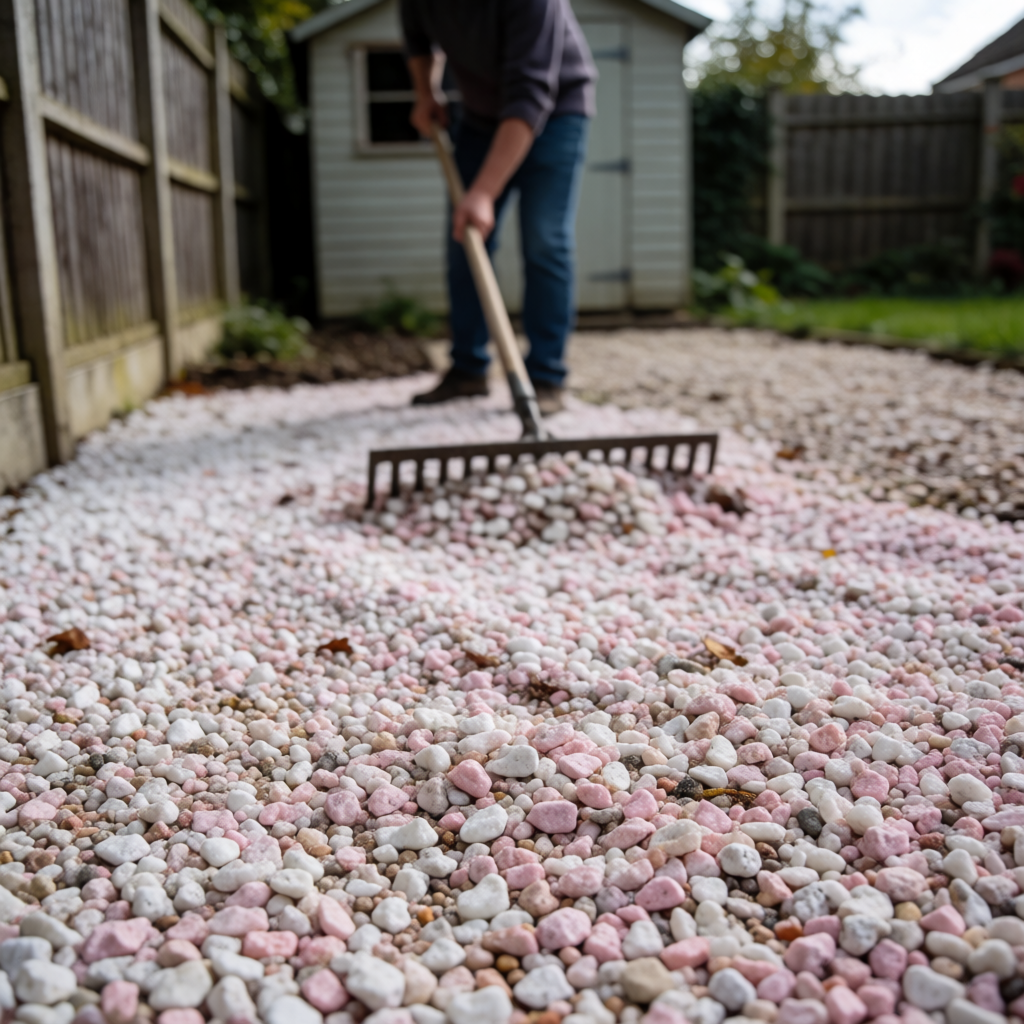
Ever found yourself staring at a half-finished garden bed, wondering why the decorative gravel ran out two metres (six feet) before the end? Or worse, tripping over five leftover bags you don't fancy storing until the next Jubilee? It's a classic: ordering landscaping gravel without a proper calculation is like making a casserole with no recipe—either too thin, or you’re feeding twenty. Let's put a stop to guesswork and get your garden looking sharp, without the extra trips to the merchant (or the landfill).
In this guide, you'll learn:
- How to work out exactly how much decorative gravel, stone or rock you need
- Why a proper take-off is worth its weight in, well, gravel
- Common mistakes (and how to dodge them)
- A worked example, with both metric (metres, kilograms) and imperial (feet, pounds) units
- Answers to the real questions people are asking
- The fastest way to get your answer—using our decorative gravel calculator
Why Get Your Gravel Quantity Right?
Ordering the wrong amount isn’t just a waste of money—it’s a waste of effort. Too little, and you’re left with patchy beds that look like a builder’s breakfast. Too much, and your driveway starts resembling a quarry. Plus, nobody’s ever finished a job and said, “I wish I’d lugged more bags of stone home for no reason.”
So, let’s get it right first time. Here’s the bit most people get wrong: decorative gravel, stone, and rock aren’t all the same size or shape, so their coverage per bag or tonne (or ton, for our American friends) varies. And the thickness you lay it—crucial. Treating all gravels like they’re peas in a pod is the fast track to disappointment.
The Basic Formula for Decorative Gravel Coverage
Let’s keep it simple. Decorative gravel (or stone, or rock) is usually sold by weight (kilograms/pounds/tonnes/tons) or volume (litres/cubic feet/cubic yards). But you need to cover an area—so how do you translate that?
Here’s the step-by-step:
- Measure your area in square metres (m²) or square feet (ft²)
- Decide on depth (how thick you want the gravel)—usually 40–50mm (1.5–2in) for most decorative applications
- Multiply area by depth to get the cubic volume needed (in m³ or ft³)
- Convert cubic volume to weight, based on the gravel’s density (usually 1,600kg/m³ or 100lb/ft³ as a rough average, but always check your supplier’s figure)
This is exactly what our decorative gravel calculator does for you—no faffing about with pen and paper, and it handles both metric and imperial units.
Worked Example: How Much Decorative Gravel for a Garden Path?
Let’s break it down with real numbers, both metric and imperial (because nobody likes switching between metres and feet in their head).
Scenario: You want to cover a path 5m by 1m (16ft by 3ft), with a 50mm (2in) layer of gravel.
Step 1: Area
- 5m x 1m = 5m² (16ft x 3ft = 48ft²)
Step 2: Depth
- 50mm = 0.05m (2in = 0.167ft)
Step 3: Volume
- 5m² x 0.05m = 0.25m³
- 48ft² x 0.167ft = 8ft³
Step 4: Weight (using average 1,600kg/m³ or 100lb/ft³)
- 0.25m³ x 1,600kg = 400kg
- 8ft³ x 100lb = 800lb
So, for that path, you’d need about 400kg (880lb) of decorative gravel. Now, if your supplier sells in 25kg (55lb) bags, that’s 16 bags. Or if you’re buying bulk, that’s 0.4 tonnes (0.44 tons). See how a quick calculation saves a lot of back-and-forth?
And if maths isn’t your cup of tea, the decorative gravel calculator will crunch the numbers for you—just plug in your area and depth, pick your units, and you’re sorted.
Pro Tips: Wastage, Supplier Differences & Coverage Myths
Bet the merchant never told you this: always add 10% for wastage. It’s the spare teabags principle—you’ll thank yourself when you hit an awkward edge or drop a bag. And don’t assume every gravel covers the same area—sizes, shapes and densities vary. Chunky decorative rock takes up more space than fine pea gravel (sometimes called pea shingle or chippings in the UK).
And while you’re at it, buy in the units your supplier uses. Mixing up bags, tonnes, cubic yards and litres is like measuring your height in inches and your shoes in millimetres—chaos.
Table: Typical Decorative Gravel Coverage
Here’s a quick cheat sheet for a 50mm (2in) depth:
| Bag Size | Area Covered (approx) | Area Covered (approx) |
|---|---|---|
| 25kg (55lb) | 0.33m² | 3.6ft² |
| 850kg (1,870lb) bulk | 11m² | 118ft² |
| 1 US ton (2,000lb) | 12.5m² | 135ft² |
Always check your supplier’s spec—the above are averages, not gospel.
Want to skip the guesswork? Punch in your sizes into the decorative gravel calculator and it’ll spit out how many bags or bulk loads you need, in whichever units you fancy.
Questions People Are Actually Asking
How much decorative gravel do I need?
To figure out how much decorative gravel (or stone/rock) you need, measure your area (length x width), decide on your depth (usually 40–50mm or 1.5–2in), and use a calculator like our decorative gravel calculator to get the exact weight or volume. Don’t forget to add 10% for wastage.
How much decorative gravel for a garden bed or path?
For most garden beds and paths, a 50mm (2in) depth is standard. Measure your area, multiply by the depth, and convert to weight—see the worked example above, or use the calculator for a shortcut.
How much decorative stone do I need for landscaping?
The process is the same for decorative stone as it is for gravel—work out your area and depth, then convert to weight or volume. Some larger stones (like river rock) may need a slightly deeper layer for full coverage—60mm (2.5in) isn’t uncommon.
How much does decorative rock cost?
Prices vary wildly, depending on type, quality, and region. Bulk decorative gravel or stone is typically cheaper per tonne (or ton) than buying small bags. Always check local prices, but expect to pay more for rare colours or polished/rounded decorative stones.
How much is landscaping gravel?
Landscaping gravel is usually sold by the tonne (metric) or the ton (US/imperial), and prices depend on the type, supplier, and delivery. It’s best to check direct with your local merchant or supplier, as prices can change with fuel costs and quarry location.
How much decorative gravel do I need calculator?
Just use our decorative gravel calculator—it handles both metric and imperial units, and works for gravel, stone, chippings, and decorative rock. Enter your area and depth, and you’ll get the quantity you need in bags, tonnes/tons, or cubic yards/metres.
How much decorative rock for a driveway?
Driveways usually need a thicker layer—at least 75mm (3in) is common. Measure your length and width, multiply by 0.075m (or 0.25ft), and convert to weight. The calculator can do this for you, just select the right depth.
Conclusion: Save Time, Money, and Your Back
There you have it—no more wild guesses, no more excess bags cluttering the shed. Use the formulas above for a quick estimate, or let the decorative gravel calculator do the heavy lifting (well, the maths anyway). Your garden—and your wallet—will thank you.
Free tools to put this into practice
Reading is one thing — working out your own numbers is what saves time and money. Here are the free HowMuchDoINeed calculators that pair best with this guide:
- Decorative Gravel Calculator Landscaping Guide — work out exactly how much you need and what it will cost.
- Xeriscape Calculator Landscaping Guide — get an instant materials estimate for your project.
- Topsoil Calculator Landscaping Guide — size up quantities and costs before you head to the merchant.
- Paver Calculator Landscaping Guide — plan your order so you avoid over- or under-buying.
Explore every free calculator on HowMuchDoINeed — no sign-up required.