Brick Calculator Walkthrough: From Wall Planning to Never Being a Brick Short Again
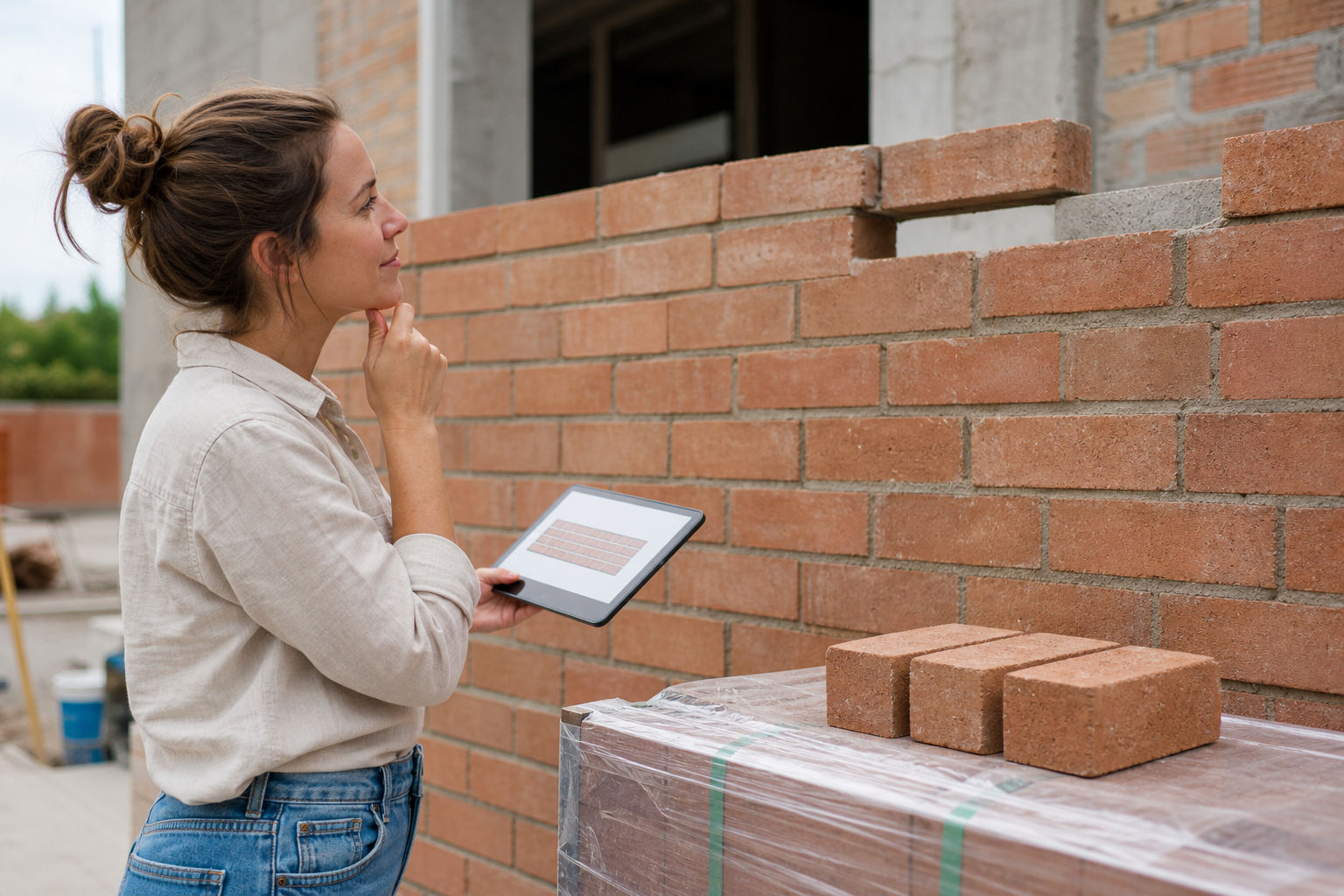
Ever found yourself staring at a half-built wall, realising you’re three bricks short and the merchant’s already shut? Yeah, we’ve all been there. That’s why a brick calculator isn’t just a fancy spreadsheet—it’s your best mate on site, saving you from mid-job runs and rookie mistakes. In this walkthrough, I’ll show you how to use a brick calculator, plan your wall properly, and never be caught short (or left with a mountain of leftovers).
Why Bother With a Brick Calculator?
Here’s the bit most people get wrong: eyeballing it. Guesswork on brick quantities is like doing your weekly shop with no list and a blindfold—you’ll forget the milk, buy too many crisps, and end up back at the shop. A brick calculator takes your wall plan and churns out an accurate order, factoring in everything from wall height to mortar joints. You’ll save time, money, and a few blushes at the builder’s yard.
The Basics: What You Need Before You Start
Before you start hammering numbers into any brick calculator, you’ll need:
- Wall dimensions (length and height) in both metres and feet (or convert as you go)
- Wall thickness (single or double skin, a.k.a. half-brick or full-brick wall)
- Size of your brick (standard metric brick: 215 x 102.5 x 65mm / 8.5 x 4 x 2.5in)
- Mortar joint thickness (usually 10mm / 3/8in)
And don’t forget to subtract door and window openings—unless you like paying for bricks you’ll never lay.
Step-by-Step: Using a Brick Calculator for Your Wall
Let’s break down the process, so you can see exactly how the numbers stack up.
1. Measure Your Wall
Say you’ve got a garden wall to build, 5m (16ft 5in) long and 1.2m (4ft) high. That’s a wall area of:
- 5m x 1.2m = 6m² (16.4ft x 4ft = 65.6ft²)
2. Work Out Your Brick Size and Type
Most UK/metric bricks are 215 x 102.5 x 65mm (8.5 x 4 x 2.5in). US bricks vary, but a common size is 194 x 92 x 57mm (7-5/8 x 3-5/8 x 2-1/4in). Don’t mix up your units—measuring the wall in metres and the bricks in inches is like trying to fit a square peg in a round hole.
3. Calculate Bricks Per Square Metre (or Foot)
With standard UK bricks (including a 10mm / 3/8in mortar joint):
- About 60 bricks per m² (5.6 per ft²) for a single (half-brick) wall
For US bricks (including mortar):
- About 7 per ft² (75 per m²) for a single wythe
4. Do the Maths
| Wall Area | Bricks per m² / ft² | Total Bricks Needed |
|---|---|---|
| 6m² | 60 | 360 |
| 65.6ft² | 7 | 459 |
Notice the numbers don’t match exactly between systems—blame the different brick sizes, not your maths.
5. Add Your Wastage Allowance
Nobody has ever finished a job saying they wish they’d bought less. Add 5–10% for wastage (the spare teabags you keep so you’re never caught short):
- 360 x 1.1 = 396 bricks (round up to 400)
- 459 x 1.1 = 505 bricks (round up to 510)
6. Subtract Openings
If you’ve got a 1m x 1m (3ft 3in x 3ft 3in) window, that’s 1m² (10.8ft²) less:
- 6m² - 1m² = 5m² (65.6ft² - 10.8ft² = 54.8ft²)
- 5m² x 60 = 300 bricks (+10% wastage = 330 bricks)
Worked Example: Let’s Build a Wall
Let’s say you’re building a 3m x 2m (10ft x 6ft 7in) single-skin wall. Door opening of 2m x 0.8m (6ft 7in x 2ft 7in).
- Wall area: 3m x 2m = 6m² (10ft x 6.7ft = 67ft²)
- Door area: 2m x 0.8m = 1.6m² (6.7ft x 2.7ft = 18ft²)
- Net wall area: 6m² - 1.6m² = 4.4m² (67ft² - 18ft² = 49ft²)
- Bricks needed: 4.4m² x 60 = 264 (+10% = 290)
So, you’ll need about 290 bricks (metric), or if you’re working in imperial, 49ft² x 7 = 343 (+10% = 377). Always check your brick size and local brick calculator—those numbers can move a bit depending on your region.
Top Tips for Accurate Brick Estimates
- Always double-check the brick size (UK, US and Australia all use different standards).
- Never forget the mortar joint—it’s the difference between a tight fit and a wall that looks like a teenager’s teeth.
- Add wastage for breakages, cuts, and the odd brick that somehow vanishes between the yard and the site.
- If you’re not sure, overestimate slightly—bricks don’t go off, and a few left over won’t hurt.
Questions people are actually asking
How much do bricks cost?
Brick prices vary massively depending on country, type (common, facing, engineering), and whether you’re buying by the brick or the pallet. As a ballpark, bricks can range from pennies to a few dollars each. Always get a quote from your local supplier.
How many bricks do I need for my wall?
Multiply your wall’s area (length x height) and use the bricks per square metre (60 for UK metric, 7 per ft² for US standard) as shown above. Don’t forget wastage and to subtract openings.
How much does a brick weigh?
A standard UK clay brick weighs about 2.2kg (4.85lb). US bricks are a bit lighter, at roughly 2kg (4.4lb). Concrete bricks tend to be heavier.
How many bricks are on a pallet?
A typical pallet holds 500 bricks (UK) or up to 525 (US), but always check with your supplier—in Australia and NZ, pallets can be smaller (generally 400–500).
How much does a brick wall cost to build?
Costs depend on brick price, labour, mortar, and site prep. Materials alone are usually a fraction of the total. For a rough guide, check local rates for bricklayers and materials—don’t forget to factor in VAT/GST or sales tax.
How much brick is in a cube?
In the US, a “cube” of bricks is a pallet load, usually around 500 bricks (enough for about 70ft² / 6.5m² of single-skin wall). UK merchants talk in pallets, not cubes, but it’s roughly equivalent.
How much do bricklayers make?
Rates vary by country and experience. In the UK, bricklayers might earn £150–£250 per day; in the US, $20–$40 per hour. These are typical ballpark figures, not guarantees.
Wrapping Up—and Avoiding Rookie Mistakes
Getting your brick estimate right is the difference between a wall that goes up smoothly and a job that grinds to a halt when you’re a dozen bricks short. Use a brick calculator before you order, double-check your measurements, and always allow for a bit of wastage. It’s quicker than a second run to the merchant—and a lot less embarrassing.
Ready to get your numbers? Grab a brick calculator and take the guesswork out of your next wall build.
Free tools to put this into practice
Reading is one thing — working out your own numbers is what saves time and money. Here are the free HowMuchDoINeed calculators that pair best with this guide:
- Brick Calculator Vs Manual Method Accuracy For Uk Walls — work out exactly how much you need and what it will cost.
- Partition Wall Material Calculator Stud Wall Estimator — get an instant materials estimate for your project.
- Brick Quantity Calculator Guide — size up quantities and costs before you head to the merchant.
- Brick Calculator — plan your order so you avoid over- or under-buying.
Explore every free calculator on HowMuchDoINeed — no sign-up required.