
Brick Calculator vs Manual Method: Which One Actually Gets Your Wall Right?
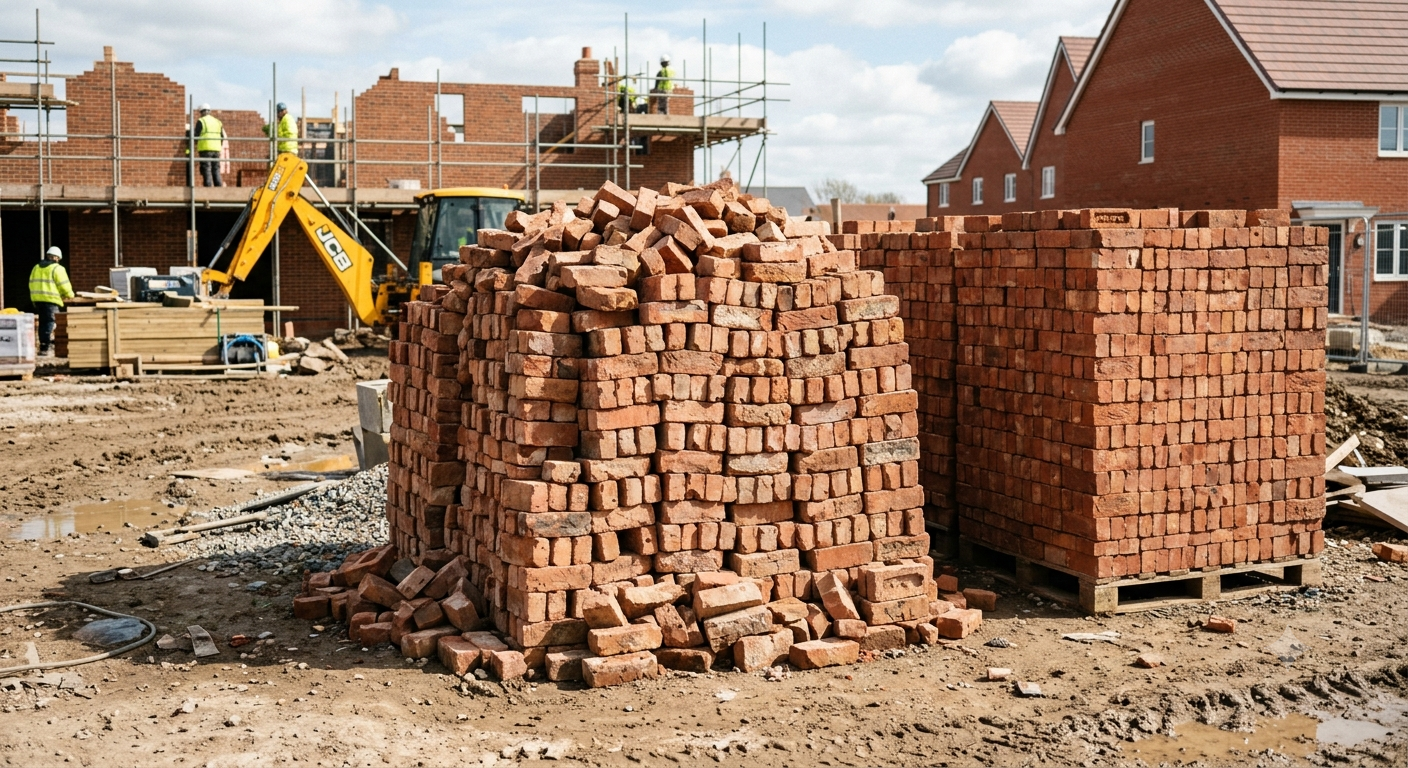
Ever found yourself halfway through a wall, staring at a sad pile of leftover bricks, wondering where your maths went wrong? Or worse, scraping around for three more bricks to finish a job because your 'guesstimate' turned out to be pure fiction? This guide will help you decide whether to trust a brick calculator or stick with the manual method when figuring out how many bricks you need for your UK (or global) walls. Spoiler: one method is like using a shopping list, the other is like shopping hungry with no list and a blindfold.
Brick Calculators: The Power Tool for Your Maths
Let’s start with the brick calculator. It’s the online tool that does all the sums for you—no battered notepad, no scribbled numbers, no dodgy mental arithmetic after a long day. Pop in your wall dimensions, choose your brick size, add your mortar joint thickness, and it’ll spit out exactly how many bricks you’ll need. It’ll even factor in wastage if you ask nicely (usually 5–10%—the spare teabags of the building world).
Why use a brick calculator?
- Speed. It’s fast. Enter numbers, get answers. Like a microwave for your take-off.
- Accuracy. It does all the conversions for you—no mixing up metres, feet, inches, and ending up with a garden wall fit for a doll’s house.
- Consistency. If you’re pricing several jobs, you’ll get the same method every time.
- Wastage included. No more forgetting to add a margin for breakages, mishaps, or the odd brick that gets turned into a doorstop.
But—here’s the bit most people get wrong—a calculator is only as good as the info you feed it. Enter the wrong dimensions, brick size, or forget the mortar joint, and you’ll still be making that embarrassing second trip to the merchant.
Manual Method: Old School, Still Kicking
Now, don’t get me wrong—manual take-offs are still around for a reason. If you’re the type who likes to double-check the numbers (or you just don’t trust the internet not to round up your order to a whole lorry-load), the manual method is your friend. Here’s how it typically works:
- Measure your wall’s area. Length x height (in metres or feet).
- Work out the area of a single brick (including mortar joint). For a standard UK brick, that’s 215mm x 65mm (8.5in x 2.5in) plus, say, a 10mm (3/8in) mortar joint.
- Divide the wall area by the brick area.
- Add wastage. Never skip this step, unless you like playing brick Jenga at the end of the job.
Worked Example: Manual Calculation (Metric & Imperial)
Let’s say you want to build a single-skin garden wall that’s 6m (20ft) long and 1.2m (4ft) high.
- Wall area: 6m x 1.2m = 7.2m² (20ft x 4ft = 80ft²)
- Standard brick size (with mortar): 225mm x 75mm (9in x 3in)
- Area per brick: 0.225m x 0.075m = 0.0169m² (9in x 3in = 27in²)
- Bricks per m²: 1 ÷ 0.0169 ≈ 59 bricks (1ft² ÷ 0.1875 ≈ 5.33 bricks per ft²)
- Total bricks (before wastage):
- 7.2m² x 59 = 425 bricks (80ft² x 5.33 = 426 bricks)
- Add 10% wastage: 425 x 1.10 ≈ 468 bricks (426 x 1.10 ≈ 469 bricks)
So, you need about 468–469 bricks for this wall. Whether you use metric or imperial, the numbers come out frighteningly close. That’s the power of doing both.
Which Method Wins for UK Walls?
Here’s the honest answer: both methods will get you there if you’re diligent. But the calculator is like having a mate who’s done it a thousand times and never forgets their tape measure. The manual method is great if you want to check the sums or your wall’s a weird shape the calculator can’t handle.
Pros and Cons Table
| Method | Pros | Cons |
|---|---|---|
| Calculator | Fast, accurate, includes wastage, no unit headaches | Only as good as your inputs |
| Manual | Good for quirky jobs, builds confidence, no tech needed | Prone to error, slower, fiddly |
Common Pitfalls (and How to Dodge Them)
- Mixing units: Measuring your wall in metres and your bricks in inches is a classic. Like ordering fish and chips and getting sushi. Stick to one system, or use a calculator that handles both.
- Forgetting mortar joints: Bricks don’t float—always add the joint thickness. Otherwise, you’ll end up short.
- Ignoring wastage: Nobody has ever finished a wall wishing they’d bought less. Add 5–10% for breakages and offcuts.
- Not factoring in wall thickness: Double-skin walls (cavity walls) need twice as many bricks. Don’t get caught out building a house with half the bricks.
Questions People Are Actually Asking
How much do bricks cost?
Brick prices vary wildly depending on type, quality, and region. In the UK, expect to pay anywhere from £0.40–£1.00 per brick ($0.50–$1.20). Bulk deals and reclaimed bricks can be cheaper. Always check your local supplier for current prices.
How many bricks do I need?
Work out your wall area (length x height) and multiply by the number of bricks per square metre (about 60, or 5.3 per square foot for standard bricks). Don’t forget to add 5–10% for wastage. Or just use a brick calculator for fast answers.
How much does a brick weigh?
A standard clay brick usually weighs around 2.2–2.7kg (5–6lb). Some dense bricks (engineering bricks) can hit 3kg (6.6lb) or more. Multiply by your total number for delivery weight.
How many bricks are in a pallet?
Typically, a UK brick pallet holds 500 bricks. In the US, pallets usually carry 400–525 bricks, depending on size. Always check with your merchant—some pallets are smaller to keep within weight limits.
How many bricks does it take to build a house?
For a typical 3-bedroom UK house (external walls only), you’ll need about 8,000–13,000 bricks (roughly 9,000–14,000 in the US for similar sizes). This varies with design, number of storeys, and wall thickness. Always get a proper take-off before ordering.
How much brick is in a cube?
A cubic metre (35.3 cubic feet) of stacked bricks (with no gaps) contains about 500–550 standard bricks. But real walls have mortar, so the number used in construction will be less dense.
How much do bricklayers make?
Bricklayers’ pay varies by country, region, and experience. In the UK, it’s around £150–£200 per day ($200–$300), with some earning more on price work. In North America and Australia, rates differ but are generally comparable once you factor in local costs.
Conclusion: Choose Your Weapon (But Don’t Skip the Maths)
Whether you use a brick calculator or go manual, the goal is the same—order the right amount of bricks, avoid mid-job panic, and save yourself time, money, and the odd blush on site. For most jobs, the calculator is quicker and more foolproof, but don’t be afraid to check its sums by hand. Ready to start your brickwork? Grab your wall dimensions and try out a brick calculator—you’ll thank yourself when the job’s done and there’s a neat pile of leftovers (not a gaping hole).
Free tools to put this into practice
Reading is one thing — working out your own numbers is what saves time and money. Here are the free HowMuchDoINeed calculators that pair best with this guide:
- Brick Calculator — work out exactly how much you need and what it will cost.
- Choosing The Right Skip Size For Construction Diy Renovation Projects — get an instant materials estimate for your project.
- Wall Stud Calculator — size up quantities and costs before you head to the merchant.
- Partition Wall Material Calculator — plan your order so you avoid over- or under-buying.
Explore every free calculator on HowMuchDoINeed — no sign-up required.