Timber Connection Calculator: Nail Your Joins (and Your Quantities) the First Time
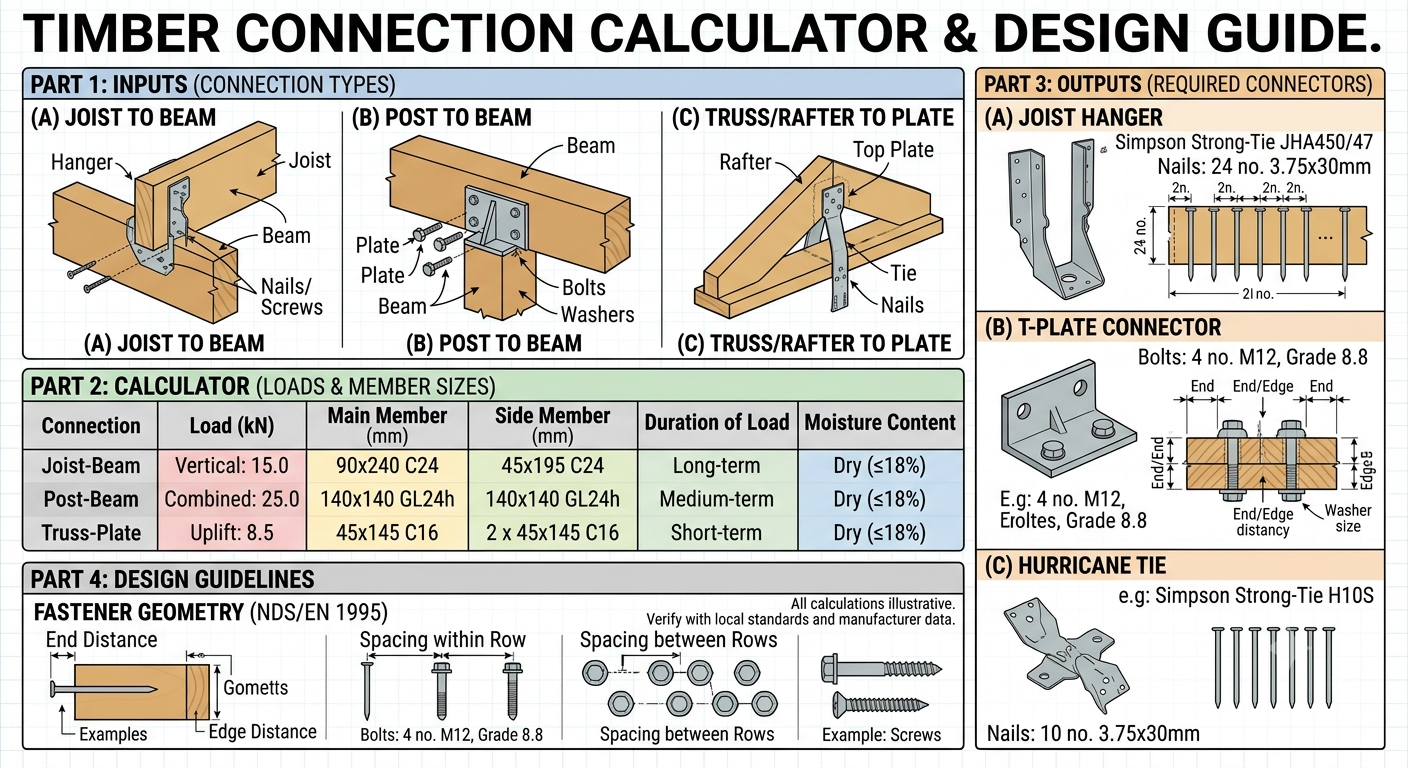
Ever measured up for a timber frame, only to realise your box of fixings is emptier than your flask at 3pm? Welcome to the world of timber connection calculators—the unsung heroes that stop you making three trips to the merchant for 'just a few more bolts'. In this guide, you’ll get the lowdown on what a timber connection calculator is, why it matters, and how to use one like a pro. Plus, we’ll walk through a worked example (both metric and imperial), dodge the classic mistakes, and answer the questions real builders and DIYers are actually asking.
What Is a Timber Connection Calculator (and Why Bother)?
Let’s be honest: Calculating timber connections by eye is about as reliable as a weather forecast from your nan. A timber connection calculator is a tool—usually an online one—that helps you work out the right number, size and type of fixings (like bolts, screws, or connector plates) you need to join pieces of timber (lumber) together safely and to code.
Think of it as your joinery shopping list, but with the maths already done. It factors in timber size, loadings, spacing, and sometimes even timber species. Get it right, and your structure stands strong. Get it wrong, and you’re building a wobbly wardrobe with the structural integrity of a soggy biscuit.
Why Timber Connections Matter (More Than You Think)
Timber connections are the unsung heroes holding everything from decking (deck) frames to roof trusses together. Skimp on the right number or type of connectors, and you’re inviting squeaks, splits, or the kind of collapse that ends up on a viral DIY fail video. Overdo it, and you’re burning through your budget faster than a kettle in a builder's hut.
A timber connection calculator takes out the guesswork. It makes sure your fixings match your timber, your loads, and your local standards—whether you're working in millimetres or inches, kilograms or pounds, eurocodes or American codes.
What Goes Into a Timber Connection Calculator?
Here’s the bit most people get wrong: It’s not just about the number of screws. Most calculators will want the following:
- Timber (lumber) size: width, thickness, and length in mm and inches
- Type of joint: lap, butt, mortise and tenon, etc.
- Load or force: how much weight is going through the joint (in kg/lb or N)
- Timber species or grade (softwood vs hardwood, C16, C24, etc.)
- Type and size of connector: screw, bolt, plate, dowel, etc.
Throw these into the calculator, and out comes the magic: the right number, spacing, and type of fixings to keep everything tight as a drum.
Worked Example: Using a Timber Connection Calculator
Let’s say you’re building a simple deck (patio) frame. You need to join a 2.4m x 150mm x 50mm (8ft x 6in x 2in) joist to a beam. You expect a load of 250kg (550lb) at each joint. You’re using softwood (C24 grade) and want to use M12 bolts (½in bolts).
- Input Timber Size:
- 150mm x 50mm (6in x 2in)
- Choose the Joint Type:
- Let's say a simple lap joint.
- Enter the Load:
- 250kg (550lb)
- Select Connector:
- M12 bolts (½in bolts), galvanised for outdoor use.
Calculator Suggests:
- Use 2 M12 bolts (½in) per joint, spaced at least 75mm (3in) apart vertically, and 50mm (2in) from any edge.
- Add washers to prevent the bolt heads from crushing the timber.
Total for 10 joints:
- 20 M12 bolts (½in), 20 washers, 20 nuts.
Add a 10% wastage allowance (the spare teabags of the fixings world—never be caught short):
- 22 bolts, 22 washers, 22 nuts.
Result: You buy one box, not two, and you don’t end up with a bag of random leftovers that live in your van until the end of time.
Types of Timber Connections (and the Fixings You’ll Need)
| Joint Type | Common Fixings | Typical Use Case |
|---|---|---|
| Butt joint | Screws, bolts | Basic frames, stud walls |
| Lap joint | Bolts, connector plates | Decks, trusses, fencing |
| Mortise & tenon | Dowels, glue, pins | Traditional joinery, furniture |
| Dovetail | Wood glue, mechanical pins | Drawers, cabinetry |
| Notched/halved | Bolts, screws, plates | Heavy timber structures |
Each method has its champions (and its headaches). The calculator helps you match the right fixing to the right job—because using drywall screws in a load-bearing joint is like using Blu Tack to hang a door.
How to Avoid Classic Timber Connection Blunders
- Mismatched Units: Measuring timber in metres (feet) but buying bolts by the inch (mm) is the DIY equivalent of putting your shoes on the wrong feet. Double-check every measurement.
- No Allowance for Wastage: Always add 10% for lost, bent or dropped fixings (and for the one you’ll inevitably drop through the decking gap).
- Underestimating Loads: If in doubt, round up. Nobody ever regretted a stronger joint.
- Ignoring Timber Type: Softwood and hardwood have wildly different holding strengths. Don’t treat pine like oak.
- Forgetting Code Requirements: Always check your local building regs—especially for structural work.
Questions People Are Actually Asking
How much is timber?
Timber (lumber) prices change faster than a weathered spirit level. As of now, expect basic softwood carcassing to range from £2-£5 per metre (£0.60–£1.50 per foot) in the UK, and $3–$7 per 8ft (2.4m) length in North America. Prices rocket for hardwoods, treated, or premium grades. Always check with your local merchant for up-to-date rates—and factor in wastage!
How many tons of timber per acre?
For standing timber in a woodland, the yield can vary wildly depending on species, spacing and age. As a rule of thumb: a managed UK woodland might yield around 20–40 tonnes per acre (45–90 US tons per acre), but that's fresh-cut (green) weight. US and Canadian forests can range from 25–100 US tons per acre. For cut, dried, commercial timber, expect much less per acre—always ask your local forestry service for specifics.
How to joint timber?
The right way depends on your project. For framing (walls, decks), use butt or lap joints with screws, bolts or connector plates. For fine joinery (furniture), mortise and tenon or dovetail joints with glue and pins are classic. Always match the joint to the load and the tools you have—nobody expects a full dovetail on a garden fence post. If in doubt, search for a timber connection calculator to check fixings for your joint type.
How to use timber connectors?
Timber connectors (like split rings, shear plates, or proprietary plates) are designed to boost the load capacity of a joint. Mark out your fixing positions, drill pilot holes if needed, and tap or bolt the connector into place as per the manufacturer’s instructions. For heavy jobs, a timber connection calculator can tell you exactly how many connectors, of what type and size, you’ll need for each joint.
How to use timber connector plates?
Connector plates (metal plates with teeth or holes) are pressed or screwed onto the joint. For trusses and beams, lay the plate over the joint, hammer or press it in, then drive in screws or bolts as specified. Always follow the plate manufacturer’s guidance for minimum edge distances and number of fixings—guessing here is like playing Jenga with your workshop roof.
Do I need to use washers with bolts in timber?
Short answer: yes, almost always. Washers spread the load of the bolt head or nut, stopping it from biting into the timber (lumber) and weakening the joint. Use a washer under both the head and the nut for every bolt in a structural connection.
What size bolts should I use for timber framing?
For most deck, pergola or shed frames, M10 or M12 bolts (3/8in or ½in) are standard. Length should be at least 10mm (½in) longer than the timber thickness to allow for the nut and washer. For bigger jobs (like glulam beams), go up in size and always check with a timber connection calculator or engineer.
Conclusion
Timber connection calculators are your shortcut to stronger, safer, and less stressful builds. They help you order the right fixings, avoid the classic mistakes, and keep your timber joins tight—whether you’re working in metric or imperial, screws or bolts, or building a garden deck or a new house frame. Before you start your next project, save yourself a headache and use a timber connection calculator. Your joints (and your wallet) will thank you.
Free tools to put this into practice
Reading is one thing — working out your own numbers is what saves time and money. Here are the free HowMuchDoINeed calculators that pair best with this guide:
- Timber Fastener Spacing Calculator — work out exactly how much you need and what it will cost.
- Timber Connection Basics Types Strengths Spacing Tips — get an instant materials estimate for your project.
- Calculate Timber Fastener Spacing — size up quantities and costs before you head to the merchant.
- Timber Fastener Spacing Calculator — plan your order so you avoid over- or under-buying.
Explore every free calculator on HowMuchDoINeed — no sign-up required.