
Timber Fastener Spacing Calculator: Stop Guessing and Start Fixing It Right
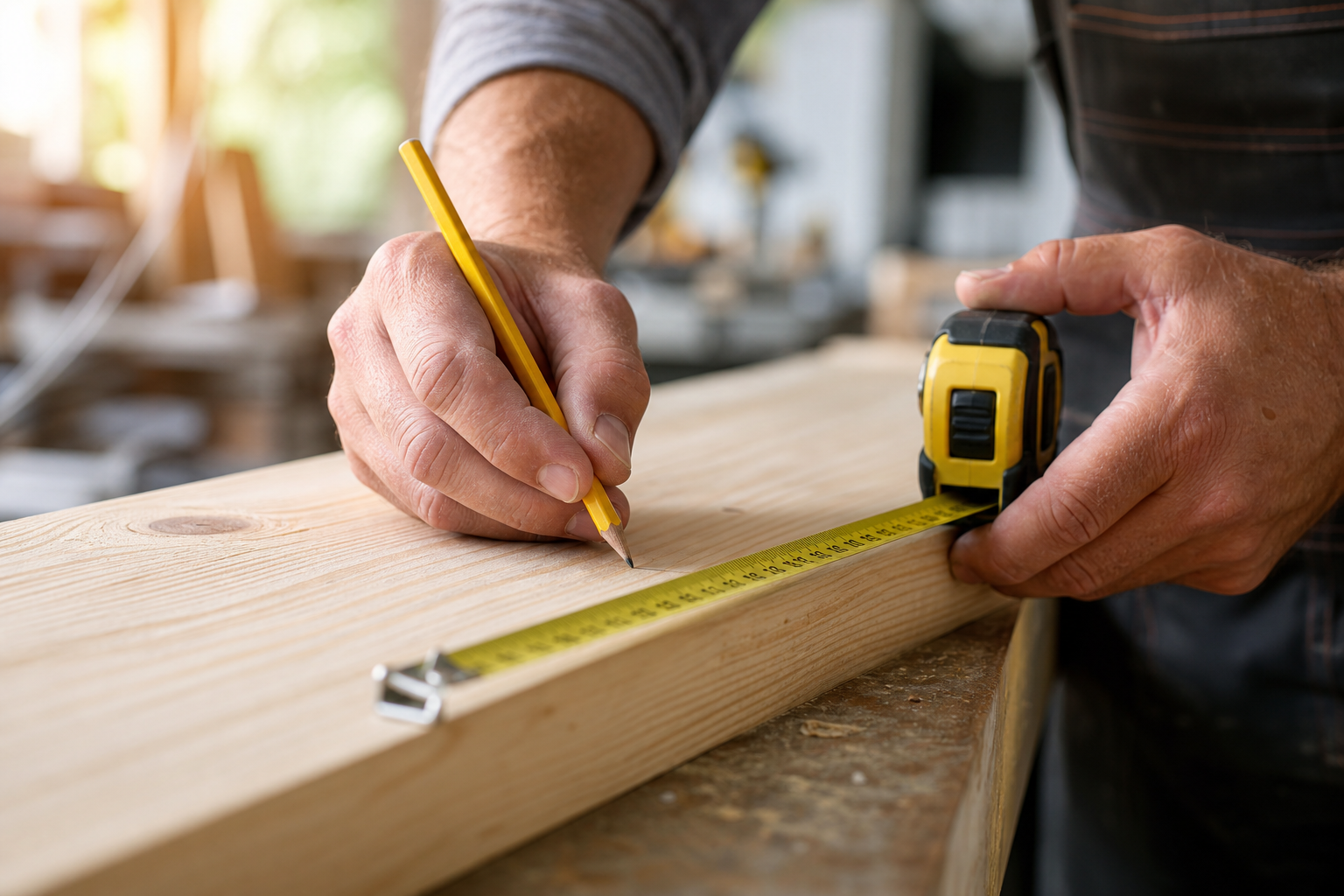
Deck, wall frame, or joist repair — it doesn't matter what you're building. Get your timber fastener spacing wrong and you're either splitting the wood or watching it sag six months later. Neither's a good look. This guide walks you through the principles, the maths, and the common mistakes — plus a handy timber fastener spacing calculator to take the legwork out of it entirely.
Why Timber Fastener Spacing Actually Matters
Here's the thing people don't always appreciate: too many fasteners is just as bad as too few. Pack them in too tight and you're weakening the wood. Space them out too much and you haven't got enough support. It's like trying to carry a long plank with one hand — technically possible, practically disastrous.
Correct fastener spacing keeps your timber structurally sound and stops problems like splitting, warping, and sagging before they start. Building codes and best practice guidelines exist for a reason, and following them is what separates a job that lasts from one you're redoing in three years.
What Affects Fastener Spacing?
Not all fixings are created equal — and neither are the gaps between them. Several factors dictate how far apart your screws, nails, or bolts should sit:
- Type of timber (softwood, hardwood, engineered wood)
- Fastener type (nail, screw, bolt)
- Structural load (floor, wall, roof, deck, etc.)
- Timber size and thickness
- Environmental conditions (indoor/outdoor, exposure to moisture)
- Building codes or local standards
Always check the relevant standards for your country — UK's BS 5268, the US's NDS, or Australia's AS 1684. These aren't optional reading.
Timber Fastener Spacing Calculator: Save Time & Avoid Mistakes
Want to skip the back-of-envelope arithmetic? Our timber fastener spacing calculator does the heavy lifting for you. Punch in your timber dimensions, fastener type, and load requirements, and it spits out a clear fixing layout. Think of it as the site foreman who never gets the numbers wrong.
Common Timber Fastener Spacing Guidelines
Here are some general guidelines to work from — but always verify against your local codes before you start drilling.
| Application | Typical Spacing (mm) | Typical Spacing (in) | Notes |
|---|---|---|---|
| Decking boards (screws) | 400 - 600 | 16 - 24 | Along joists |
| Floor joists (nails) | 450 - 600 | 18 - 24 | At each support |
| Wall studs (screws) | 600 | 24 | Edge of sheathing |
| Timber to timber (bolts) | 100 - 150 | 4 - 6 | Edge distance, not spacing |
Tip: Edge distance — the gap from the fastener to the edge of the timber — is just as important as the spacing between fasteners. Too close to the edge and you're asking for a split.
Worked Example: Calculating Timber Fastener Spacing
Right, let's put some numbers to it. Same scenario, both metric and imperial — because not everyone's converted yet and that's fine.
Scenario
- You're installing 38mm x 150mm (1.5" x 6") softwood decking boards onto joists.
- You're using screws to fix each board.
- The recommended screw spacing for decking is 400mm (16") along each joist.
Metric Calculation
- Length of board: 2.4 metres (2400mm)
- Spacing: 400mm between screws
- Number of screws per board: 2400mm / 400mm = 6
Six screws per board, evenly spaced at 400mm intervals. Simple as that.
Imperial Calculation
- Length of board: 8 feet (96 inches)
- Spacing: 16 inches
- Number of screws per board: 96 in / 16 in = 6
Same answer: 6 screws per board, one every 16 inches. The maths doesn't care which system you use.
Use the timber fastener spacing calculator to run these numbers for any board size or fastener type in seconds.
Tips for Accurate Fastener Placement
Knowing the spacing is one thing. Hitting it consistently on site is another. Here's how to keep it tight:
- Mark out spacing before drilling or nailing — tape measure and pencil, every time.
- Pre-drill holes in hardwoods to prevent splitting. Skipping this step is the carpentry equivalent of not reading the instructions.
- Stagger fasteners on adjacent boards for extra strength.
- Check code requirements for load-bearing structures — no guessing on the structural stuff.
Questions People Are Actually Asking
How do I calculate bolt spacing in timber?
Bolt spacing depends on the timber size, load, and type of joint. As a rule of thumb, bolts should be spaced at least 4 times the bolt diameter apart (centre to centre), and at least 6–7 times the diameter from the timber end. For precise results, run it through the timber fastener spacing calculator and cross-check with your local building codes.
What is the minimum distance between timber fasteners?
Generally, you're looking at 2.5 to 4 times the fastener diameter, centre to centre. Go tighter than that and you're inviting splits and uneven load distribution. Always check the manufacturer's recommendations and the building standards for your country — they exist for good reason.
How far from the edge should a timber fastener be?
For softwood, keep fasteners at least 35–50mm (1.5–2") from the edge. Hardwoods need a touch more breathing room. The closer you get to the edge, the more likely you are to split the timber — particularly with screws or bolts.
Does fastener spacing change for hardwood vs softwood?
Yes. Hardwoods are less prone to splitting but may need slightly greater edge distances or pre-drilling for larger fasteners. Softwoods are more vulnerable to splitting, so spacing and edge distances matter even more. Don't treat them the same — they're not.
Can I use nails instead of screws or bolts for structural timber?
Nails work fine for plenty of timber connections, but screws and bolts offer greater holding power and are often required for structural joints — particularly outdoors or in load-bearing situations. Follow code recommendations and, where in doubt, take an engineer's advice over a YouTube comment.
How do I avoid timber splitting when fixing fasteners?
Stick to the correct spacing, pre-drill pilot holes (especially in hardwood), don't over-tighten, and keep well clear of timber edges and ends. Four habits that'll save you a lot of cracked boards.
Are there differences in spacing for exterior vs interior timber work?
Yes — exterior timber moves more because of moisture and temperature swings. That typically means closer fastener spacing and corrosion-resistant fixings as standard. Interior work is more forgiving, but don't use that as an excuse to get sloppy.
Conclusion
Correct timber fastener spacing is the difference between a structure that stands proud and one that quietly fails over time. Get the principles right, use a dedicated timber fastener spacing calculator to nail the numbers, and you'll sidestep the most common pitfalls before they cost you time or timber. Every joint solid, every fixing placed with purpose — that's the standard worth hitting.
Free Tools to Put This into Practice
Reading is one thing — working out your own numbers is what saves time and money. Here are the free HowMuchDoINeed calculators that pair best with this guide:
- Timber Fastener Spacing Calculator — work out exactly how much you need and what it will cost.
- Stud Spacing Calculator — work out exactly how much you need and what it will cost.
- Fence Post Spacing Calculator — work out exactly how much you need and what it will cost.
- Baluster Spacing Calculator — work out exactly how much you need and what it will cost.
Explore every free calculator on HowMuchDoINeed — no sign-up required.