Sod/turf Calculator: Nail Your Turf Order and Stop Paying for Leftovers (or Running Short!)
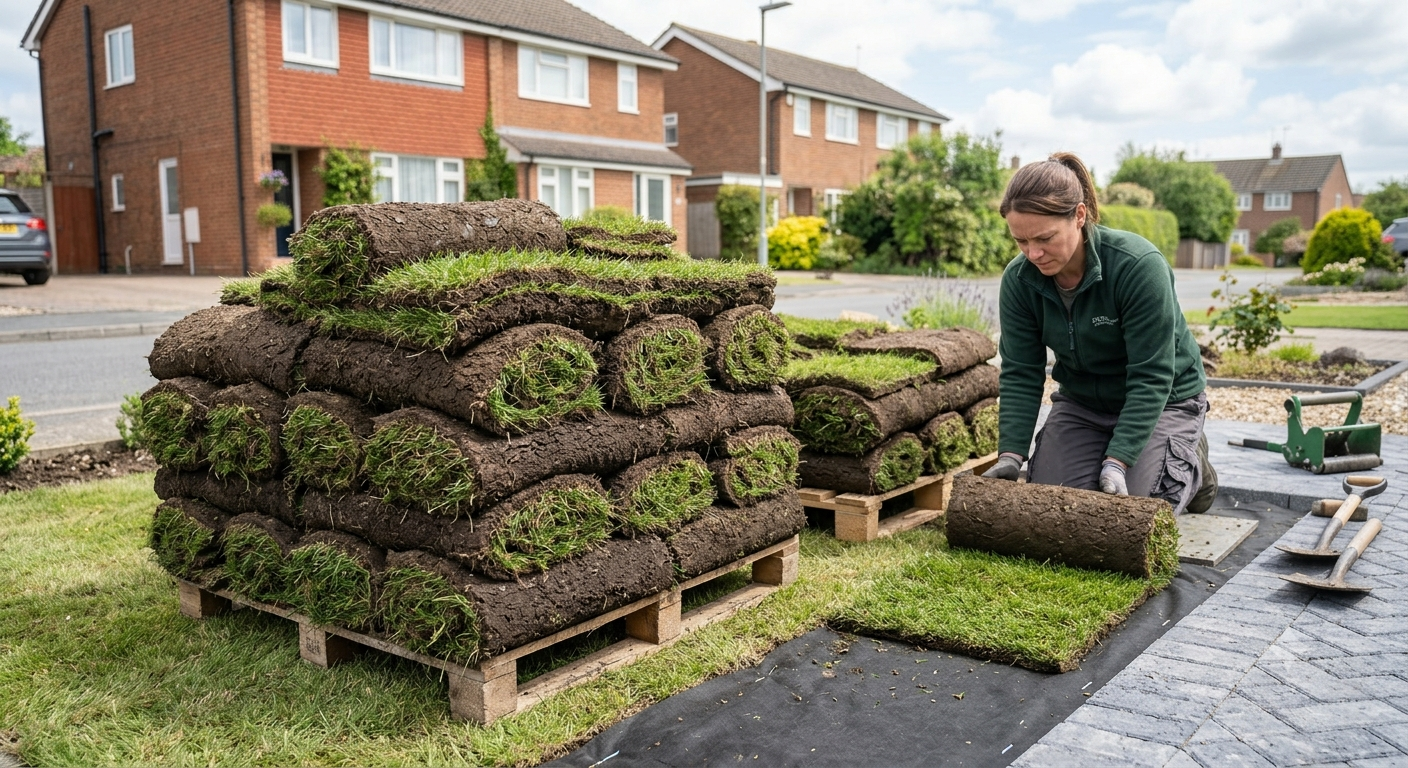
Ever found yourself with a patchy lawn because you underestimated your turf order? Or worse, lugged home twice as much sod as you needed? Sorting out your lawn shouldn't feel like a guessing game at the garden centre. Get it right, and it's instant curb appeal (or kerb appeal, depending where you live). Get it wrong, and you're either staring at a muddy bald spot or hosting a stack of leftover turf rolls that nobody wants. This is where a proper sod calculator comes in — and it beats pacing about with a tape measure and a notepad any day.
Why You Need a Sod Calculator (Even If You Think You're Good at Maths)
Here's the bit most people get wrong: eyeballing the garden and 'rounding up' isn't just a bit cowboy — it's a fast track to over-ordering (wasted cash) or under-ordering (wasted time and a mismatched lawn). Using a sod calculator means:
- No more guesswork (or maths-induced headaches)
- You'll buy just the right amount
- You can convert easily between square metres (m²) and square feet (ft²)
- You'll have a tidy allowance for offcuts and fiddly bits
Trying to lay sod without a plan is like baking a cake with no recipe and hoping it rises. Spoiler: it rarely does.
How to Measure Your Lawn for Sod — Metric and Imperial, No Nonsense
Step one: get your tape measure (or a long bit of string and a ruler if you're feeling old school). You want to measure the length and width of each area where you'll lay sod. If your lawn is a perfect rectangle, it's as easy as:
Area = length × width
For the UK, Australia, and most of the world, you'll measure in metres. For the US, Canada, and those who favour feet, same deal — just swap units.
- Example:
- Length: 8m (26ft)
- Width: 5m (16.4ft)
| Measurement | Metric (metres) | Imperial (feet) |
|---|---|---|
| Length | 8m | 26ft |
| Width | 5m | 16.4ft |
| Area | 40m² | 427.8ft² |
Other Shapes You'll Encounter
Not everyone has a bowling-green-perfect rectangle. Here's how to handle other common lawn shapes:
- Circles: Area = π × (radius)² (where π ≈ 3.14)
- Triangles: Area = (base × height) / 2
- Odd shapes: Break them into simple rectangles, circles, or triangles, measure each, then add them up
| Shape | Formula | Example (metric) | Example (imperial) |
|---|---|---|---|
| Rectangle | Length × Width | 8m × 5m = 40m² | 26ft × 16ft = 416ft² |
| Circle | π × (Radius)² | π × (2.5m)² = 19.6m² | π × (8ft)² = 201ft² |
Pro tip: If your garden is a weird shape (think L-shaped, or lots of beds), split it into simple rectangles or triangles. Add up the areas for each section. The sod calculator can handle these numbers for you — just punch them in, section by section.
Don't Forget Your Wastage Allowance (This Isn't the Place to be Stingy)
Nobody has ever finished a lawn project and said, "I wish I'd ordered less turf". Why? Because offcuts, curves, and odd corners swallow up more than you think. That's why you add a bit extra — call it your 'spare teabags' stash so you're never caught short.
- Standard wastage allowance: Add 5–10% to your total area.
- For easy, square lawns: 5% is usually enough.
- For curvy, awkward, or multi-section lawns: go for 10% (trust me, you'll thank yourself).
Worked Example:
- Total area: 40m² (427.8ft²)
- Add 10% wastage: 40m² × 1.10 = 44m² (427.8ft² × 1.10 = 470.6ft²)
So you'd order 44m² (470.6ft²) of turf. If the turf is sold in rolls of 1m² (10.8ft²), you'd want 44 rolls (or round up to the nearest full roll).
How Sod Is Sold: Rolls, Pallets and the "What Do I Actually Order?" Question
Bet the merchant never told you this: turf is rarely sold in the exact amount you need. Instead, you'll see it as:
- Rolls: Usually 1m² (10.8ft²) or 2ft × 5ft (10ft²) per roll
- Pallets: Often 50m² (538ft²) or 60m² (646ft²) per pallet
Don't mix your units up. Measuring your garden in feet and ordering turf in metres is like buying petrol by the gallon for a car that drinks litres. The sod calculator sorts this out automatically — just choose the units you're working with and let it do the heavy lifting.
Common Sod (Turf) Roll Sizes (UK & US)
| Country/Region | Typical Roll Size |
|---|---|
| UK/Europe | 1m × 0.6m = 0.6m² (2ft × 3ft = 6ft²) |
| US/Canada | 2ft × 5ft = 10ft² (0.6m × 1.5m = 0.9m²) |
Always check with your supplier—sizes do vary. If in doubt, enter your area and roll size into the sod calculator to get the right order first time.
Step-by-Step: Using the Sod Calculator Like a Pro
- Measure each lawn section (length × width)
- Note down each area in either m² or ft²
- Add the numbers up for a total area
- Pop the total into our sod calculator — select your preferred units
- Add 5–10% for wastage if you're ordering yourself
- The calculator spits out the number of rolls or pallets you need — job done!
Top Tips for Sod Laying (From Someone Who's Made the Mistakes)
- Order all your sod at once. Mixing batches is like painting your lounge with two different tins—subtle, but you'll always notice.
- Lay sod as soon as it arrives. Sod left rolled up will dry out faster than your patience on a hot day.
- Prep your soil. Remove weeds, rake level, and water lightly before laying.
- Work from a straight edge. Lay your first row along a fence or path. Like wallpaper, if you start wonky, you'll stay wonky.
- Butt the rolls tightly with no gaps. Gaps are future weeds' favourite real estate.
- Stagger the joints. Offset each row like brickwork—it looks better and helps the lawn bind together.
- Water well after laying. Sod is thirstier than a teenager on a hot day. Keep it well watered for the first week.
Common Pitfalls (And How to Dodge Them)
- Forgetting odd shapes: Break tricky gardens into smaller, simple bits — don't just measure the longest and widest points and hope for the best.
- No wastage allowance: Skimp here, and you'll be patching with potting mix and a prayer.
- Mixing up m² and ft²: Always double-check what your supplier is selling. If in doubt, enter your numbers into the calculator and match the unit.
- Not measuring twice: Measure your garden like you'd measure timber for a cut — twice for accuracy, once for pride.
Questions People Are Actually Asking
How much sod do I need for my lawn?
Measure your lawn's length and width (in metres and feet). Multiply to get the area (in m² and ft²). Add 5–10% for wastage. Then use the sod calculator to work out exact rolls or pallets needed. Easy as that.
Can I lay sod straight onto soil?
You can, but it needs to be properly prepared — remove weeds, level the ground, and rake it smooth. A bit of soil conditioner never hurts. Laying sod onto compacted or uneven ground is like painting over a damp wall: you'll get away with it for about a week.
Should I order extra sod for tricky corners and curves?
Definitely. For regular-shaped lawns, 5% extra is enough. If you've got curves, beds, or paths cutting into the lawn, add 10%. Better a few spare rolls than a last-minute dash back to the merchant.
How long does sod last before I need to lay it?
Sod (turf) is perishable — it starts to deteriorate within 24–48 hours, especially in hot weather. Plan to lay it the same day it arrives, or at worst, within a day. Leaving it stacked is a bit like leaving milk out of the fridge: don't push your luck.
How do I convert between square metres and square feet for sod?
1m² = 10.764ft². If you've measured in metres but the supplier is quoting feet, multiply your number of m² by 10.764 to get ft². The sod calculator does this for you, so you don't have to juggle the calculator and a conversion chart.
What's the difference between sod and turf?
They're two words for the same thing: pre-grown grass with a bit of soil and roots attached. 'Sod' is the term in North America and Australia; 'turf' is common in the UK and Ireland. Both get you a ready-made lawn in hours, not months.
How much does sod (turf) weigh?
Weight varies by soil type, but typically a standard roll is 15–25kg (33–55lb) in the UK, or 30–40lb (13–18kg) in North America. Don't try to lift a dozen at once unless you fancy a day on the sofa with an ice pack.
How soon after laying sod can I walk on it?
Wait at least 2–3 weeks (or until the roots have knitted into the soil). Walking on new sod too soon is like jumping on a cake before it's set—messy and a bit tragic.
Wrapping Up: Get the Lawn You Actually Want
Whether you're after a football pitch, a show garden, or just a patch where the dog can roll, nailing your turf order is step one. Don't wing it. Use the right measurements, add a sensible wastage buffer, and let the sod calculator take the guesswork out of the job. Your future self (and your lawn) will thank you.
Free tools to get your lawn spot-on
Work out exactly how much turf, topsoil, or seed you need — no guesswork, no leftovers.
- Sod / Turf Calculator — calculates the exact amount of turf for any lawn shape, with a sensible allowance for offcuts.
- Topsoil Calculator — works out how much topsoil you need to prep the ground before laying your new turf.
- Grass Seed Calculator — tells you how much seed to buy if you're patching bare spots or overseeding alongside turf.
Explore every free calculator on HowMuchDoINeed — no sign-up required.
Explore every free calculator on HowMuchDoINeed — no sign-up required.