Plaster Estimator: The No-Nonsense Guide to Getting Your Quantities Spot On (and Not Running Out Halfway Up the Wall)
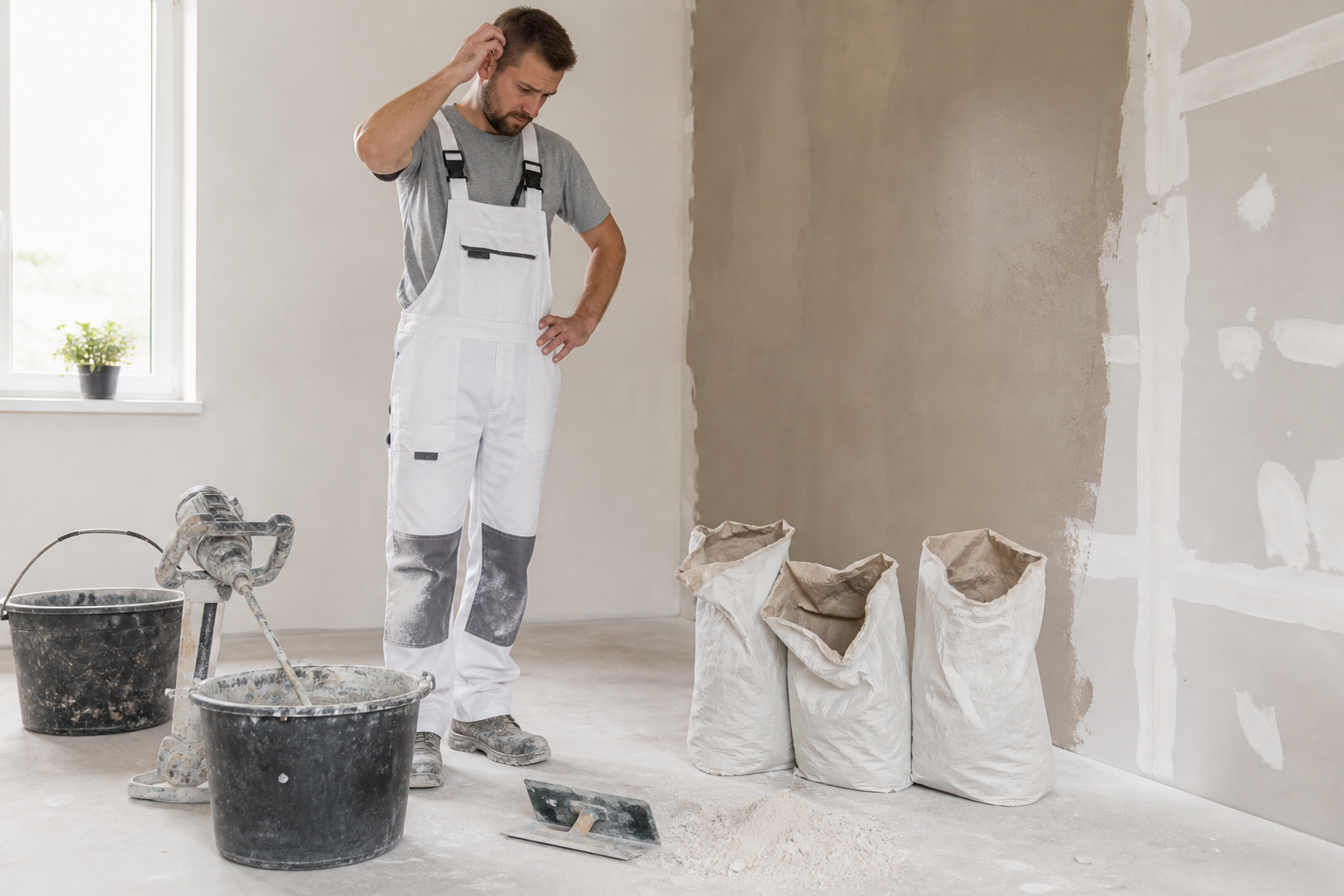
Ever stood back, proud as punch with your first coat, then realised you’re a bag or two short of finishing the job? Or worse, you’ve bought enough plaster to rebuild the Colosseum, and your garage is now a gypsum warehouse. If you’ve ever fumbled your way through plaster estimates, this is the guide for you. We’ll break down the essentials of plaster quantity calculations, show you how to use a proper plaster estimator calculator, and explain how to sidestep the classic mistakes that cost you time, money, and a few grey hairs.
Why Accurate Plaster Estimating Matters
Here’s the bit most people get wrong: plastering isn’t just slapping mud on the wall and hoping for the best. Get your numbers wrong, and you’re either rushing to the merchant mid-job (never a good look), or you’re left with a pile of unused bags, mocking you from the corner of the van. Imagine doing your weekly shop with no list and a blindfold – that’s ordering plaster without a proper take-off.
An accurate estimate saves you cash, hassle, and those awkward “back in ten minutes” moments with the client. Plus, it means you only mix what you need, so your mix isn’t sitting there going off faster than a builder’s brew in winter.
The Basics: What Affects Your Plaster Quantities?
Before you get all calculator-happy, you’ll need to know:
- The area to be plastered (in square metres/feet)
- The thickness of each coat (base + finish)
- The type of plaster (hardwall, bonding, multi-finish, etc.)
- Wastage allowance (because nobody ever finishes a job wishing they’d bought less)
Skimping on any of these is like measuring the room in feet and buying your timber in metres and hoping for the best. Don’t do it.
Metric vs. Imperial: Translating Between the Two
Whether you’re in Manchester or Minnesota, the formula is the same – just swap your metres for feet as needed. Here’s a quick translation:
- 1m² ≈ 10.76ft²
- 1m³ ≈ 35.3ft³
- Bag sizes: UK/Europe usually 25kg (55lb), US often 50lb (22.7kg)
Worked Example: Calculating Plaster Quantities (Metric & Imperial)
Let’s say you’re plastering a 4m x 3m (13ft x 10ft) room, with all four walls at 2.4m (8ft) high. You’re doing a classic two-coat job: 11mm (0.43in) base coat, 2mm (0.08in) finish coat.
Calculate Wall Area
- Perimeter: (4 + 3 + 4 + 3) = 14m (46ft)
- Area: 14m x 2.4m = 33.6m² (46ft x 8ft = 368ft²)
Calculate Volume of Plaster Needed
- Total thickness: 13mm (0.51in) = 0.013m (0.042ft)
- Volume: 33.6m² x 0.013m = 0.4368m³ (368ft² x 0.042ft = 15.456ft³)
Plaster Coverage per Bag
- A 25kg (55lb) bag of multi-finish plaster covers ~10m² at 2mm (0.08in) thick.
- For the base coat (11mm/0.43in), you’ll need several bags: 33.6m² x 0.011m = 0.3696m³. Each 25kg bag typically covers about 2.25m² at 11mm thick.
- Number of bags: 33.6m² ÷ 2.25m² ≈ 15 bags (rounded up).
- For the finish coat (2mm/0.08in): 33.6m² ÷ 10m² = 3.36 bags (call it 4 to be safe).
Add Wastage Allowance
- Always add about 10% (the spare teabags principle).
- Total bags needed: (15 + 4) x 1.10 ≈ 20.9 → 21 bags.
Sound like a faff? That’s why the two-coat plaster calculator exists – punch in your numbers and let it do the hard graft.
The Plaster Estimator Calculator: Your New Best Mate
Bet the merchant never told you this: most pros use a calculator (not their dad’s thumb in the air) to work out their plaster. Why? Because the difference between 18 bags and 22 is the difference between a tidy profit and an awkward phone call.
Our plaster estimator calculator works for both metric and imperial units, handles single or double coats, and factors in wastage. No more guesswork. Just plug in your wall dimensions, coat thicknesses, and bag sizes, and it’ll spit out exactly what you need.
How to Use a Plaster Estimator: Step-by-Step
- Measure Your Walls – Length x height for each, add them up. Windows and doors? Knock off their area, unless you fancy plastering glass.
- Choose Your Thickness – Standard is 11mm (0.43in) base, 2mm (0.08in) finish. Adjust if you’re matching existing or patching deep holes.
- Pick Your Plaster Type – Different plasters have different coverage rates. Our calculator lets you choose.
- Add Wastage – The calculator does this for you. If you’re a perfectionist or your walls are rough as a badger, bump it up.
- Hit Calculate – Get your answer, order your materials, and avoid the shame of coming up short.
What About Plasterboard (Drywall) and Sand?
If you’re boarding out before plastering, you’ll want to estimate plasterboard (drywall) sheets separately. Same goes for sand if you’re mixing your own base coat. The plaster estimator calculator covers plaster, but always double-check board sizes and sand volumes for your region.
Questions people are actually asking
How do I calculate plastering costs?
To calculate plastering costs, add up the price of materials (plaster, beads, boards if needed), plus labour if you’re getting a pro in. For a DIY job, it’s mostly materials. Use the two-coat plaster calculator to work out how many bags you need, then multiply by your local price per bag.
What price plastering calculator?
Most good plastering calculators are free (like ours). You just need your measurements and the calculator will do the rest. For price, input your cost per bag and multiply by the number of bags recommended.
How much plaster do I need?
Work out the total area to be covered and multiply by the thickness. Divide that by the coverage of your chosen plaster per bag. For most small to medium jobs, a 25kg (55lb) bag covers about 10m² (108ft²) at 2mm (0.08in) thickness. Or save yourself the maths and use the plaster estimator calculator.
How much plaster of paris to water?
The standard ratio is 2 parts plaster of paris to 1 part water by volume. Add plaster to water (never the other way round), mix until lump-free, and don’t hang about – it sets fast. For detailed jobs (like casting), check the manufacturer’s recommendations, but 2:1 is a safe bet.
How much plaster do I need for a mould?
Measure your mould’s volume (length x width x depth), convert to litres (US gallons) or cubic inches/feet, and match that to your plaster’s coverage. Plaster of paris expands slightly, so fill to just below the brim. Always mix up a little extra for spills.
How much plasterboard do I need?
Work out the area to be covered, then divide by the area of one sheet. Standard boards are 2.4m x 1.2m (8ft x 4ft), or 2.88m² (32ft²) each. Always add 10% for cuts and wastage.
How much plaster sand per m²?
For traditional sand and cement plaster, you’ll typically need about 16-18kg (35-40lb) of plaster sand per m² (10.76ft²) at 12mm (0.5in) thickness. Adjust up if your walls are as wonky as a pub dartboard.
Conclusion: Never Guess Your Plaster Quantities Again
The days of wild guesses and awkward shortfalls are over. With a proper plaster estimator calculator, a tape measure, and a dash of common sense, you’ll get your numbers right first time. Less waste, less stress, and more time to admire your handiwork (or put the kettle on). Try the calculator now and see how much easier life gets when you’re not winging it.
Free tools to put this into practice
Reading is one thing — working out your own numbers is what saves time and money. Here are the free HowMuchDoINeed calculators that pair best with this guide:
- Plaster Estimator How Much Plaster Do You Really Need — work out exactly how much you need and what it will cost.
- Wall Area Calculator For Plastering — get an instant materials estimate for your project.
- Cement Plaster Mix Calculator — size up quantities and costs before you head to the merchant.
- Plaster Coverage Per Bag Calculator — plan your order so you avoid over- or under-buying.
Explore every free calculator on HowMuchDoINeed — no sign-up required.
Try the Plaster Calculator
Working this out by hand? Our Plaster Calculator does the sums for you in seconds — pop in your measurements and you'll have your numbers straight away.