Paving Slab Calculator: Never Run Short (or Overpay) on Your Next Patio Project
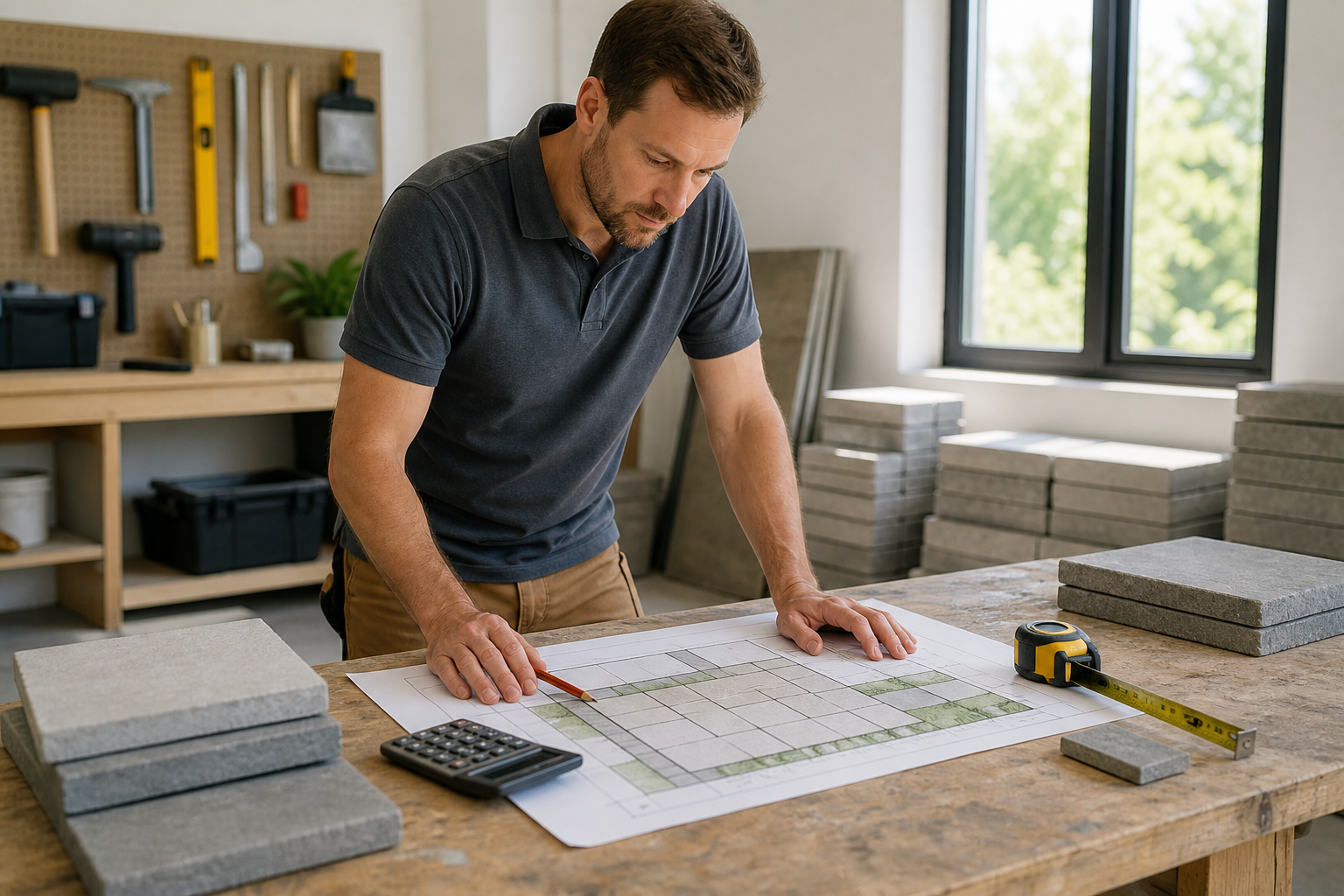
Ever got to the last row of paving and realised you’re three slabs short, staring at the merchant like it’s their fault? Yeah, we’ve all been there. Ordering paving slabs without a proper take-off is like laying bricks with one eye shut: you’ll end up with a wonky job and a half-finished patio. Today, I’ll walk you through how to calculate the exact number of paving slabs (or patio stones, if you’re across the pond) you need—using both metric and imperial—so you only make one trip to the builder’s merchant (or big box store).
By the end, you’ll know:
- How to measure your area (in m² and ft²)
- How to factor in wastage (the spare teabags principle)
- How to use the paving slab calculator to take the guesswork out
- What a real-world worked example looks like (with both units)
Let’s dig in (pun intended).
Why Getting Your Paving Slab Quantities Right Matters
Here’s the bit most people get wrong: they buy slabs by the eye, then hope for the best. That’s like doing your weekly food shop with no list and a blindfold. You’ll either be running back for more or left with a pile of leftovers and a lighter wallet.
Order too few, and you’re stuck mid-job, covered in dust, praying the merchant still has your batch in stock. Order too many, and you’ve paid to store someone else’s patio on your driveway. Nobody has ever finished a job saying they wish they’d bought less.
So, let’s get it right first time.
Step 1: Measure Up (Both Ways)
First, measure the length and width of your paving area. Use metres (m) and feet (ft)—don’t try to convert in your head, or you’ll end up laying a 10ft patio in a 3m space and wondering why it doesn’t fit.
- For metric: Area (m²) = length (m) × width (m)
- For imperial: Area (ft²) = length (ft) × width (ft)
Example:
- Patio size: 4m x 3m (13ft x 10ft)
- Area = 4m × 3m = 12m² (or 13ft × 10ft = 130ft²)
Step 2: Size Up Your Slabs (Pavers, Stones—Pick Your Term)
Paving slabs come in all shapes and sizes. In the UK, 600mm x 600mm (about 24in x 24in) is a classic. Across North America, you’ll see everything from 18in x 18in (450mm x 450mm) up to 24in x 36in (600mm x 900mm).
- Slab area (m²) = length (m) × width (m)
- Slab area (ft²) = length (ft) × width (ft)
Example for a 600mm x 600mm (24in x 24in) slab:
- Slab area = 0.6m × 0.6m = 0.36m² (or 2ft × 2ft = 4ft²)
Step 3: Calculate the Number of Slabs
Here’s the simple bit:
- Number of slabs = Total area ÷ Slab area
But don’t forget joints. A typical mortar joint is 10mm (3/8in). If you want to be precise, factor in the joint size, especially with larger gaps. Or, just use the paving slab calculator, which does this for you.
Worked Example:
- Patio area: 12m² (130ft²)
- Slab size: 0.6m x 0.6m (2ft x 2ft)
- Slab area: 0.36m² (4ft²)
- Number of slabs: 12m² ÷ 0.36m² = 33.33 → round up to 34 slabs
- In imperial: 130ft² ÷ 4ft² = 32.5 → round up to 33 slabs
Now, unless you enjoy jigsaw puzzles, always round up. It’s better to have one slab left over than a gap staring at you accusingly.
Step 4: Add a Wastage Allowance (The Spare Teabag Rule)
No matter how careful you are, slabs chip, break, or get cut wrong. Add 10% for wastage—it’s the “spare teabags in the cupboard” trick. For odd-shaped patios or lots of cuts, bump it up to 15%.
- Wastage slabs = Total slabs × 0.10 (or 0.15)
- Total to order = Number of slabs + wastage
Example:
- 34 slabs × 0.10 = 3.4 → round up to 4 extra slabs
- Total to order = 34 + 4 = 38 slabs
Step 5: Use the Paving Slab Calculator and Avoid Headaches
You could do all this with a calculator and a pad of paper, but why risk it? Use the paving slab calculator for instant, accurate results—especially handy if you’re dealing with more complex patterns, multiple slab sizes, or just want to double-check your maths.
Enter your area, select your slab size (metric or imperial), and let the tool crunch the numbers—including joints and wastage. It’s the difference between ‘hoping for the best’ and ‘knowing you’ve nailed it’.
Table: Quick Reference for Common Slab Sizes (Metric & Imperial)
| Slab Size | Area per Slab (m²) | Area per Slab (ft²) | Slabs per 10m² (108ft²) | Slabs per 20m² (215ft²) |
|---|---|---|---|---|
| 600x600mm (24x24in) | 0.36 | 4 | 28 | 56 |
| 450x450mm (18x18in) | 0.2025 | 2.25 | 50 | 99 |
| 600x900mm (24x36in) | 0.54 | 6 | 19 | 37 |
Add 10% to those numbers for wastage unless you like living dangerously.
Questions people are actually asking
How much paving slabs?
The amount of paving slabs you need depends on your area and slab size. Measure your patio or path, work out the area, then divide by your slab’s area. Don’t forget to add 10% for wastage—or just plug it all into the paving slab calculator for instant answers in both metric and imperial.
How many paving slabs do I need?
You’ll need enough slabs to cover your area, plus a few spares. The formula: total area ÷ slab size (including joints), then add 10% extra. For example, covering a 10m² (108ft²) patio with 600x600mm (24x24in) slabs: 10 ÷ 0.36 = 27.8 → round up to 31 slabs to be safe.
How much patio slabs?
"How much" can mean quantity or price. For quantity, use your area and slab size as above. For cost, multiply your total slab count by the price per slab in your area. Slab prices vary by material and supplier, so always check locally.
How much paving stones cost?
Paving stone or slab costs vary widely. Concrete, stone, and porcelain all have different price points. Check current prices at your local merchant or store. For a rough idea, multiply your required slab number by the price per slab you find—just don’t forget delivery or potential cutting charges.
How much are paving slabs at Wickes?
Prices at Wickes (UK) change often and depend on size, material, and deals. Typically, basic concrete slabs might start at a few pounds each, while premium or decorative options cost more. Always check their website or visit in person for up-to-date pricing. It pays to compare with other merchants as well.
How much are paving slabs at B&Q?
Same story as Wickes: prices vary by material, size, and region. B&Q often runs seasonal offers, so it’s worth shopping around. Remember, a slightly pricier slab that’s in stock beats a cheaper one that’s a three-week wait.
How much are paving slabs 600 x 600?
600x600mm (24x24in) is a standard size in the UK and widely available. Prices range from basic budget slabs up to premium natural stone or porcelain. As a ballpark, expect to pay more for anything fancier than plain pressed concrete. Always check local suppliers for the latest prices.
How much are paving slabs UK?
In the UK, paving slab prices range from budget (plain concrete) to luxury (sandstone, porcelain, etc.). Prices change with supply, demand, and region, so always check with several merchants. Don’t forget to add the cost of delivery, especially for bulky orders.
Conclusion: Get Your Slab Order Right, First Time
There’s no glory in running out of slabs with half a patio left to lay, or paying to store a mountain of spares. Measure up, size your slabs, add sensible wastage, and use the paving slab calculator to save yourself time, cash, and hassle. Your knees—and your pride—will thank you.
Free tools to put this into practice
Reading is one thing — working out your own numbers is what saves time and money. Here are the free HowMuchDoINeed calculators that pair best with this guide:
- Block Paving Calculator Builders Guide — work out exactly how much you need and what it will cost.
- Paving Slab Calculator — get an instant materials estimate for your project.
- Block Paving Calculator — size up quantities and costs before you head to the merchant.
- Drywall Sheet Calculator Builders Guide — plan your order so you avoid over- or under-buying.
Explore every free calculator on HowMuchDoINeed — no sign-up required.