Fencing Area Calculator: Nail Your Square Footage (or Metres) the First Time, Every Time
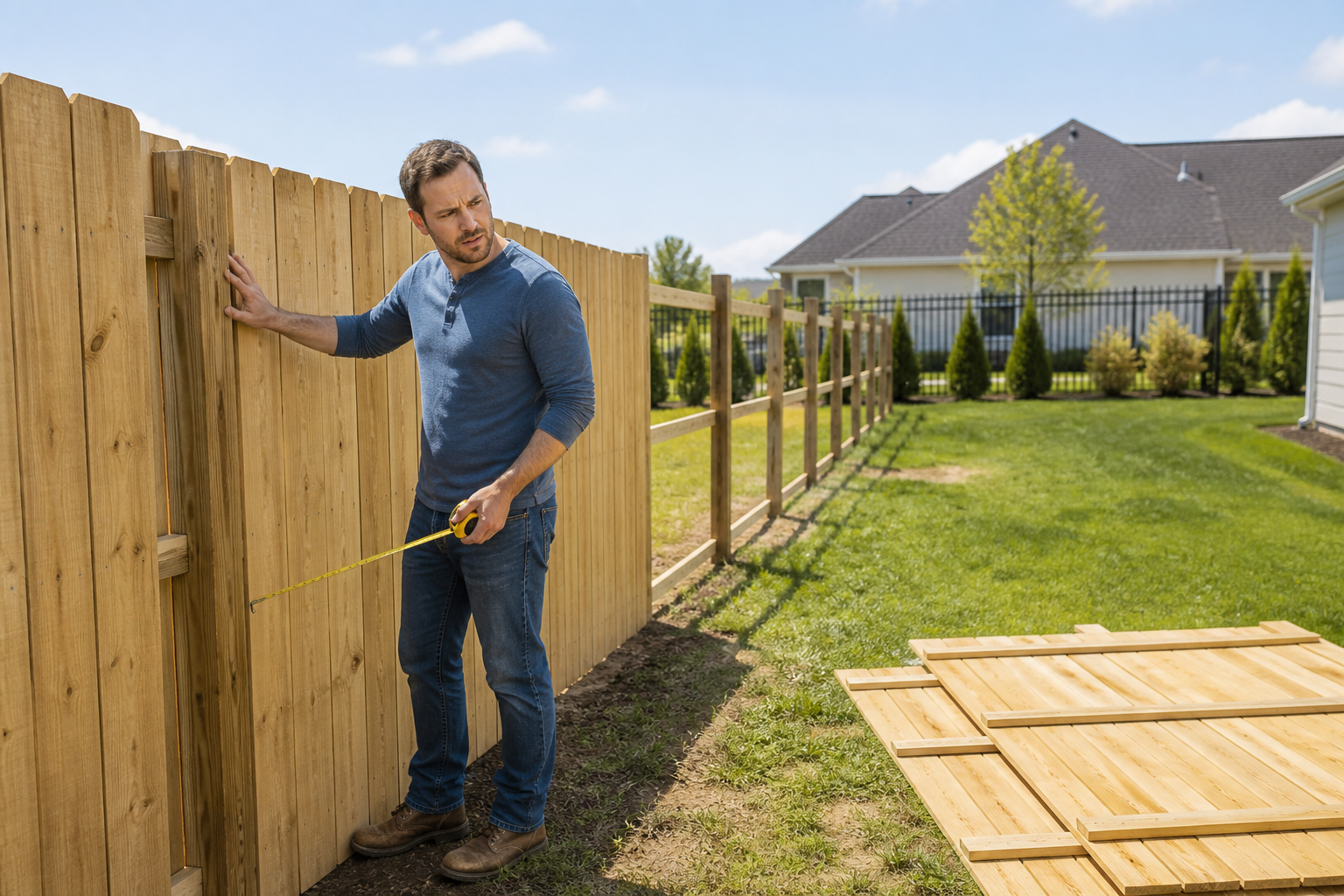
Ever got halfway through putting up a fence, only to realise you’re three panels short and the local merchant’s shut for the weekend? Welcome to the club. Sizing up fencing without a proper area calculation is like heading to the chippy with no idea how many mates are coming—someone’s going home hungry.
This guide will show you how to measure, calculate, and order the right amount of fencing for any perimeter—back garden, paddock, or anywhere you need to keep the neighbours (or sheep) on their side. Plus, we’ll show you how the fencing area calculator takes all the maths off your plate.
Why Calculating Fencing Area Matters (and Why So Many Get It Wrong)
Here’s the bit most people get wrong: they go straight for how many panels or posts they need, without first working out the total area or length that needs fencing. That’s like measuring the room in feet and the timber in metres and hoping for the best. You end up with a pile of leftover panels—or a fence that stops awkwardly halfway across the lawn.
A proper fencing take-off means:
- Fewer wasted materials (and cash)
- No embarrassing gaps or last-minute dashes to the merchant
- A fence that actually fits your garden, field, or worksite
Step-by-Step: How to Measure for Fencing
It’s not rocket science, but it does pay to be methodical. Here’s the process:
1. Mark Out Your Perimeter
Use a tape measure (metric and imperial both work, as long as you stick to one system for the whole job) and mark out the full line you want to fence. For curves or awkward shapes, use string or a measuring wheel for accuracy.
2. Measure Each Section
Walk the perimeter and measure every straight run, jotting down the length in metres (and feet, if you prefer). For rectangles or squares, just measure each side. For more complex shapes, break the perimeter into sections.
3. Add It All Up
Add together all the lengths to get your total perimeter—the number you’ll base your fencing order on.
4. Calculate Area (If Needed)
For solid fencing (like closeboard panels or privacy fencing), you might want the area for paint, stain, or to compare options. That’s just:
Area = Perimeter length × Height
So, if your fence is running 30m (98ft) and is 1.8m (6ft) high:
- 30m × 1.8m = 54 square metres
- 98ft × 6ft = 588 square feet
(You can switch between square metres and square feet, but don’t try mixing and matching in the same calculation unless you like headaches.)
Worked Example: Fencing Up a Standard Back Garden
Let’s say you’ve got a rectangular back garden measuring 10m x 15m (33ft x 49ft) and you want to fence all the way around. Here’s how you’d do it:
Calculate Perimeter:
- 2 × (Length + Width)
- 2 × (15m + 10m) = 2 × 25m = 50m
- 2 × (49ft + 33ft) = 2 × 82ft = 164ft
Choose Your Panel Size:
- Standard fence panels are usually 1.8m (6ft) wide.
Number of Panels Needed:
- 50m ÷ 1.8m ≈ 27.8 panels (round up to 28 panels)
- 164ft ÷ 6ft ≈ 27.3 panels (again, round up to 28 panels)
Add Wastage (Spare Teabags Rule):
- Always order an extra panel or two for offcuts, mistakes, or future repairs. Nobody’s ever said, “I wish I’d bought less fencing.”
Or, to avoid all this arithmetic, plug your numbers straight into our fencing area calculator and let it do the heavy lifting.
| Measurement | Metres | Feet |
|---|---|---|
| Perimeter | 50m | 164ft |
| Panel Width | 1.8m | 6ft |
| Panels Needed | 28 | 28 |
Converting Between Square Metres and Square Feet (Without Melting Your Brain)
Bet the merchant never told you this: 1 square metre = 10.76 square feet. So, if you’re stuck with measurements in metres but need to order in feet (or vice versa), that’s the magic number.
- To convert square metres to square feet, multiply by 10.76
- To convert square feet to square metres, divide by 10.76
But honestly, your best bet? Let the fencing area calculator convert and crunch everything for you—no spreadsheets, no swearing.
Pro Tips for a Smooth Fencing Job
- Check local regulations: Some areas have height limits for fencing. Don’t find out the hard way when the council comes knocking.
- Account for gates: Subtract the width of any gates from your total fencing run before ordering panels.
- Factor in terrain: Slopes, bumps, and bends might mean you need extra posts or custom panel cuts.
- Buy in full units: Fencing comes in standard panel sizes—don’t try ordering 13.4 panels unless you fancy some creative carpentry.
- Wastage allowance: Always order at least 5–10% extra. It’s your material safety net—the spare teabags you keep so you’re never caught short.
Questions people are actually asking
How do I calculate how much fencing I need?
Start by measuring the total length of the area you want to fence—use a tape measure and walk the boundary. Add up all the straight runs to get your total length in metres (and feet). Divide this by the width of your chosen fence panel, then round up to the next whole number. Don’t forget to allow for gates and a bit of wastage. Or, just use our fencing area calculator for a quick answer.
How do you measure for fencing?
Mark the boundary with string or stakes, then measure each section with a reliable tape. For corners or curves, measure in smaller segments for accuracy. Write everything down—guesswork leads to gaps!
How do you calculate fencing area?
Multiply the total fence length (perimeter) by the fence height to get the area in square metres (or square feet). For example, a 30m (98ft) fence at 1.8m (6ft) high covers 54m² (588ft²). The fencing area calculator works this out instantly.
How do you fence a backyard?
First, measure the perimeter. Choose your fencing style and height, then calculate how many panels and posts you’ll need. Factor in gates and a bit of extra for wastage. Order your materials, prep the ground, set your posts, and get building—one panel at a time.
How do you get a fence?
You can DIY with the right tools and some patience, or hire a local fencing contractor. Either way, you’ll need accurate measurements and a materials list—use a fencing area calculator to get started.
How do you do rural fencing?
For rural jobs, you’re usually dealing with wire (barbed or plain), posts, and maybe strainers or stays. Measure your boundary, decide on post spacing (often 2–3m or 6–10ft apart), and calculate how many posts and rolls of wire you’ll need. Rural fencing is more about length and line rather than area.
What is the fencing arena called?
In the context of the sport, the area where fencing takes place is called a “piste” (pronounced “peest”). But in building terms, we just call it a ‘fenced area’ or ‘enclosure’—no fancy French required.
Where is fencing most popular?
If you mean the sport, it’s big in Europe, the US, and parts of Asia. For garden and property fencing, you’ll find it everywhere from the UK to Australia to North America—anywhere people want a bit of privacy or to keep the livestock in (or out).
Conclusion: Avoid the Classic Fencing Fails
Guessing your fencing area is like making tea without checking if there’s any milk—risky and often disappointing. Measure up, crunch the numbers, and let the fencing area calculator do the hard graft. You’ll save money, time, and a few blushes at the merchant’s counter.
Ready to fence like a pro? Get your measurements sorted and try the calculator now.
Free tools to put this into practice
Reading is one thing — working out your own numbers is what saves time and money. Here are the free HowMuchDoINeed calculators that pair best with this guide:
- Square Footage Calculator — work out exactly how much you need and what it will cost.
- How To Calculate Fencing Area — get an instant materials estimate for your project.
- Fencing Area Calculator — size up quantities and costs before you head to the merchant.
- How Many Plants Per Square Foot Landscaping Calculator — plan your order so you avoid over- or under-buying.
Explore every free calculator on HowMuchDoINeed — no sign-up required.