Fence Material Calculator: Your Shortcut to a No-Nonsense Fence Take-Off (No More Maths Headaches!)
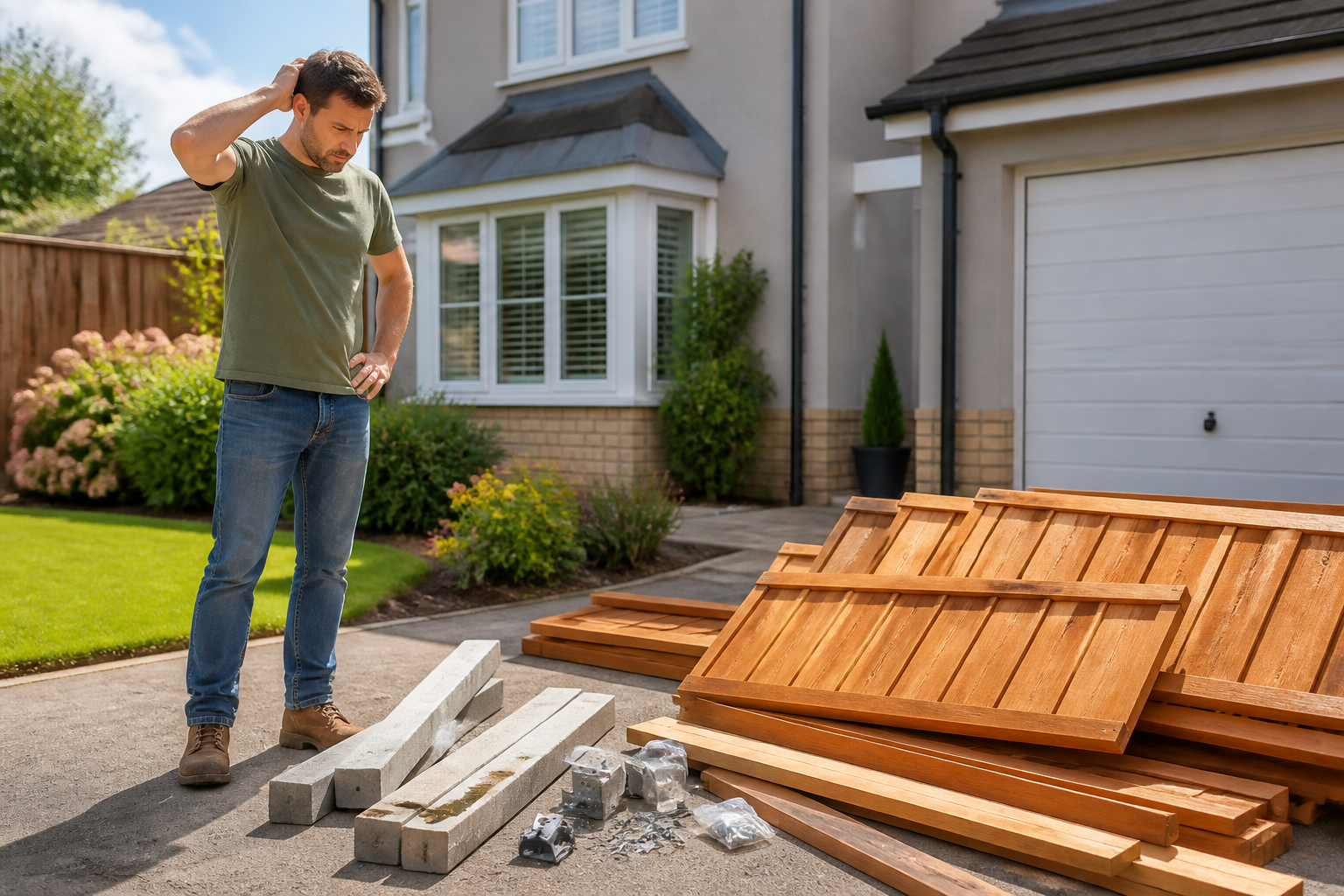
Ever stared at a pile of fence panels (or boards) and wondered if you’ve got enough—or if you’ll be back at the merchant before lunch? You’re not alone. Working out how much fence material you need can feel like guessing the number of sweets in a jar—except, if you get it wrong, it costs you actual money and time. This guide will show you, step-by-step, how to calculate exactly what you need for your fencing job, minus the brain-ache and the wild guesses. Plus, you’ll get the inside scoop on when to use a fence panel calculator to do the heavy lifting.
Why Getting Fence Material Quantities Right Actually Matters
Here’s the bit most people get wrong: ordering fencing is not just about picking a length and hoping for the best. It’s like measuring your garden in metres (feet) and then buying posts in inches (centimetres)—a one-way ticket to a lopsided fence and a merchant’s car park you know far too well. Not enough material? You’re stuck halfway, fence flapping like a tarpaulin in a gale. Too much? You’ve got a leftover pile and a lighter wallet. Nobody’s ever finished a job and thought, “I wish I’d bought less.”
The Basic Fence Take-Off: What You Need to Measure
Before you even think about loading up the van, get these figures in your notebook (or on your phone, if you’re fancy):
- Total fence length: Measure the full run in metres and feet (e.g. 18m (59ft)).
- Fence height: Standard heights are 1.8m (6ft), but check what you actually want (and what’s allowed).
- Panel or board width: Most fence panels are 1.8m (6ft) wide. Boards (pickets/palings) are often 100mm (4in) wide, but always check.
- Post spacing: Usually one post per panel, or every 1.8m (6ft).
Don’t forget gates, corners and ends—they all need posts too.
How to Calculate Fence Materials (Panels, Boards, Posts, Rails)
Let’s break it down.
1. Panels vs Boards: The Two Main Fencing Styles
- Panel fencing: Pre-made panels, each with their own width (usually 1.8m (6ft)).
- Board (picket/paling) fencing: Individual boards nailed to rails, with gaps or no gaps.
2. Panel Fence: Quick Calculation
- Panels needed: Total fence length ÷ panel width. Always round up—unless you want a gap Fido can stroll through.
- Posts needed: One more post than panels (every panel needs a post at each end).
- Gravel boards/rails: One per panel, if used.
Example (Metric & Imperial):
- Fence length: 24m (79ft)
- Panel width: 1.8m (6ft)
Panels: 24m ÷ 1.8m = 13.33 → 14 panels Posts: 14 panels + 1 = 15 posts
(For imperial: 79ft ÷ 6ft = 13.16 → 14 panels, 15 posts)
3. Board Fence: Slightly More Maths, Still No Sweat
- Boards needed:
- (Total fence length ÷ (board width + gap))
- E.g. 24m (79ft) fence, 100mm (4in) boards, 20mm (¾in) gap:
- (24,000mm ÷ 120mm) = 200 boards (or 79ft × 12in ÷ 4.75in ≈ 200 boards)
- Rails: Usually two or three per fence height (top, middle, bottom), matching your total fence length.
- Posts: One every 1.8m (6ft), plus one at each end/corner/gate.
Want the easy way? The fence panel calculator does all this for you—just plug in your fence length, panel/board size, and you’ll get a full shopping list, no calculator-on-the-phone faff.
Don’t Forget Wastage: The Spare Teabags of Fencing
Always add a bit for wastage—warped boards, miscuts, or the inevitable board you drop in a puddle and drive over. 10% is a good rule of thumb (or a bit extra if you’re a serial board-snapper). For panels, usually one extra is enough.
Worked Example: Real Numbers, Real Units
Let’s say you’re fencing a 30m (98ft) boundary with panels.
- Panel width: 1.8m (6ft)
- Number of panels: 30m ÷ 1.8m = 16.66 → 17 panels (rounded up)
- Number of posts: 17 + 1 = 18 posts
- Gravel boards: 17 gravel boards
- Extra for wastage: 1 extra panel, 1 extra post
Final shopping list:
| Material | Metric Qty | Imperial Qty |
|---|---|---|
| Fence panels | 18 | 18 |
| Fence posts | 19 | 19 |
| Gravel boards | 18 | 18 |
(Always double-check, and let the fence panel calculator do a final tally—no shame in a digital back-up!)
Common Pitfalls: Where Most People Go Wrong
- Mixing units: Buying timber in metres, but measuring your garden in feet? That’s how you end up with offcuts for days.
- Forgetting about gates/corners: Every change in direction or opening needs an extra post.
- Ignoring terrain: Slopes and steps will eat up more material—measure along the actual run, not just a straight line.
Bet your local merchant never told you that, eh?
Questions People Are Actually Asking
How much fence material do I need?
Work out your total fence length (in metres and feet), then divide by the width of your panels or the combined width of your boards plus gaps. Add on posts at each end and corners. For the quickest answer, punch your numbers into the fence panel calculator and get a ready-made list.
How much does fence material cost?
Fence material costs vary depending on your country, the material (timber/lumber, metal, vinyl), and style. Typically, panels cost more up-front but save labour; boards can be cheaper per metre (foot) but take more time. Get prices for panels, posts, and extras from your local supplier, then multiply by your quantities.
How many fence boards per metre?
To find the number of boards per metre (or foot):
- Boards per metre = 1,000mm ÷ (board width + gap in mm)
- Example: 100mm board + 20mm gap = 120mm per board
- 1,000mm ÷ 120mm ≈ 8.33 → round up to 9 boards per metre (3 per foot)
How to calculate fence materials?
Measure your total run, decide on panel or board style, and use the formulas above. Or save time (and your sanity) by using the free fence panel calculator—it’s built for exactly this job.
What fence material lasts the longest?
Metal (steel/aluminium) and vinyl (UPVC) fences tend to outlast timber/lumber, especially if you’re not a fan of regular maintenance. Pressure-treated wood can last 15-20 years if looked after, but metal and vinyl often top that (with less fuss over painting or rot).
What fence material is best?
That depends—if you want low maintenance, go for vinyl or powder-coated steel/aluminium. For a classic look and easy repairs, timber/lumber is the old reliable. If you’re on a tight budget, chain link is king (if you don’t mind the see-through look). Always check local fence rules before splashing out.
How much is chain link fence material?
Chain link (wire mesh) is usually the most affordable fence material per metre (foot). Exact costs depend on wire gauge and coating, but it’s popular worldwide for a reason—cheap, quick to install, and long-lasting. Get a price per roll and multiply by your fence length.
Conclusion: The Right Fencing, First Time—No Guesswork
Getting your fence material quantities spot-on is half the battle—muck it up and you’re either running short or drowning in leftovers. Use your tape, jot down the right numbers, and when in doubt, let the fence panel calculator do the sums. Fencing shouldn’t be a mystery—just a job well measured, and well done.
Free Calculators for Your Fence Take-Off
Work out posts, panels, spacing and costs in seconds—no guesswork, no leftover piles.
- Fence Calculator — calculates total panels, posts, rails and gravel boards for your exact fence run.
- Fence Panel Calculator — works out how many panels you need for a given length, rounded up properly.
- Fence Post Spacing Calculator — tells you exactly where to dig each post hole along your fence line.
- Fence Cost Calculator — estimates total material and labour costs before you commit to buying.
Explore every free calculator on HowMuchDoINeed — no sign-up required.
Explore every free calculator on HowMuchDoINeed — no sign-up required.