
Compare LVT to Engineered Wood: Which Floor Wins the Battle of Looks, Wear, and Wallet?
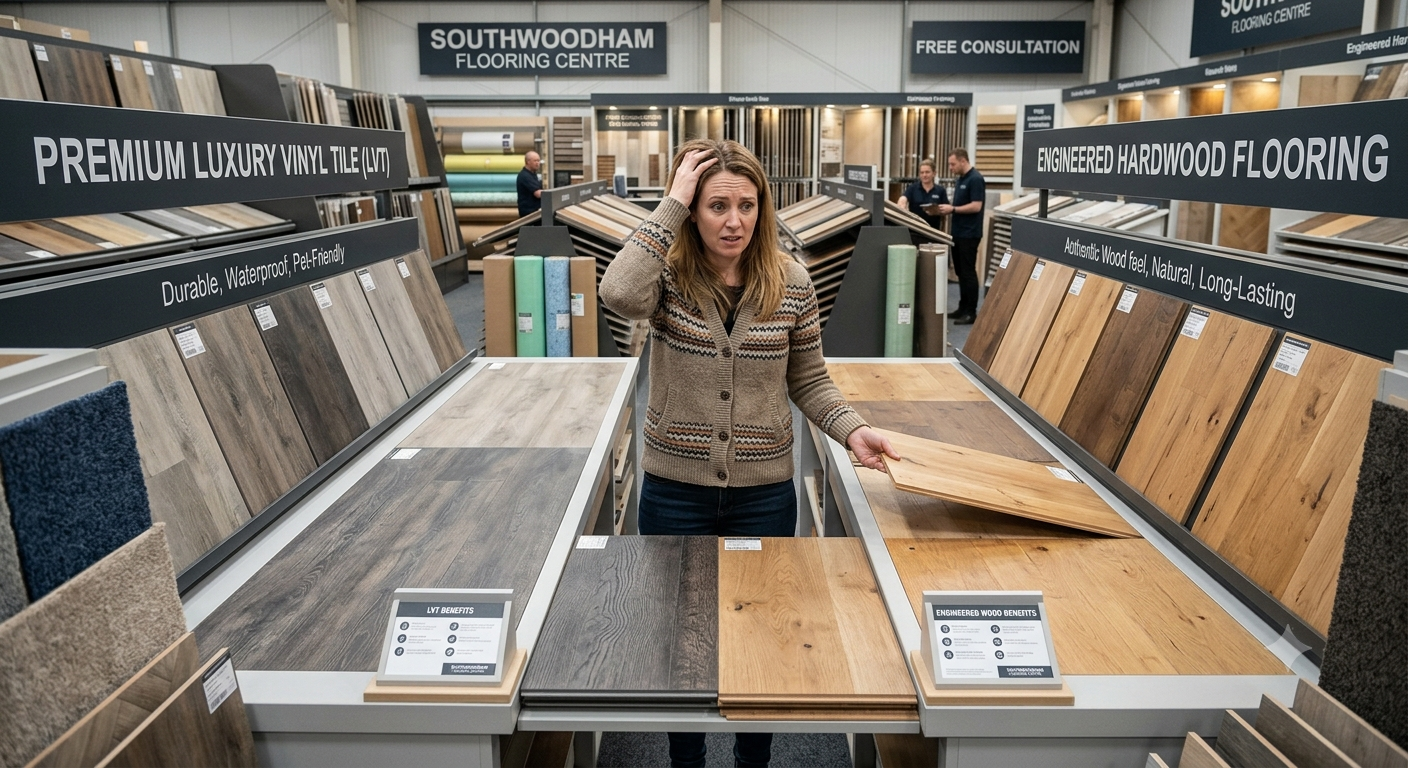
Ever stood in a flooring showroom, squinting at the samples, and wondered whether you’re about to make a costly mistake? You’re not alone. Choosing between LVT (luxury vinyl tile) and engineered wood isn’t just about what looks flash in the brochure — it’s about costs, wear, and whether your floor will still be smiling back at you five years down the line. Let’s break it down, mate: the real pros, cons, and pounds-and-pence (or dollars-and-cents) of both, with no sales talk and no wishful thinking.
What Are LVT and Engineered Wood Anyway?
Before we start comparing, let’s make sure we’re not measuring apples in metres and oranges in feet.
- LVT (Luxury Vinyl Tile/Plank): This is a tough, waterproof vinyl flooring designed to mimic wood, stone, or ceramic. It comes in planks or tiles, usually 2-5mm thick (about 1/12 to 1/5 inch), with a click-lock or glue-down system.
- Engineered Wood Flooring: Real wood on top, stable layers below. Usually 12-20mm (1/2 to 3/4 inch) thick, with a hardwood veneer (the bit you see) glued to a plywood or softwood core. It’s as close as you get to solid wood without remortgaging the house.
The Big Head-to-Head: Pros and Cons
Here’s where most people get it wrong: they just go by looks. But your floor’s got to handle muddy boots, the odd spilt cuppa, and maybe even the dog’s tap-dance routine. Let’s see how they really stack up.
LVT: The Good, The Bad, and The Ugly
Pros:
- Waterproof: Splash it, mop it, spill your pint — LVT shrugs it off. Ideal for kitchens and bathrooms.
- Tough as old boots: Resists dents and scratches from pets, kids, or that chair you keep dragging.
- Easy on the wallet: Costs less to buy and fit than engineered wood — more on pricing below.
- Low maintenance: No sanding, waxing, or fussy cleaning. Keep it simple.
- Warm and quiet: Softer and warmer underfoot compared to tiles. Less of a clatter when you drop a spoon.
Cons:
- Not the real deal: However good the print, it’s still not actual wood. Up close, you’ll know.
- Can dent: Heavy furniture or sharp heels can leave a mark, especially budget brands.
- Can fade in strong sunlight: Like that holiday tan, some colours don’t last forever.
- Not as posh for resale: Some buyers will always want genuine timber (or at least engineered wood).
Engineered Wood: The Pros, The Cons, The Splinters
Pros:
- Real wood look and feel: The top layer is genuine wood. It ages, patinas, and tells a story.
- Can be refinished: You can sand and re-oil/surface it (once or twice, depending on veneer thickness).
- Adds value: Buyers love real wood. Floors like this can bump up your home’s price.
- Stable: Handles changes in humidity better than solid wood. Less likely to warp or cup.
Cons:
- Pricey: Both the material and fitting cost more than LVT.
- Not waterproof: A spilt bucket or a sneaky leak is bad news.
- Scratches and dents: It’s wood. Dogs, chairs, and stilettos can take their toll.
- Needs care: You’ll need to use the right cleaners and avoid excess water.
See for Yourself: Side-by-Side Comparison Table
| Feature | LVT (Luxury Vinyl Tile/Plank) | Engineered Wood Flooring |
|---|---|---|
| Look & Feel | Imitates wood convincingly, but not real | Genuine wood surface |
| Water Resistance | 100% waterproof | Not waterproof |
| Scratch/Dent Resistance | Very good (better than soft woods) | Moderate; can scratch |
| Maintenance | Easy, no refinishing | Needs care, can refinish |
| Installation | DIY-friendly (click/glue) | Pro fitting best |
| Cost (per sq m/sq ft) | £20–£45/m² (£1.90–£4.20/ft²) | £35–£85/m² (£3.30–£7.90/ft²) |
| Resale Value | Decent, but not premium | Higher, adds value |
| Lifespan | 10–20 years | 15–30 years (with care) |
Real-World Pricing: How Much Will You Actually Spend?
Let’s do a worked example for a 20m² (215ft²) living room:
LVT: Middle-of-the-road LVT is about £30/m² (£2.80/ft²). For 20m² (215ft²):
- Materials: 20m² x £30 = £600 (~$750 USD)
- With underlay, trims, and a bit of wastage (+10%): £660 (~$825 USD)
- Fitting (if you don’t DIY): add £10–£15/m² (£0.90–£1.40/ft²), so another £220–£330 (~$275–$410 USD)
- Total fitted: £880–£990 (~$1,100–$1,240 USD)
Engineered Wood: A mid-range product costs about £60/m² (£5.60/ft²). For the same 20m² (215ft²):
- Materials: 20m² x £60 = £1,200 (~$1,500 USD)
- Allow for underlay, trims, and 10% wastage: £1,320 (~$1,650 USD)
- Fitting: £20–£25/m² (£1.90–£2.30/ft²), so £440–£550 (~$550–$690 USD)
- Total fitted: £1,760–£1,870 (~$2,200–$2,340 USD)
Note: Prices will swing up or down by region and product quality. Always add a 10% wastage allowance — the spare teabags you keep so you’re never caught short.
Installation: DIY or Call the Pros?
- LVT: Most click or glue-down LVT can be DIY’d with a bit of patience and a sharp knife (and maybe a few choice words). No need for sanding or sealing.
- Engineered Wood: Click systems exist, but real planks often need pro fitting, especially if you want it to look like you haven’t done it blindfolded. There’s underlay, acclimatising, and sometimes glue or nails involved.
Where Each Flooring Shines (and Where It Doesn’t)
- LVT: Best in bathrooms, kitchens, basements, or anywhere water gets a look-in. Good for rental properties or high-traffic rooms.
- Engineered Wood: Main living areas, bedrooms, and anywhere you want a bit of wow-factor. Avoid bathrooms (unless you like drama).
The Bottom Line: Which Should You Choose?
- Go LVT if: You want waterproof, low-fuss flooring that’s easy on the budget and you’re not fussed about bragging rights for real timber.
- Go Engineered Wood if: You want a real wood feel, higher resale value, and you’re happy to spend a bit more (and maybe treat it with the respect it deserves).
Questions People Are Actually Asking
Is LVT cheaper than engineered wood?
Yes — LVT almost always costs less to buy and install than engineered wood. It’s also easier to fit yourself, which can save a tidy sum on labour.
Can you tell the difference between LVT and engineered wood?
Up close and barefoot, yes — engineered wood feels and looks like real timber because it is. LVT is a convincing imitation, especially from standing height, but touch and fine detail give it away.
Which flooring lasts longer: LVT or engineered wood?
Engineered wood can last longer (up to 30 years with care) and can be sanded and refinished. LVT usually lasts around 10–20 years before it needs replacing, but is less fussy day-to-day.
Is LVT suitable for kitchens and bathrooms?
Absolutely. LVT is waterproof, so it’s ideal for kitchens, bathrooms, basements — anywhere spills are likely. Engineered wood is riskier in wet areas.
Can you fit LVT or engineered wood over underfloor heating?
Both can work with underfloor heating, but always check the manufacturer’s guidance. LVT handles heat well, and most engineered wood will too, as long as you avoid extremes.
Does engineered wood add more value to your home than LVT?
Generally, yes. Buyers tend to see engineered wood as a premium feature, which can help when it’s time to sell.
Can you lay either floor directly over existing tiles or old flooring?
LVT can go over many flat, sound surfaces (including old tiles) with the right prep. Engineered wood usually needs a level, dry, and stable base — don’t just whack it over a wobbly floor.
How much extra flooring should I order for wastage?
Plan on at least 5–10% extra for cuts, mistakes, and pattern matching. It’s the “insurance policy” you’ll thank yourself for when you’re not piecing together offcuts by the skirting board (baseboard).
Conclusion
Choosing between LVT and engineered wood is a bit like picking between a reliable workhorse and a flash sports car. Both will get you there, but the ride and the price tag are different. Whether it’s waterproof and wallet-friendly LVT or the rich warmth of engineered wood, the key is knowing what you need, what you can live with, and what you’re willing to spend.
Ready to measure up? Check out our other plain-English guides — and when you’re sorting quantities, always use a calculator (or at least a proper take-off sheet). No one ever finished a job saying they wished they’d guessed more.
Free tools to put this into practice
Reading is one thing — working out your own numbers is what saves time and money. Here are the free HowMuchDoINeed calculators that pair best with this guide:
- Plywood Calculator — work out exactly how much you need and what it will cost.
Explore every free calculator on HowMuchDoINeed — no sign-up required.