
Topsoil Calculator: Never Run Short or Lug Too Much Again (Your Back Will Thank You)
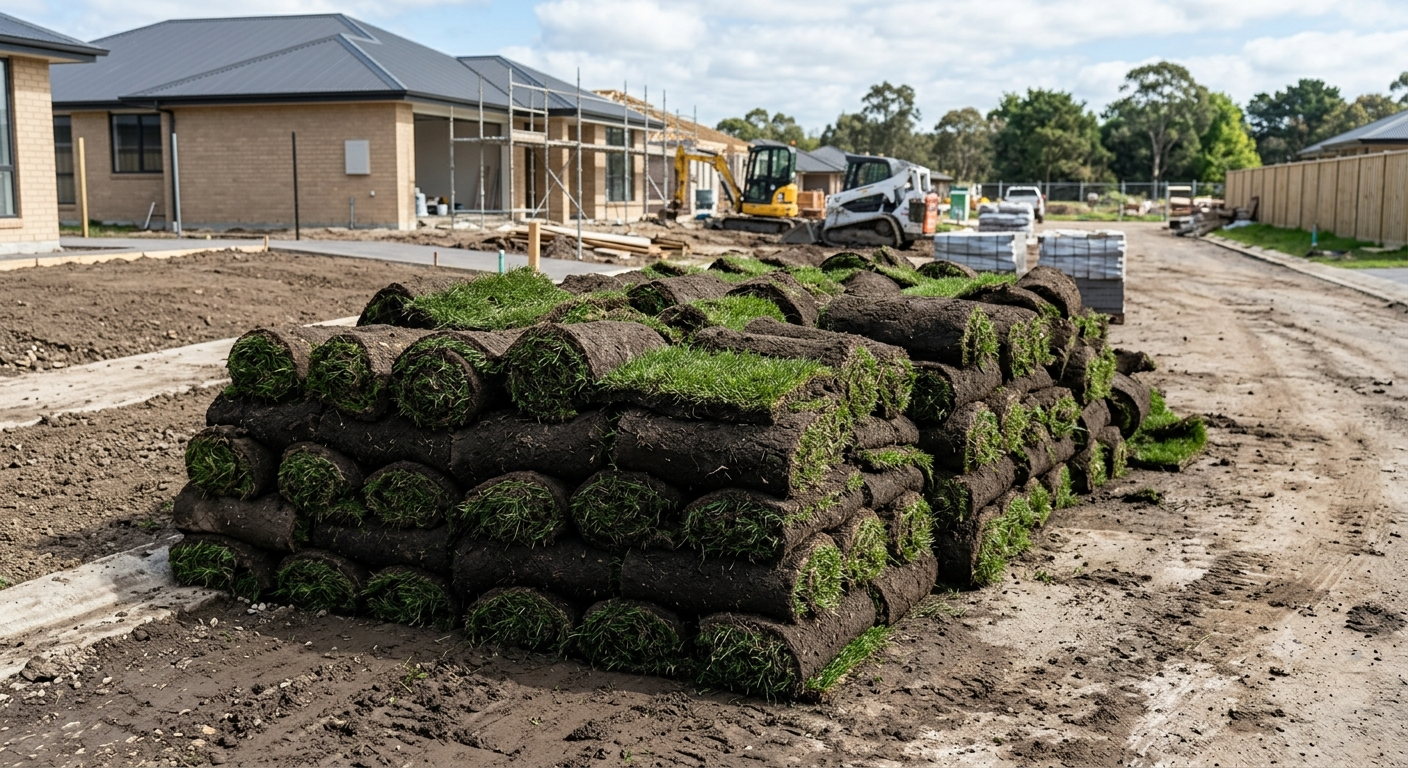
Ever got halfway through levelling a lawn, only to realise you’re three wheelbarrows short and the merchant’s closed? Or, just as painful, ordered a mountain of topsoil and spent the weekend shifting half of it to the neighbour’s garden? Yeah, we’ve all been there. Knowing how much topsoil you actually need is the difference between a tidy finish and a sore back (or a messy pile that sticks around longer than your last DIY regret).
This guide will show you how to size up your topsoil order the right way—no guesswork, no waste, no extra trips. And if you want the fastest route to the right number, the topsoil calculator does the heavy lifting for you. Let’s dig in (pun intended).
Why Getting Topsoil Quantities Right Actually Matters
Here’s the bit most people get wrong: eyeballing topsoil is like trying to measure flour with a mug—close enough for pancakes, but not for a level lawn. Too little, and you’ll have patchy grass and sunken spots. Too much, and you’re shifting muck for fun.
A proper take-off keeps costs down, your project on schedule, and your back in one piece. Plus, with the price of topsoil (or dirt, for our US mates) climbing faster than your grass ever will, you don’t want to pay for more than you’ll use.
The Golden Formula: Calculating Topsoil Volume
Let’s keep it simple: you need three numbers—length, width, and depth of the area you want to cover. Always measure in metres (m) and centimetres (cm) for metric, or feet (ft) and inches (in) for imperial. And don’t mix and match, unless you like puzzles.
Formula:
- Metric: Length (m) × Width (m) × Depth (m) = Volume in cubic metres (m³)
- Imperial: Length (ft) × Width (ft) × Depth (ft) = Volume in cubic feet (ft³)
Want it in litres or US gallons? 1 m³ = 1,000 litres (264 US gallons). 1 ft³ = 28.3 litres (7.48 US gallons).
Worked Example
Let’s say you want to level a 10m x 8m (33ft x 26ft) lawn with 10cm (4in) of topsoil:
| Metric | Imperial | |
|---|---|---|
| Length | 10m | 33ft |
| Width | 8m | 26ft |
| Depth | 0.10m (10cm) | 0.33ft (4in) |
| Volume | 10 × 8 × 0.10 = 8m³ | 33 × 26 × 0.33 ≈ 282ft³ |
| Litres/US gal | 8 × 1,000 = 8,000L (2,113 US gallons) | 282 × 28.3 = 7,981L (2,108 US gallons) |
So, for that project, you need 8 cubic metres (282 cubic feet) of topsoil—give or take a teacup.
Pro tip: Always add a 10% wastage allowance. Think of it as the spare loo roll in the van—better safe than sorry. 8m³ + 0.8m³ = 8.8m³ (or about 310ft³ total).
Or, skip the maths and get the answer in seconds with the topsoil volume calculator.
How Deep Should Your Topsoil Be?
Bet the merchant never told you this: depth depends on what you’re doing.
- New lawns (seeding or turf/sod): 10–15cm (4–6in) is the gold standard. Less, and you’re basically giving your grass a thin duvet on a concrete bed.
- Flower beds or veggie plots: 20–30cm (8–12in) for decent root growth.
- Top-up/levelling: 5–10cm (2–4in) is usually plenty.
Don’t go overboard. More isn’t always better—think of it like icing on a cake: just enough to cover, not enough to drown out the flavour.
Bagged or Bulk? Units Can Trip You Up
Here’s a classic mistake: buying your soil in litres and measuring your bed in feet, then wondering why you’re short. Topsoil is sold by the cubic metre (m³), cubic yard (yd³), or in bags—usually 25L (7 US gallons), 40L (10.5 US gallons), or 1 tonne (1.1 US tons) bulk bags.
- 1 cubic metre (m³) ≈ 1.3 cubic yards (yd³) ≈ 1,000 litres (264 US gallons) ≈ 1.5 tonnes (1.65 US tons) (moisture and compaction affect weight—don’t just trust the scales).
- 1 cubic yard = 27 cubic feet (764 litres or 202 US gallons).
Not sure how many bags you need for your patch? Pop your area and depth into the topsoil calculator for beds and lawns and get the answer in bags, bins, or bulk—no converter chart needed.
Topsoil for Lawns, Beds, and Sod: How Much Is Enough?
Let’s break it down:
- New lawn from seed: 10–15cm (4–6in)
- Laying turf or sod: 7.5–10cm (3–4in) under the turf
- Levelling existing lawn: 5–10cm (2–4in)
- Flower beds/vegetable beds: 20–30cm (8–12in)
Quick reference table:
| Area Size | Depth | Volume (m³/yd³) |
|---|---|---|
| 100m² (1,076ft²) | 10cm (4in) | 10m³ (13yd³) |
| 50m² (538ft²) | 10cm (4in) | 5m³ (6.5yd³) |
| 1,000ft² (93m²) | 4in (10cm) | 3.7yd³ (2.8m³) |
If you’ve got a specific size (like 5,000ft² or 2,000ft²) in mind, just scroll down to the FAQs, or let the topsoil calculator crunch it for you.
Questions People Are Actually Asking
How much topsoil do I need?
Measure your area’s length and width, then decide your desired depth (see above—usually 10–15cm or 4–6in for lawns). Multiply length × width × depth in metres (or feet), then convert to cubic metres (m³) or cubic yards (yd³). Don’t forget that 10% wastage allowance—it’s the little insurance policy you’ll thank yourself for later. Or, get an instant answer with the topsoil calculator.
How much topsoil to level lawn?
For levelling (not starting from scratch), 5–10cm (2–4in) is plenty. Measure the area, multiply by your chosen depth, and that’s your volume. For example, a 50m² (538ft²) patch at 5cm (2in) depth needs 2.5m³ (3.3yd³) of topsoil.
How much topsoil is in a yard?
A “yard” here means a cubic yard (not the length). One cubic yard of topsoil is about 0.76 cubic metres and equals 27 cubic feet (about 764 litres or 202 US gallons). If you’re buying bulk, that’s the size of a small builder’s bag—enough for roughly 30m² (323ft²) at 2.5cm (1in) depth.
How much topsoil is needed to grow grass?
For healthy grass, aim for 10–15cm (4–6in) of good topsoil. Less, and your grass will struggle—more, and you’re just paying extra. For each square metre (10.7ft²), that’s 0.1–0.15m³ (3.5–5.3ft³).
How much topsoil do I need for 5,000 square feet?
Let’s do the sums: 5,000ft² × 0.33ft (4in) = 1,650ft³. Divide by 27 for cubic yards: 1,650 ÷ 27 ≈ 61yd³ (or about 47m³). Add 10% for wastage, so order around 67yd³ (51m³). Let the topsoil calculator for large areas confirm it for you.
How much topsoil do I need for 2,000 square feet?
2,000ft² × 0.33ft (4in) = 660ft³. 660 ÷ 27 ≈ 24.4yd³ (about 18.6m³). With a 10% margin, order about 27yd³ (20m³).
How much topsoil do I need for 1,000 square feet?
1,000ft² × 0.33ft (4in) = 330ft³. 330 ÷ 27 ≈ 12.2yd³ (about 9.3m³). Add 10% and order around 13.5yd³ (10.3m³).
How much topsoil for sod?
Lay 7.5–10cm (3–4in) of topsoil under your turf (sod) for best results. For 100m² (1,076ft²), that’s 7.5–10m³ (10–13yd³). If in doubt, the topsoil calculator has you covered.
Conclusion: The Smart Way to Order Topsoil
Ordering topsoil without a proper take-off is like doing your weekly shop with no list and a blindfold—almost guaranteed to go wrong, and usually messy. Use the formulas above or, better yet, plug your numbers into the topsoil calculator for a fast, accurate answer in any unit. Your lawn (and your lower back) will thank you.
Free tools to put this into practice
Reading is one thing — working out your own numbers is what saves time and money. Here are the free HowMuchDoINeed calculators that pair best with this guide:
- Topsoil Calculator Guide — work out exactly how much you need and what it will cost.
- Topsoil Calculator — get an instant materials estimate for your project.
- Raised Bed Soil Calculator — size up quantities and costs before you head to the merchant.
- Raised Bed Soil Calculator — plan your order so you avoid over- or under-buying.
Explore every free calculator on HowMuchDoINeed — no sign-up required.