Plasterboard Ceiling Calculator: Stop Guessing and Get Your Take-Off Right First Time
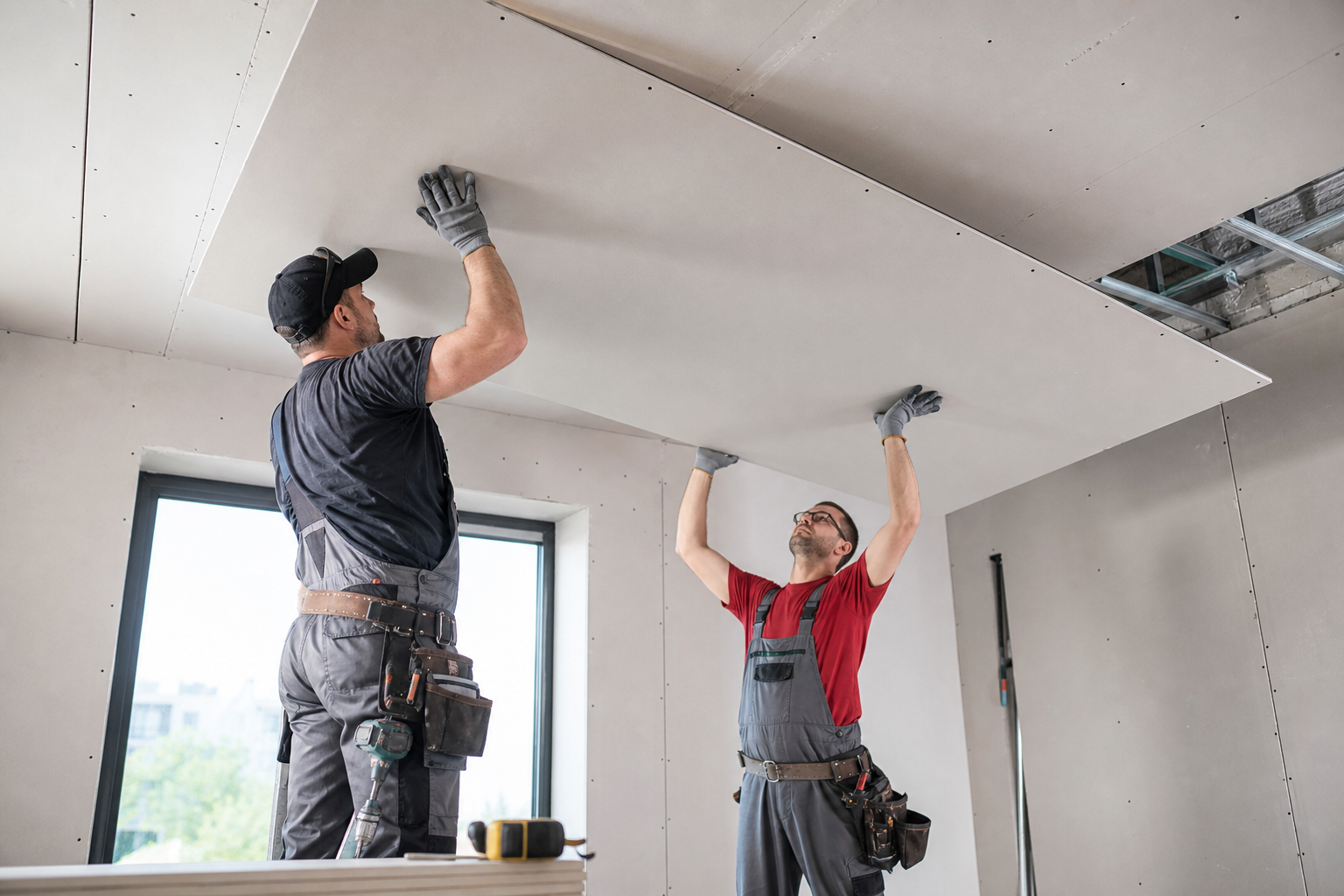
Whether you're renovating a tired room or starting from a bare frame, knowing exactly how much plasterboard you need for your ceiling is the difference between a smooth job and three unnecessary trips to the merchant. In this guide, you'll learn how to measure accurately, what factors can throw your numbers off, and how to avoid the classic pitfalls — plus straight answers on costs, installation, and everything else people actually want to know.
Why Getting Your Ceiling Measurement Right Actually Matters
Plasterboard — also known as drywall or gypsum board — is the go-to ceiling material in homes and commercial buildings across the UK, US, Australia, and beyond. Buy too little and you're staring at a half-finished ceiling waiting on a delivery. Over-order and you've got a stack of boards gathering dust in the hallway. Getting it right first time saves money, time, and a fair bit of aggravation.
The Basics: Plasterboard Sheet Sizes
Before you can calculate anything, you need to know what size boards you're working with. Standard sizes vary by region:
- UK & Europe: 1200mm x 2400mm (approx. 4ft x 8ft)
- US/Canada: 4ft x 8ft (1219mm x 2438mm), 4ft x 12ft (1219mm x 3658mm)
- Australia/NZ: 1200mm x 2400mm or 1350mm x 3000mm
Thickness matters too — 12.5mm (½ inch) is the most common choice for ceilings.
Step-by-Step: How to Calculate Plasterboard for a Ceiling
- Measure your ceiling area. Measure the length and width of the ceiling, then multiply them together to get the total area.
- Account for openings. Subtract the area of any large openings — skylights, loft hatches, that sort of thing.
- Choose your board size. Divide the total ceiling area by the area of a single plasterboard sheet.
- Round up. Always round up to the next whole board. A spare board is far less painful than a shortfall on the final fix.
- Consider waste. Add 10% on top to cover offcuts and the odd miscut — think of it as the spare teabags you keep so you're never caught short.
Worked Example: Metric and Imperial
Let's run through a real room so you can see exactly how the numbers stack up.
- Length: 4.2 metres (13'9")
- Width: 3.6 metres (11'10")
Step 1: Calculate Area
- Metric: 4.2m × 3.6m = 15.12m²
- Imperial: 13'9" × 11'10" ≈ 162.7ft²
Step 2: Select Plasterboard Size
- Standard UK board: 1.2m × 2.4m = 2.88m² per board
- Standard US board: 4ft × 8ft = 32ft² per board
Step 3: Divide to Find Number of Boards
- Metric: 15.12m² ÷ 2.88m² ≈ 5.25 (round up to 6 boards)
- Imperial: 162.7ft² ÷ 32ft² ≈ 5.1 (round up to 6 boards)
Step 4: Add Waste
- 6 boards × 1.10 = 6.6 — round up to 7 boards total
Summary Table:
| Room Size | Board Size | Boards Needed (with 10% extra) |
|---|---|---|
| 4.2m x 3.6m | 1.2m x 2.4m | 7 |
| 13'9" x 11'10" | 4ft x 8ft | 7 |
Find that a bit fiddly? Use the plasterboard ceiling calculator and get the same answer in about ten seconds.
Factors That Can Throw Your Calculation Off
Here's where jobs that look straightforward on paper get interesting in practice.
- Board orientation: Running boards perpendicular to joists is standard practice, but it can mean more cutting.
- Room shape: L-shaped or irregular rooms need careful planning — winging it is like doing the weekly shop with no list and a blindfold.
- Ceiling features: Bulkheads, recesses, or sloped ceilings all push your waste figure up.
- Access: Tight lofts or awkward stairwells create extra offcuts whether you like it or not.
Cost Considerations: How Much for a Plasterboard Ceiling?
The total cost of a plasterboard ceiling breaks down into three main buckets:
- Plasterboard sheets: Price per board varies by thickness and type — standard, moisture-resistant, acoustic, fire-rated, and so on.
- Fixings: Screws, adhesive, and jointing compound.
- Labour (if not DIY): Installation and finishing — taping, jointing, or skimming.
Typical Prices (as a guide):
- Plasterboard sheets: £8–£15 per standard 2.4m x 1.2m board (UK), $10–$20 per 4ft x 8ft board (US/AUS)
- Labour (UK): £10–£25 per m² for supply and fit, including taping/skimming (varies by region and finish)
- Jointing and finishing materials: £1–£3 per m²
Tip: Always check with local suppliers and tradespeople for up-to-date rates in your region.
Questions People Are Actually Asking
How much does a plasterboard ceiling cost?
It depends on the room size, the type of plasterboard, and whether you're doing it yourself or bringing in a plasterer. For a typical UK room at 15m², you're looking at roughly £120–£200 for materials and £150–£375 for labour — so £270–£575 all in. In other countries, multiply the area by your local board and labour rates to get a ballpark.
How much does plaster ceiling installation cost per square metre?
In the UK and Ireland, labour and materials for a standard plasterboard ceiling typically land between £10 and £25 per m². That covers fitting, taping, and skimming — though complex rooms or specialist boards like fire-rated plasterboard will push that figure higher.
How much plasterboard do I need for my ceiling?
Measure the length and width of your ceiling, multiply for total area, then divide by the area of a single board. Add 10% for waste and round up to whole boards. Or skip the maths entirely and let the plasterboard ceiling calculator do the heavy lifting.
How much weight can a plasterboard ceiling support?
Standard plasterboard ceilings aren't built for heavy loads. Light fittings and small items up to around 3–5kg can be hung with the right anchors. For anything heavier — large chandeliers, pull-up bars — you need to fix directly into the ceiling joists or use specialist fixings. Don't rely on the board itself for structural loads. It won't thank you for it.
How does the cost compare internationally (e.g., Malaysia, Australia, US)?
Plasterboard and installation costs vary considerably by country and even by region within a country. In Malaysia, for example, costs per m² tend to be lower than in the UK or Australia — but always get quotes from local suppliers and contractors for the most accurate figures. The calculation method, at least, is exactly the same wherever you are.
Common Mistakes to Avoid
- Not allowing for waste or offcuts — always add that 10% buffer.
- Forgetting to subtract large openings like skylights or loft hatches.
- Choosing the wrong board thickness for your ceiling type.
- Not planning your board layout before you start — a few minutes with a sketch can save a pile of offcuts.
Conclusion: Take the Guesswork Out
Estimating plasterboard for a ceiling really isn't complicated once you know the steps — measure accurately, add a sensible amount for waste, and pick the right board size for the job. Do it properly upfront and you won't be the one making an emergency run to the builders' merchant on a Friday afternoon. Want the instant answer? Run your numbers through the plasterboard ceiling calculator and get a precise material list in seconds.
Free Tools to Put This Into Practice
Reading about it is one thing — getting your own numbers sorted is what actually saves time and money on site. Here are the free HowMuchDoINeed calculators that pair best with this guide:
- Plaster Calculator — work out exactly how much you need and what it will cost.
- Drywall Calculator — work out exactly how much you need and what it will cost.
- Deck Board Calculator — work out exactly how much you need and what it will cost.
Explore every free calculator on HowMuchDoINeed — no sign-up required.