
Mulch Calculator: Quick Guide for Beds, Borders and Play Areas (No More Guesswork, No More Bare Patches)
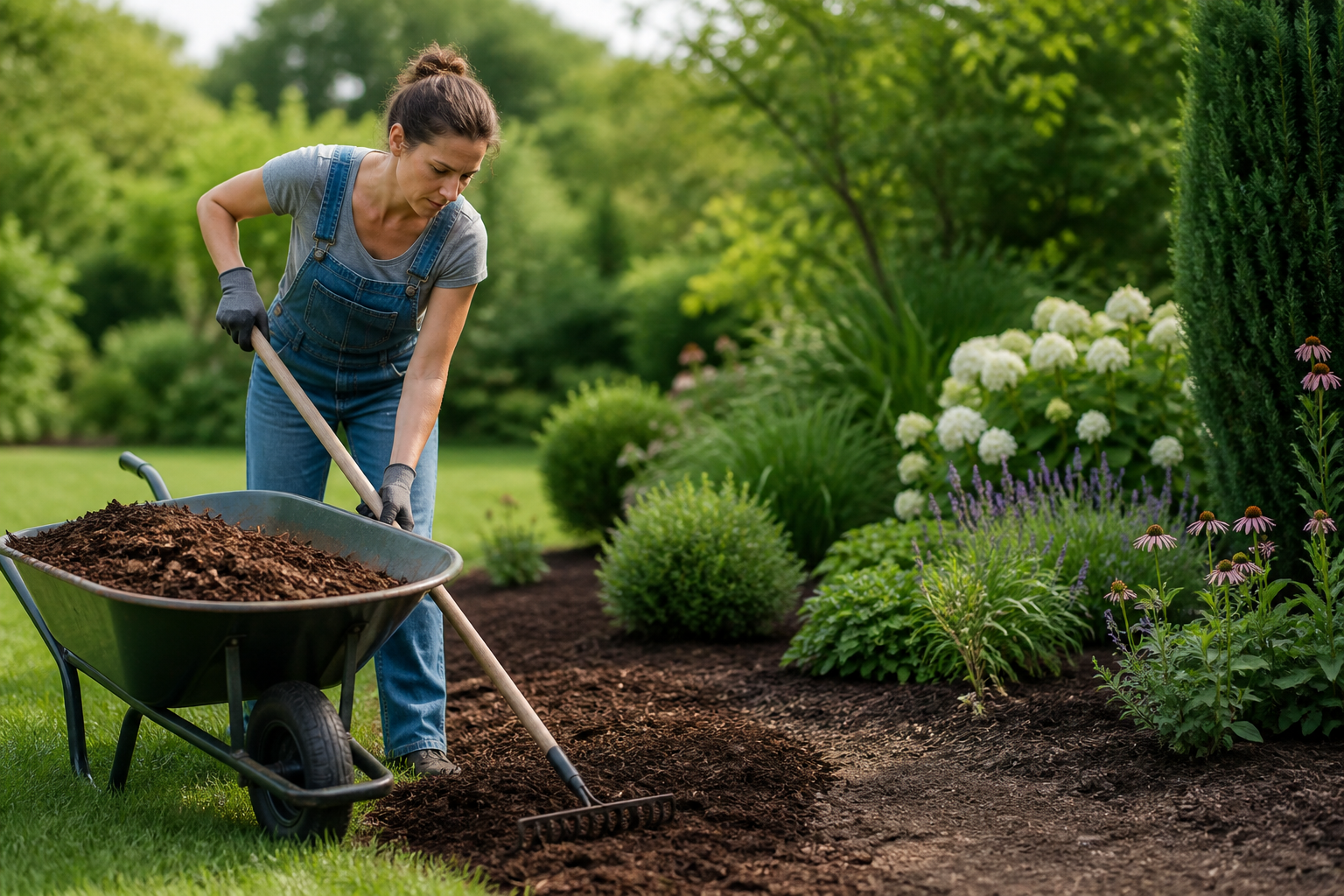
Ever got halfway through mulching the border, only to realise you’re a couple of bags short and the garden centre’s closed? Or ended up with a heap of spare bark chippings that sits in the corner until it turns into a slug hotel? Yeah, we’ve all been there. Mulch maths shouldn’t be a mystery, whether you’re tackling a flower bed, play area, or the world’s fanciest veg patch. This guide walks you through the lot—bags, cubic yards (and metres), coverage, and a worked example in both metric and imperial. Let’s make mulch measuring as painless as scattering the stuff.
Why Bother with a Mulch Calculator?
Here’s the bit most people get wrong: eyeballing mulch is like guessing how many biscuits are left in the tin without opening the lid. Spoiler alert—you’ll be wrong, and it’ll always be at the worst moment. Calculating your mulch needs saves money, time, and your back from hauling pointless extra bags. Plus, you get that perfect, even finish (the gardening equivalent of a skin fade—no patchy bits).
What Is Mulch, and Why Does Amount Matter?
Quick refresher: mulch (bark, wood chips, gravel/aggregate, cocoa shells—take your pick) keeps weeds down, moisture in, soil happy, and play areas safe. Too thin and weeds laugh at you; too thick and you’re just feeding the local fungus. The sweet spot is usually 5–10cm (2–4 inches) for most beds and borders, 10–15cm (4–6 inches) for play areas.
The Basic Mulch Calculation Formula
Bet the merchant never told you this: the key is always volume, not just area.
Volume = Area × Depth
- For metric: Volume (cubic metres) = Area (square metres) × Depth (metres)
- For imperial: Volume (cubic yards) = Area (square feet) × Depth (feet) ÷ 27
You’ll need to:
- Measure your area (length × width).
- Decide your mulch depth.
- Convert everything to the same units before you start multiplying. Mixing metres with inches is like measuring your kitchen in pints and teaspoons—don’t.
Worked Example: How Much Mulch for a Border?
Let’s say you’ve got a border that’s 6m × 1.5m (20ft × 5ft), and you want a 7.5cm (3in) layer of mulch.
- Area:
- Metric: 6m × 1.5m = 9m²
- Imperial: 20ft × 5ft = 100ft²
- Depth:
- Metric: 7.5cm = 0.075m
- Imperial: 3in = 0.25ft
- Volume:
- Metric: 9m² × 0.075m = 0.675m³
- Imperial: 100ft² × 0.25ft = 25ft³
- 25ft³ ÷ 27 = 0.93yd³
So, you’ll need roughly 0.7m³ (0.93yd³) of mulch for that border.
Bags, Bulk, and Buying: Converting Volume to Bags or Loads
Here’s where it gets fun: mulch is sold in bags or bulk. Bags come in litres (UK/AU/EU) or cubic feet (US), bulk is usually by the cubic metre (m³) or cubic yard (yd³). Mixing units here is like buying beer in pints but drinking it from a thimble.
- A standard small bag: 50 litres (about 13 US gallons, or 0.05m³, or 1.76 cubic feet)
- A bulk bag: Typically 1m³ (about 1.3yd³ or 1,000 litres)
- A cubic yard (US bulk): 27 cubic feet (about 764 litres or 0.76m³)
| Bag Type | Volume per Bag | Bags per m³ | Bags per yd³ |
|---|---|---|---|
| Small bag | 50L (13 US gal) | 20 | 26 |
| Standard US bag | 2 cu ft (57L) | 17.5 | 13.5 |
| Bulk bag (metric) | 1m³ (1,000L) | 1 | 1.3 |
| Bulk bag (imperial) | 1yd³ (764L) | 1.3 | 1 |
So, for our worked example (0.7m³ or 0.93yd³):
- 50L bags: 0.7m³ × 20 = 14 bags (metric)
- 2 cu ft (57L) bags: 0.93yd³ × 13.5 ≈ 13 bags (imperial)
Pro tip: Always round up. Nobody has ever finished a job saying they wish they’d bought less mulch.
How Deep Should My Mulch Be?
Don’t skimp. Here’s a rough guide:
- Beds & borders: 5–10cm (2–4in)
- Play areas: 10–15cm (4–6in)
- Paths: 5cm (2in) minimum (unless you like picking gravel out of your shoes)
If your soil is dry or you’ve got persistent weeds, go to the top end. If you’re just topping up, a little less is fine.
Allow for Wastage (and the Odd Squirrel)
A 10% wastage allowance is the spare tea bags you keep so you’re never caught short. Mulch blows away, gets kicked about, or is eaten by local wildlife (I’m looking at you, blackbirds). Multiply your calculated volume by 1.1 and sleep easy.
Quick Reference Table: Common Areas
| Area Size | Depth | Volume Needed (m³/yd³) | 50L Bags Needed | 2 cu ft Bags |
|---|---|---|---|---|
| 10m² / 100ft² | 7.5cm / 3in | 0.75 / 1.1 | 15 | 15 |
| 25m² / 250ft² | 7.5cm / 3in | 1.88 / 2.3 | 38 | 31 |
| 50m² / 500ft² | 7.5cm / 3in | 3.75 / 4.6 | 75 | 62 |
Questions people are actually asking
How much mulch do I need?
Work out your area (length × width), pick your depth (usually 5–10cm / 2–4in), and multiply them together. Convert everything to the same units first. Add 10% to your total for wastage, unless you’re a precision robot or just love mulching twice.
How much mulch is in a bag?
A standard small bag is usually 50 litres (13 US gallons, 1.76 cubic feet). In the US, bags are often 2 cubic feet (57 litres). Always check the bag label—some garden centres sneak in 40L (10.5 US gallon) bags.
How much mulch is in a yard?
A cubic yard (yd³) of mulch is 27 cubic feet (about 764 litres or 0.76m³). It’ll cover about 100ft² (9.3m²) at a 3in (7.5cm) depth.
How much mulch for 100 sq ft?
For a 3in (7.5cm) layer, you’ll need about 0.93yd³ (0.7m³), or roughly 14 of the 50L (13 US gallon) bags, or 13 of the standard 2 cu ft (57L) bags.
How much mulch do I need for 500 sq ft?
For a 3in (7.5cm) depth, you’ll need about 4.6yd³ (3.75m³), or 75 of the 50L bags, or 62 of the 2 cu ft bags. That’s a full van load—maybe consider bulk delivery!
How much mulch fits in a truck bed?
A standard pickup truck bed will take about 2–3 cubic yards (1.5–2.3m³) of mulch if piled high, but check your vehicle’s payload. Overloading isn’t a good look, and it’s a fast way to a bent axle.
How much mulch to buy?
Once you’ve done your sums (area × depth), convert that volume into bags or bulk. Always round up and add 10% for wastage. Better to have a little left for the next job than come up short with half a bed to go.
Conclusion: Don’t Wing It—Calculate It!
Ordering mulch without measuring is like making tea without checking the milk—risky, and nobody thanks you for it. Use the formulas above or a proper mulch calculator tool to nail it first time, save cash, and get that pro finish. Next time your neighbour asks how you made your beds look so sharp, you’ll know—maths, not magic.
Free tools to put this into practice
Reading is one thing — working out your own numbers is what saves time and money. Here are the free HowMuchDoINeed calculators that pair best with this guide:
- Garden Bed Size Calculator — work out exactly how much you need and what it will cost.
- Garden Bed Size Calculator — get an instant materials estimate for your project.
- Bark Mulch Calculator — size up quantities and costs before you head to the merchant.
- Area Calculator — plan your order so you avoid over- or under-buying.
Explore every free calculator on HowMuchDoINeed — no sign-up required.
Try the Mulch Calculator
Working this out by hand? Our Mulch Calculator does the sums for you in seconds — pop in your measurements and you'll have your numbers straight away.