Carpet Estimate Calculator: Never Overpay for Fitting Again (Or Run Out With One Step to Go)
Ever looked at a new carpet and thought, “Surely it can’t cost that much?” Or worse—cut your last piece and realised you’re a foot short? Getting a carpet estimate right is as essential as a decent brew on site. We’ll walk you through measuring, calculating, and budgeting for your carpet so you’re not left with a patchwork job or an empty wallet.
Why a Proper Carpet Estimate Matters
Ordering carpet without a proper estimate is like tiling with your eyes shut—you’re either buying too much and funding the merchant’s holiday, or too little and patching gaps with offcuts. Carpet isn’t like paint or plasterboard (drywall): you can’t just blend a new batch if you run short. Dye lots, pile direction, and seam placement all matter. One misstep and it’ll bug you every time you walk into the room.
The 3-Step Carpet Take-Off: Measure, Add Wastage, Convert Units
Step 1: Measure Each Area
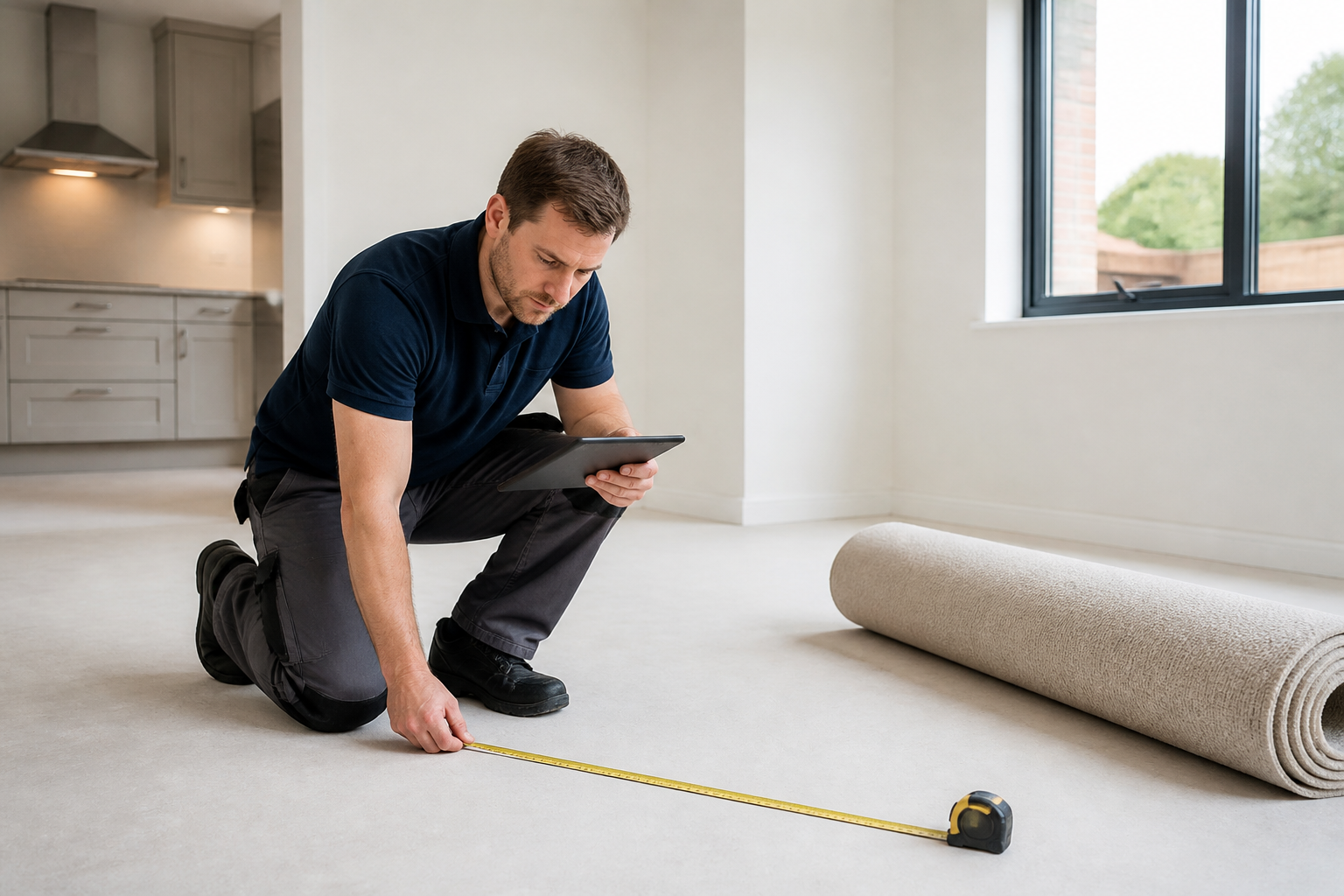
Grab your tape measure (measuring tape), not a guessing stick. For each room, measure the length and width at the longest points, including alcoves, bay windows, and doorways. Always round up to the nearest 0.1m (4in). If you’re in the US, measure in feet and inches; metric folks, stick to metres and centimetres.
Example:
- Room is 4.2m x 3.6m (13ft 9in x 11ft 10in)
- Always round up: use 4.3m x 3.7m (14ft x 12ft)
For stairs:
- Measure the tread (the part you step on) and riser (the upright part) for one step.
- Multiply by the number of stairs.
Step 2: Add Wastage (The Spare Teabags Principle)
Nobody has ever finished a job wishing they’d bought less carpet. A 10% allowance is the industry standard—think of it as the spare tea bags in the cupboard so you’re never caught short. If your room has tricky shapes, or you’re matching patterns, nudge up to 15%.
Step 3: Convert to the Units the Merchant Wants
Carpet is usually sold by the square metre (sq m) or square foot (sq ft), and widths typically come in 4m (13ft) and 5m (16ft) rolls. Don’t measure your room in feet and then order in metres—it’s like buying timber (lumber) in inches for a metric house.
Quick Conversion:
- 1 square metre = 10.76 square feet
- 1 metre = 3.28 feet
Worked Example: Estimating for a 3m x 4m (10ft x 13ft) Room
Let’s walk through it, both ways:
| Step | Metric | Imperial/US |
|---|---|---|
| Room Size | 3m x 4m | 10ft x 13ft |
| Area | 12 sq m | 130 sq ft |
| Wastage (10%) | 1.2 sq m | 13 sq ft |
| Total Needed | 13.2 sq m | 143 sq ft |
You’d order:
- 13.2 sq m (143 sq ft) of carpet, but check the roll width: for a 4m (13ft) wide roll, you’d need a 4m x 3.3m (13ft x 11ft) cut. Always round up the length to the nearest 10cm (4in) or half foot for safety.
Stairs: The Classic Carpeting Banana Skin
Here’s the bit most people get wrong: stairs eat carpet like a builder at breakfast. Each step has two surfaces (tread and riser). For a straight flight:
- Tread: measure depth (front to back) and width
- Riser: measure height and width
- Add tread + riser, multiply by number of steps
Example:
- 12 stairs, each tread 25cm (10in) deep, riser 18cm (7in) high, width 90cm (36in)
- Total run per stair: 25cm + 18cm = 43cm (10in + 7in = 17in)
- For 12 stairs: 43cm x 12 = 516cm (17in x 12 = 204in)
- So, you need a length of 5.2m (17ft) at 90cm (36in) wide—or whatever your carpet roll width is, cut accordingly.
Add 10% for errors, pattern matching, and the odd mis-cut caused by “helpful” DIY dads.
Price Factors: What Actually Affects Your Carpet Estimate?
- Carpet type: Wool, synthetic, twist, Berber—price per sq m (sq ft) varies wildly.
- Room shape: Odd corners and alcoves mean more wastage.
- Seaming: If your room is wider than the carpet roll, you’ll need joins (seams)—and more carpet.
- Underlay (padding): Always budget for this.
- Fitting/installation: Labour costs are often separate.
No matter what, get the estimate right before you order—relying on the fitter to “sort it out” is the carpet equivalent of letting your mate wire a fuse box after three pints.
Questions people are actually asking
How much to carpet 200 sq ft?
For 200 sq ft (18.6 sq m), add 10% for wastage: 220 sq ft (20.5 sq m). Check the roll width—if it’s 12ft (3.66m), you’ll need a piece roughly 12ft x 18.5ft (3.66m x 5.64m). Actual price depends on carpet type and local fitting rates, so check with your supplier.
How much carpet do I need?
Measure the length and width of each room, multiply for area (in sq m or sq ft), then add 10% for wastage. For stairs, measure one step’s tread and riser, multiply by number of stairs, and add 10%. Always round up to the nearest practical length for your carpet roll width.
How much carpet do I need for a 12x12 room?
A 12ft x 12ft room (3.66m x 3.66m) is 144 sq ft (13.4 sq m). Add 10% for wastage: 158 sq ft (14.7 sq m). If using a 12ft (3.66m) wide roll, you’ll need 12ft x 13.2ft (3.66m x 4m) to cover with wiggle room.
How much carpet do I need for stairs?
Measure tread (depth) + riser (height) for one stair, multiply by stair width and number of steps. Example: 10in tread + 7in riser = 17in x 36in width x 12 stairs = 51 sq ft (4.7 sq m). Add 10% wastage for cutting and pattern matching.
How much does carpet installation cost?
Fitting costs vary by location and installer. Most fitters charge per sq m or sq ft, plus extra for stairs or tricky shapes. Get quotes from fitters, and check if underlay (padding), gripper rods, and moving furniture are included in the price.
How much does carpet cost?
Carpet prices swing wildly based on fibre, quality, and brand. Budget options start low, luxury wool or designer carpets much higher. Always get a full quote including underlay and fitting—not just the carpet itself.
How much carpet cleaner do I need?
A standard carpet cleaner bottle covers about 50 sq m (540 sq ft). Check your cleaner’s instructions, as coverage varies. For a 3m x 4m (10ft x 13ft) room, you’ll need less than one typical bottle.
Conclusion: Don’t Let Guesswork Cost You
Measuring carpet is like making tea for a crowd—do it right, and everyone’s happy; get it wrong, and someone’s left out. Use a carpet estimate calculator (or follow the steps above) to make sure you order enough, but not enough to carpet the neighbour’s cat. Ready to get started? Grab your tape measure, jot down the numbers, and use a calculator for spot-on results every time.
Free tools to put this into practice
Reading is one thing — working out your own numbers is what saves time and money. Here are the free HowMuchDoINeed calculators that pair best with this guide:
- How To Measure Estimate Carpet Room — work out exactly how much you need and what it will cost.
- Carpet Calculator — get an instant materials estimate for your project.
- Flooring Calculator Guide How Much Flooring Do I Need Complete Uk Homeowner Diy Guide — size up quantities and costs before you head to the merchant.
- Flooring Calculator — plan your order so you avoid over- or under-buying.
Explore every free calculator on HowMuchDoINeed — no sign-up required.