
Concrete Calculator: How Much Concrete Do I Need? The Complete UK DIY & Build Guide
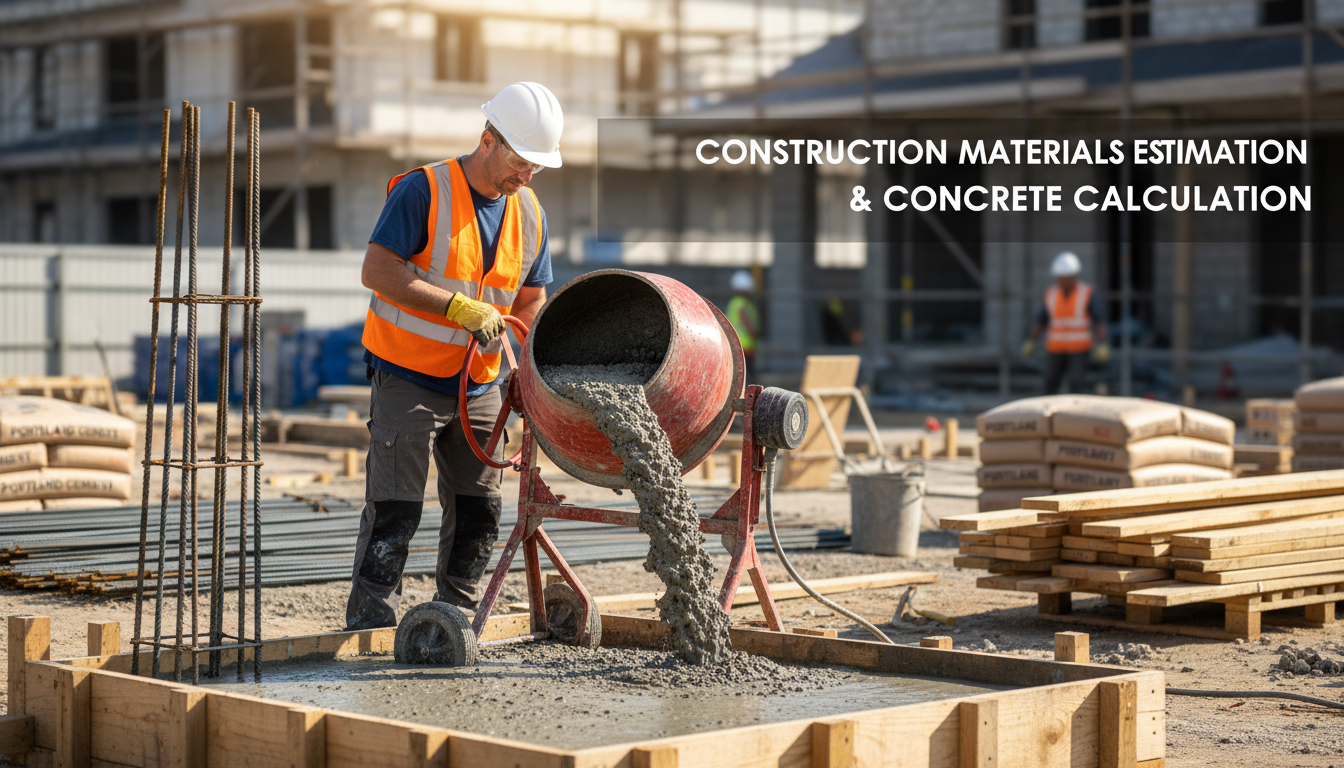
Get your concrete calculations wrong and you're either staring at an unfinished pour or paying for a cubic metre of the stuff you'll never use. Neither is a good afternoon. Getting it right saves real money, cuts waste, and means the job actually finishes on time.
A dedicated Concrete Calculator takes the guesswork out of it — whether you're a homeowner laying a shed base, a landscaper pricing a patio, or a groundworker quoting a driveway. This guide walks you through concrete calculations, mix ratios, material quantities, and every question the internet keeps asking about concrete.
Try our free Concrete Calculator:
https://howmuchdoineed.co/calculators/concrete-calculator
Why Accurate Concrete Calculations Actually Matter
Concrete isn't like ordering an extra tin of paint. You can't just crack open another one if you run short mid-pour. Once you start, consistency is everything — stop and restart and you've got a cold joint, which is exactly as bad as it sounds.
Incorrect calculations can result in:
- Incomplete slabs
- Cold joints
- Structural weaknesses
- Additional delivery charges
- Excess material waste
- Delayed project completion
Professional contractors always calculate concrete volume before ordering. There's a reason for that.
How to Calculate Concrete Volume
The basic concrete formula is straightforward:
Volume = Length × Width × Depth
For example:
- Length: 5m
- Width: 4m
- Depth: 100mm (0.1m)
Calculation:
5 × 4 × 0.1 = 2m³
You'd need approximately 2 cubic metres of concrete. Most ready-mix suppliers sell by the cubic metre, so that's your working unit.
The one trap people fall into? Forgetting to convert millimetres to metres before they multiply. Enter 100 instead of 0.1 and suddenly you're apparently ordering enough concrete to build a bunker. Keep your units consistent and the maths stays simple.
How Much Concrete Do I Need for a Slab?
One of the most common questions on Reddit goes something like: "How much concrete do I need for a concrete slab?" Let's use a typical garden shed base as the worked example.
Example
Dimensions:
- Length: 3m
- Width: 3m
- Depth: 100mm
Calculation:
3 × 3 × 0.1 = 0.9m³
You should order: 1.0m³ of concrete
Most builders add a 5–10% contingency — think of it as the spare teabags you keep so you're never caught short. Ground conditions vary, losses happen, and a second delivery costs far more than that extra 10%.
Common Concrete Mix Ratios Explained
Here's where a lot of people get stuck. Not all concrete is the same — different jobs need different strengths, and the mix ratio is how you dial that in.
1:2:4 Concrete Mix
Ratio:
- 1 part cement
- 2 parts sand
- 4 parts aggregate
Common uses:
- Concrete slabs
- Driveways
- Footpaths
- Foundations
This is one of the most widely used general-purpose concrete mixes. The workhorse of the site.
1:3:6 Concrete Mix
Ratio:
- 1 part cement
- 3 parts sand
- 6 parts aggregate
Common uses:
- Non-structural applications
- Garden projects
- Lightweight foundations
Provides lower strength than 1:2:4. Fine where you don't need the grunt.
1:1.5:3 Concrete Mix
Ratio:
- 1 part cement
- 1.5 parts sand
- 3 parts aggregate
Common uses:
- Structural work
- Reinforced concrete
- Load-bearing applications
Produces higher compressive strength. When the job demands it, this is what you reach for.
C20 Concrete
Frequently used for:
- Domestic foundations
- Shed bases
- Internal floor slabs
C25 Concrete
Suitable for:
- House foundations
- Reinforced footings
- Ground beams
C30 Concrete
Often used for:
- Driveways
- Roads
- Commercial projects
C35 and Above
Typically used for:
- Heavy-duty commercial structures
- Industrial flooring
- Structural engineering projects
Concrete Calculator Example: Driveway
Right, let's run the numbers on something a bit meatier — a driveway.
Dimensions:
- Length: 10m
- Width: 3m
- Depth: 150mm
Convert depth: 150mm = 0.15m
Calculation:
10 × 3 × 0.15 = 4.5m³
Adding 10% contingency:
4.5 × 1.10 = 4.95m³
Recommended order: 5m³ of concrete
Rounding up to a clean number also makes ordering easier. Ready-mix suppliers will thank you.
How Many Bags of Concrete Do I Need?
This one comes up constantly on Reddit, and the answer depends on bag size.
Typical 25kg Ready Mix Bag Yield
A 25kg bag generally produces approximately 0.011m³.
For 1m³:
1 ÷ 0.011 ≈ 91 bags
Therefore: 1m³ = approximately 90–95 bags
Lugging 91 bags around a site is exactly as grim as it sounds. That's why anything over a cubic metre or so is usually better served by a ready-mix delivery.
Ready Mix vs Mixing Concrete Yourself
Ready Mix Concrete
Advantages:
- Consistent strength
- Faster installation
- Less labour
- Better quality control
Best for:
- Driveways
- Foundations
- Large slabs
DIY Mixing
Advantages:
- Lower cost on small projects
- Flexible quantities
- Suitable for repairs
Best for:
- Fence posts
- Small pads
- Garden projects
What Thickness Should Concrete Be?
Depth is one of those things people guess at and then regret. Here are the standard recommendations:
Concrete Patio
Recommended: 100mm thick
Shed Base
Recommended: 100mm to 150mm thick
Driveway
Recommended: 125mm to 150mm thick
Garage Floor
Recommended: 150mm thick
Foundations
Depth varies according to:
- Soil type
- Building regulations
- Structural requirements
Always seek professional advice for foundations. That's not us being overly cautious — it's just the right call.
Frequently Asked Concrete Questions
How Long Does Concrete Take to Dry?
Concrete doesn't technically "dry" — it cures. There's a difference, and it matters. Typical timeline:
- Walk on after 24–48 hours
- Light loads after 7 days
- Full strength after 28 days
Patience isn't optional here. Treat it like a freshly painted wall — leave it alone until it's ready.
Can You Pour Concrete in the Rain?
Light rain: usually acceptable.
Heavy rain: can weaken the surface and affect curing.
Most professionals avoid pouring during heavy rainfall. If the forecast looks grim, it's worth rescheduling the pour rather than gambling on the weather.
How Strong Is Concrete After 7 Days?
Most concrete reaches approximately 65–75% of its design strength within 7 days. Full strength is typically achieved after 28 days.
Do I Need Reinforcement in Concrete?
For many projects: yes. Common reinforcement includes:
- Steel mesh
- Rebar
- Fibres
Particularly important for:
- Driveways
- Foundations
- Structural slabs
Can I Pour Concrete Over Existing Concrete?
Often yes, if:
- The existing surface is stable
- The surface is properly prepared
- A bonding agent is used where required
Poor preparation often leads to cracking and delamination. The prep work is where the job is won or lost.
Why Is My Concrete Cracking?
Common causes include:
- Rapid drying
- Insufficient reinforcement
- Poor sub-base preparation
- Excess water in mix
- Settlement movement
Small hairline cracks are common and not always structural. If in doubt, get a professional eye on it.
What's the Difference Between Cement and Concrete?
One of the most asked construction questions online, and fair enough — the terms get used interchangeably when they shouldn't be.
Cement is an ingredient. Concrete is made from:
- Cement
- Sand
- Aggregate
- Water
Think of cement as the glue that binds concrete together. You wouldn't call a Victoria sponge "eggs", would you?
Concrete for Different Projects
Concrete Shed Base
Typically:
- 100–150mm thick
- C20 strength
- Reinforcement mesh recommended
Concrete Patio
Typically:
- 100mm thick
- C20 or C25 concrete
- Well-compacted sub-base
Concrete Driveway
Typically:
- 125–150mm thick
- C30 concrete
- Reinforcement often required
Concrete Footings
Typically:
- C25 concrete
- Depth determined by structural requirements
Concrete Foundations
Usually:
- C25 or stronger
- Reinforced where necessary
- Installed according to building regulations
Common Concrete Calculation Mistakes
Forgetting to Convert Millimetres
Many DIY users enter 100 instead of 0.1 metres. That single slip creates enormous calculation errors — suddenly you're apparently ordering enough concrete to fill a swimming pool. Always work in metres throughout.
Not Including Waste
Most professionals add 5–10% contingency to allow for uneven ground and losses. Ordering without a buffer is like doing the weekly shop with no list and a blindfold — you'll almost certainly come up short.
Ignoring Sub-Base Depth
Concrete depth should be measured separately from:
- MOT Type 1
- Hardcore
- Gravel base layers
The sub-base doesn't count as concrete depth. Keep them separate in your calculations.
Ordering Exact Quantities
Ground conditions vary. Ordering slightly extra is almost always cheaper than arranging a second delivery. Round up, not down.
Benefits of Using an Online Concrete Calculator
Manual calculations are fine, but they're time-consuming and one wrong entry undoes everything. A dedicated concrete calculator gives you:
- Accurate volume calculations
- Cubic metre estimates
- Cubic yard conversions
- Reduced material waste
- Faster project planning
- Better budgeting
Why Use the HowMuchDoINeed Concrete Calculator?
The HowMuchDoINeed Concrete Calculator helps estimate:
- Concrete volume
- Cubic metres required
- Cubic yards required
- Slab quantities
- Footing quantities
- Foundation requirements
Ideal for:
- DIY projects
- Builders
- Landscapers
- Groundworkers
- Homeowners
Whether you're building a shed base, driveway, garage floor, patio, footing, or foundation, accurate calculations help ensure your project runs smoothly — and keeps the merchant's phone from ringing twice.
Final Thoughts
Concrete projects succeed or fail before the first pour even begins. The planning stage is where you save money, avoid waste, and stop problems before they start.
Whether you're laying a patio, constructing foundations, pouring a driveway, or installing a shed base, knowing exactly how much concrete you need isn't optional — it's the job.
Use our free Concrete Calculator to quickly estimate concrete quantities and plan your project with confidence.
Calculate your concrete requirements here:
https://howmuchdoineed.co/calculators/concrete-calculator