Concrete Bag Calculator: Never Come Up Short (or Overload Your Van) Again
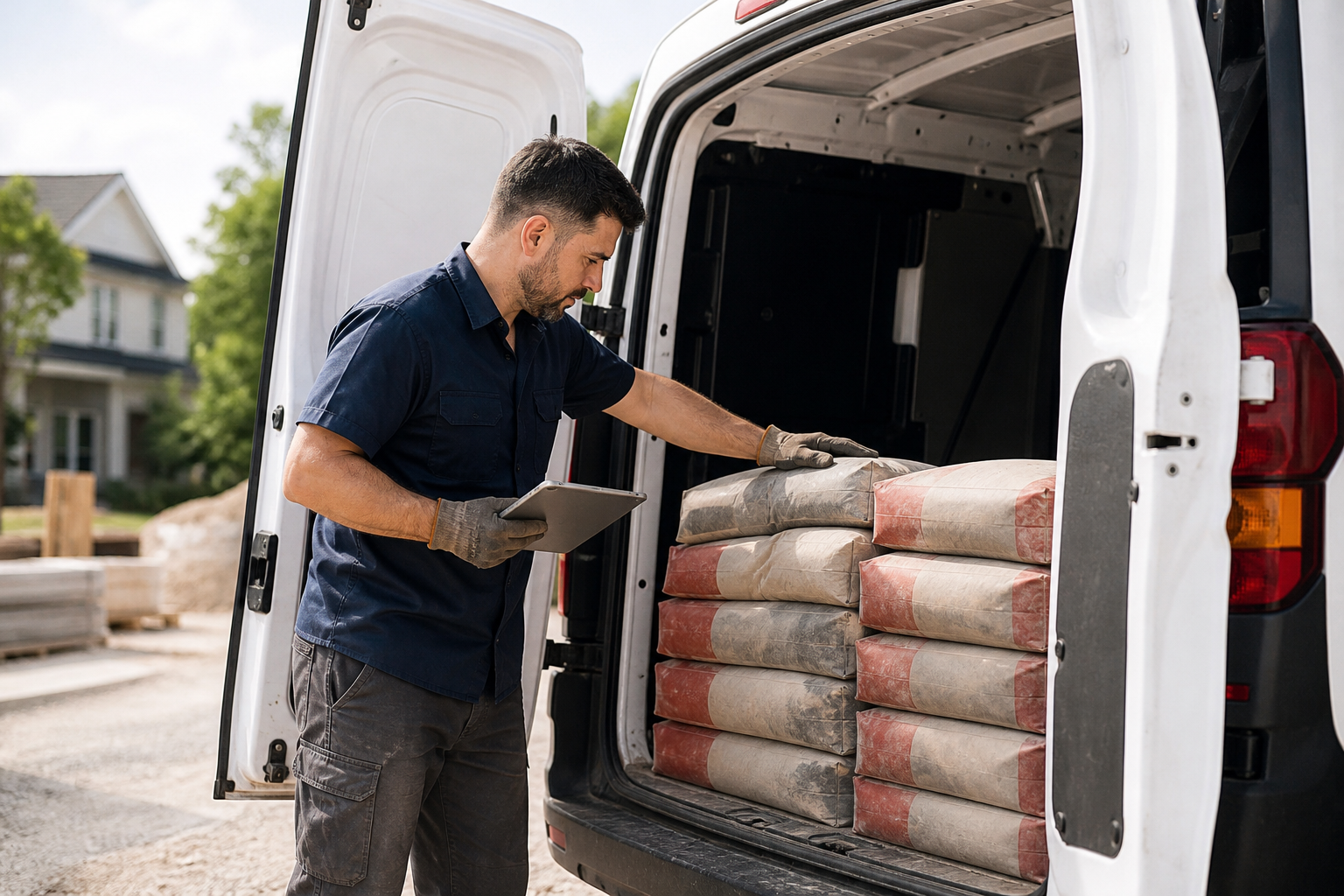
Ever got halfway through a pour and realised you’re two bags short? Or, even worse, you finish the job and have enough leftover bags to build a small fort? That’s why you need a proper concrete bag calculator—and a bit of know-how—so you order just the right amount. Let’s break down exactly how many bags you’ll need, how to work it out, and how to save yourself from those expensive, time-wasting trips back to the merchant.
Why Bag Calculations Go Wrong (and How to Avoid It)
Most DIYers and even a few pros have been tempted to just eyeball it. But ordering concrete bags without a plan is like doing your weekly shop with no list and a blindfold: you’ll either come home with six pints of milk and no bread, or vice versa. Concrete is no different. Under-order and you’re in a world of pain; over-order and you’re left with heavy, awkward bags to store (or return, if you can be bothered).
The Basics: Concrete Bags, Volumes, and What You’re Actually Pouring
Concrete bags come in a dazzling array of weights (20kg/44lb, 25kg/55lb, 40lb, 60lb, 80lb, and so on). The trick is knowing how much volume each bag actually covers once mixed. Here’s the catch: not all bags are created equal, and the finished yield depends on the mix and brand. Most manufacturers will give you a coverage guide on the bag, but here’s a general rule of thumb:
- A 20kg (44lb) bag of pre-mixed concrete makes about 0.01 cubic metres (0.35 cubic feet)
- An 80lb (36kg) bag of concrete yields roughly 0.6 cubic feet (0.017 cubic metres)
So, if you know the total volume you want to fill, you can divide by the yield per bag to get your total number of bags. Simple…ish.
The Foolproof Formula: How Many Bags Do You Actually Need?
Here’s the bit most people get wrong: they forget about waste, spillage, and the fact that concrete is less forgiving than your nan when you mess up her kitchen. Always add a little extra—about 10%—to avoid coming up short. Think of it as the spare teabags you keep so you’re never caught short when the neighbours pop round.
The Formula:
Number of bags = (Total Volume Needed ÷ Yield per Bag) × 1.1 (for 10% wastage)
Let’s see it in action...
Worked Example: Concrete Slab for a Shed Base
Say you’re pouring a base for a small shed: 2m x 1.5m x 0.1m (that’s about 6.5ft x 5ft x 4in).
- Volume = length × width × depth
- Volume = 2m × 1.5m × 0.1m = 0.3m³ (10.6 cubic feet)
You’re using 20kg (44lb) bags, each making 0.01m³ (0.35 cubic feet).
- Number of bags = 0.3m³ ÷ 0.01m³ = 30 bags
- Add 10% for wastage: 30 × 1.1 = 33 bags
In Imperial:
- Volume = 6.5ft × 5ft × 0.33ft = 10.725 cubic feet
- Using 80lb (36kg) bags at 0.6 cubic feet per bag:
- 10.725 ÷ 0.6 = ~17.9 bags
- Add 10%: 17.9 × 1.1 = ~20 bags
Bet the merchant never told you this: always round up, not down. Nobody has ever finished a job saying they wish they’d bought less concrete.
Your Secret Weapon: The Concrete Bag Calculator
If you’d rather not drown in numbers and decimal points, the concrete volume calculator does the heavy lifting for you. Plug in your dimensions, bag size, and it’ll spit out exactly how many bags you need—metric or imperial, no sweat.
And if you’re tackling something a bit more complex (steps, footings, thick slabs, or the world’s most ambitious garden path), you can also use the concrete volume calculator to break down each section and add it all up. Saves the brain ache and the backache.
Quick Reference Table: Common Bag Sizes and Coverage
| Bag Size | Yield (Metric) | Yield (Imperial) |
|---|---|---|
| 20kg (44lb) | 0.01 m³ | 0.35 cu ft |
| 25kg (55lb) | 0.011 m³ | 0.39 cu ft |
| 40lb (18kg) | 0.011 m³ | 0.4 cu ft |
| 60lb (27kg) | 0.017 m³ | 0.45 cu ft |
| 80lb (36kg) | 0.023 m³ | 0.6 cu ft |
Remember: always check your bag’s label for the manufacturer’s yield, as mixes do vary. The above is a ballpark to stop you mixing apples and oranges—or rather, cubic metres and cubic feet.
Top Tips for Concrete Bag Ordering (From Someone Who’s Ordered Wrong…A Lot)
- Measure twice, order once. Double-check every dimension. A tape measure and a mate are cheaper than a wasted Saturday.
- Buy bags from the same batch if possible. Mixing different suppliers is like painting a wall with two tins of ‘nearly white’—the mismatch will haunt you.
- Think about access. Concrete bags are heavy. Don’t stack them where you’ll have to move them twice. Your back will thank you.
- Have a clean, dry storage spot. Damp bags are about as much use as a chocolate teapot.
- Use the concrete volume calculator for anything bigger than a fence post. Seriously, it’ll save you money and grief.
Questions People Are Actually Asking
How much concrete bags for 1 cubic metre?
For 1 cubic metre (35.3 cubic feet), you’ll need roughly 100 x 20kg (44lb) bags, or about 44 x 25kg (55lb) bags. If you’re using 80lb (36kg) bags, you’ll need around 42 bags. Always check your bag’s yield and add 10% for wastage.
How much concrete does a 20kg (44lb) bag make?
A typical 20kg (44lb) bag makes about 0.01 cubic metres (0.35 cubic feet) of concrete once mixed. Always check the bag for specifics, as brands and mixes vary.
How much does a bag of concrete weigh?
Concrete bags come in various sizes. Common weights are 20kg (44lb), 25kg (55lb), 40lb (18kg), 60lb (27kg), and 80lb (36kg). Don’t be the hero who tries to carry two at once!
How much concrete in an 80 lb (36kg) bag?
An 80lb (36kg) bag typically yields about 0.6 cubic feet (0.017 cubic metres) of finished concrete. Handy for bigger projects, but they’re a workout to move.
How much concrete does one bag of cement make?
Careful—cement and concrete aren’t the same thing. A bag of cement is just one ingredient in concrete. If you’re using premixed concrete bags, see above. If you’re mixing from scratch, you’ll need to add sand, gravel (aggregate), and water. Use the concrete volume calculator to figure out your quantities.
How much is a bag of concrete?
Prices vary by region, bag size, and brand. As a rule of thumb, expect to pay a bit more for smaller bags and branded mixes. Always compare by cost per cubic metre (or cubic foot), not just per bag.
How to concrete a backyard?
Start by measuring up and using a concrete volume calculator to work out how much you need. Mark out your area, prep a solid base, set up formwork (shuttering), and then pour and level the concrete. Don’t forget to allow for expansion joints, and rope in a mate—you’ll need the help!
How much concrete bags do I need?
Work out the total volume you want to fill, find your bag’s yield (on the label), and divide. Don’t forget to add 10% for wastage. Or, skip the maths and use the concrete volume calculator for a quick answer.
Conclusion: Pour Like a Pro
There’s no glory in guessing and getting it wrong. Whether you’re doing a shed base, footings, or the world’s smallest patio, knowing how many concrete bags to buy saves money, time, and your back. Use a calculator, add a bit for luck (and wastage), and you’ll never be caught short again. Next step? Try the concrete volume calculator now and get it spot-on first time.
Free tools to put this into practice
Reading is one thing — working out your own numbers is what saves time and money. Here are the free HowMuchDoINeed calculators that pair best with this guide:
- Concrete Post Calculator — work out exactly how much you need and what it will cost.
- Concrete Cube Calculator Guide — get an instant materials estimate for your project.
- Concrete Weight Calculator — size up quantities and costs before you head to the merchant.
- Concrete Steps Calculator — plan your order so you avoid over- or under-buying.
Explore every free calculator on HowMuchDoINeed — no sign-up required.